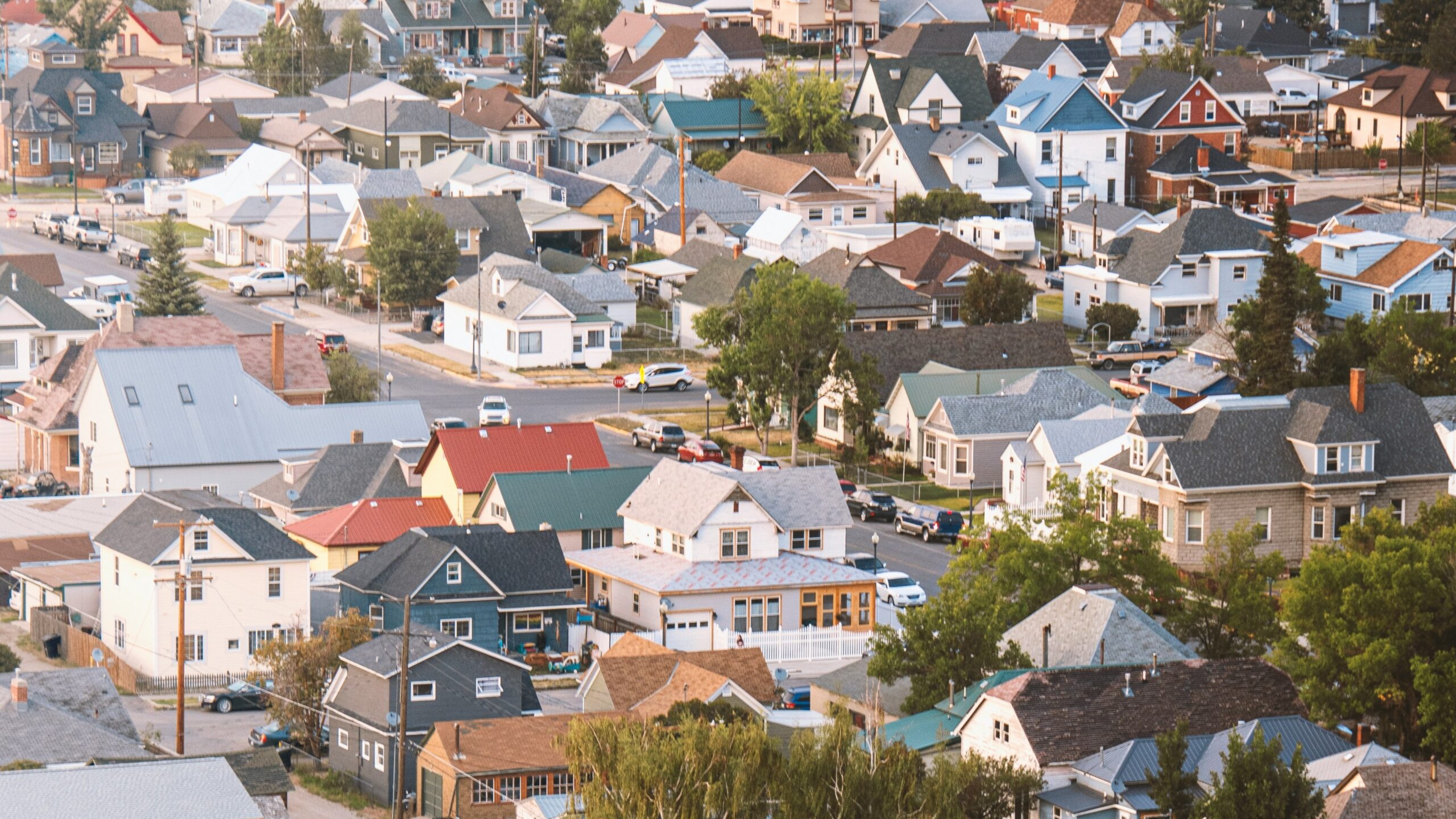
A group of the country’s biggest residential builders is quietly sketching out one of the most ambitious housing proposals in decades, a plan to roll out up to 1,000,000 branded “Trump homes” aimed squarely at first-time buyers. The idea is to flood the entry-level market with standardized, lower-cost houses that lean on President Donald Trump’s political backing and new executive actions to speed approvals and cut financing costs. If it moves from pitch to policy, the program could reset the balance between individual buyers, institutional landlords, and local governments that have struggled to keep up with demand.
The proposal is still in the planning stage, but the scale alone signals how aggressively builders are preparing to respond to affordability pressures that have sidelined younger households. It also raises a sharper question for the housing market: can a mass-produced, politically branded starter home solve a structural shortage without distorting prices, zoning, and neighborhood dynamics in the process?
The basic pitch: 1,000,000 “Trump homes” for first-time buyers
The core concept is straightforward. A coalition of large U.S. homebuilders is working on a proposal to create up to 1,000,000 “Trump homes,” a dedicated pipeline of starter houses that would be marketed as an affordable path to ownership for people who have been locked out of the market. Reporting describes a coordinated effort among several major firms, rather than a single company experiment, with the explicit goal of scaling production fast enough to matter for national inventory and pricing. The homes would be standardized, relatively modest in size, and targeted to buyers who can qualify for a mortgage but cannot compete with cash offers or high down payments.
According to one account, the coalition of large U.S. homebuilders is shaping the proposal around federal support that could include streamlined approvals, cheaper land access, and limits on institutional competition with individual homebuyers, all under a branded “Trump Homes” banner that ties the effort to the president’s housing priorities. That reporting notes that the group’s internal planning document is framed as a response to weak existing home sales and widespread affordability challenges, and it explicitly references a goal of up to 1,000,000 units, positioning the program as a national-scale intervention rather than a pilot in a handful of metros. The same document, labeled as a Feb item and described as a 2 Min Read with a reference to 48 m and 37, underscores how quickly the idea has moved from back-of-the-envelope math to a structured pitch to policymakers, even if no formal program yet exists, as detailed in coalition plans.
How executive actions and politics shape the proposal
The timing of the “Trump homes” concept is not accidental. Major builders are weighing the plan amid a flurry of executive actions from President Donald Trump that are designed to boost housing supply and ease the path for first-time buyers without triggering a broad decline in existing home values. Those actions, according to reporting on the internal discussions, include directives to federal housing agencies to prioritize entry-level construction, potential tweaks to mortgage insurance rules, and pressure on regulators to rein in large investors that have been buying up single-family homes. The builders’ proposal is being framed as a way to operationalize those priorities at scale, with the Trump brand serving as both political cover and marketing hook.
One detailed account of the internal deliberations, described as Feb and titled Major Builders Said to Weigh Plan for 1 Million Trump Homes Amid Executive Actions, notes that several major firms see a rare alignment between White House pressure to deliver visible housing wins and their own need to keep construction pipelines full as higher mortgage rates cool move-up demand. The same report describes how executives are modeling different scenarios for federal backing, from land deals to infrastructure support, and explicitly links the 1,000,000 unit target to the administration’s broader economic messaging. That context helps explain why the plan is being discussed now, and why the builders are so focused on tying it to executive actions rather than treating it as a purely private initiative.
What the homes might look like and who they are for
While the proposal is still fluid, the outlines of the product itself are becoming clearer. A cohort of major homebuilders is described as planning compact, no-frills single-family houses and townhomes that can be built quickly on standardized floor plans, with an emphasis on energy-efficient systems and low maintenance costs rather than luxury finishes. The target buyer is a first-time household that earns enough to qualify for a conventional mortgage but has been squeezed by high prices, student debt, and competition from investors. The builders’ internal documents reportedly stress that these units must be priced below the median in their respective markets to justify the “starter” label and to satisfy any federal affordability benchmarks that might be attached.
One report on the planning process, labeled as a Feb item under the heading Report, Builders Planning, Develop, Million, Trump Homes, describes how the companies are modeling different mixes of detached houses and attached units to hit the 1,000,000 figure while keeping land and infrastructure costs manageable. It notes that the program is explicitly intended to expand homeownership of single-family housing rather than feed the rental market, and that the builders are exploring deed restrictions or resale rules to keep the properties from being immediately flipped to institutional landlords. That focus on owner-occupiers is central to the pitch that these homes will help first-time buyers rather than simply create another asset class for investors, according to the planning report.
Market reaction and the role of big builders
Financial markets have already started to price in the possibility that a Trump-branded starter-home push could reshape the business outlook for large builders. Shares of Lennar, one of the country’s biggest homebuilders, jumped after word surfaced that the company was working on a version of the “Trump homes” plan, a sign that investors see potential upside in a federally aligned, high-volume entry-level product. The move reflects a broader bet that companies with the scale and political connections to plug into such a program will be better positioned than smaller rivals that lack access to cheap capital and land pipelines.
Reporting on Lennar’s stock move notes that the president has repeatedly said he wants to help first-time buyers, but without triggering a broad decline in existing home prices, and that the company has already guided to higher deliveries for 2026, up 9 percent, as it leans into more affordable product lines. That combination of political messaging and corporate strategy helps explain why Lennar’s involvement in the “Trump homes” discussions drew such a sharp market response, and why analysts are watching closely to see which other builders sign on. The same account underscores that the administration’s housing push is being interpreted on Wall Street as a potential catalyst for a new wave of construction-led growth, particularly for firms that can execute at the scale implied by Lennar’s guidance.
Affordability promises, local pushback, and open questions
For all the enthusiasm among builders and investors, the “Trump homes” idea is already running into questions about whether it can truly deliver affordability at scale. Several major homebuilders are described as considering a commitment to provide 1,000,000 units intended for first-time buyers, but local zoning rules, infrastructure constraints, and community resistance could slow or reshape where those homes actually get built. Municipal leaders are likely to welcome new supply in theory while pushing back on density, traffic, and school capacity in practice, especially if they feel the program is being driven from Washington without enough local input.
More From The Daily Overview
*This article was researched with the help of AI, with human editors creating the final content.

Elias Broderick specializes in residential and commercial real estate, with a focus on market cycles, property fundamentals, and investment strategy. His writing translates complex housing and development trends into clear insights for both new and experienced investors. At The Daily Overview, Elias explores how real estate fits into long-term wealth planning.