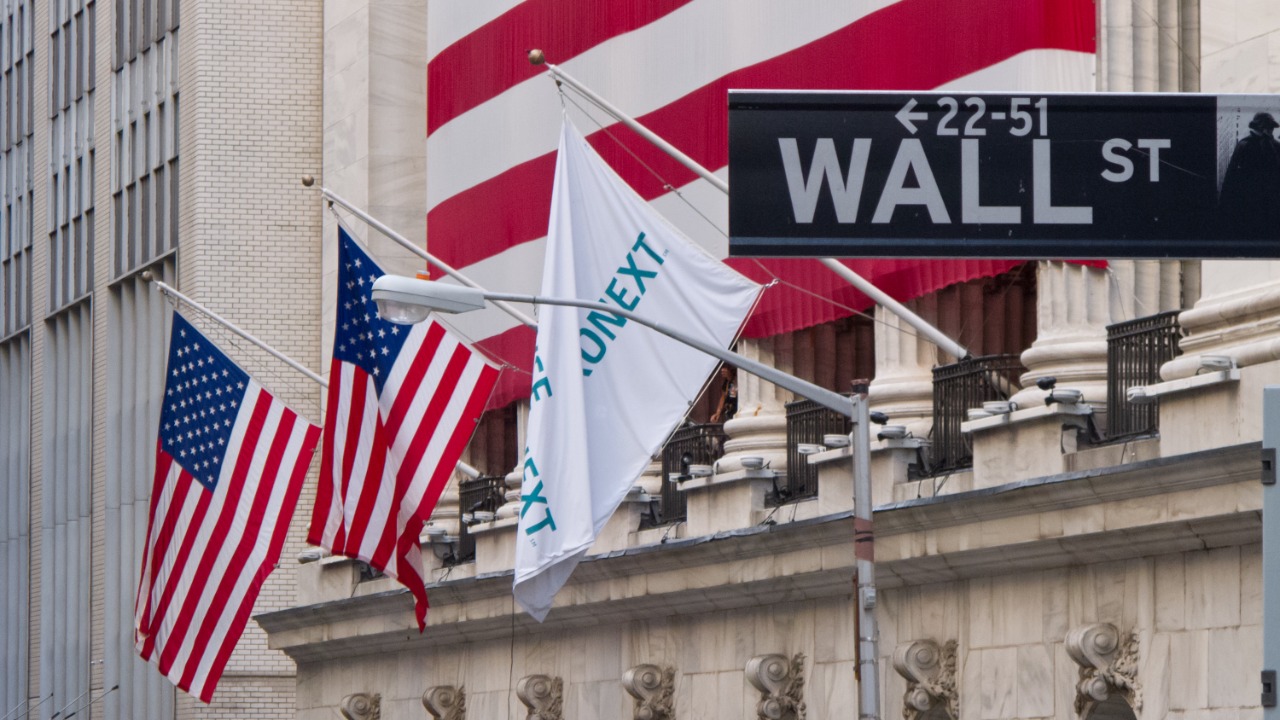
Wall Street’s two premier dealmakers have turned 2025’s merger frenzy into a profit machine, with Goldman Sachs and Morgan Stanley posting some of their strongest results in years. Their latest earnings show how a revived appetite for big-ticket transactions and buoyant markets has powered a sharp rebound in investment banking, trading and wealth management.
Behind the headline profit surge is a broader shift in global finance, as companies move from defensive postures to aggressive expansion and investors rediscover risk. I see the numbers from both banks as a clean verdict on that pivot: deal mania is no longer a forecast, it is already sitting on the income statement.
Goldman’s blockbuster quarter crowns a record year
Goldman Sachs has emerged as one of the clearest winners from the 2025 deal boom, converting its dominance in advisory into eye-catching earnings. The bank’s Q4 2025 EPS of $14.01 comfortably beat estimates of $11.70, while net revenues reached $13.45 billion, underscoring how far activity has snapped back from the post‑pandemic lull. Another breakdown of the results highlights Q4 revenue of $13.5 billion and reiterates EPS of $14.01, with full‑year EPS of $51.32, a combination that management has framed as proof the franchise is firing on multiple cylinders. For a bank that has spent years trying to rebalance away from consumer missteps, the return to its core strengths looks decisive.
The Goldman Sachs Group Inc has been keen to stress that these are not one‑off gains but the product of a deliberate refocus on high‑margin businesses. In its latest Earnings Call Highlights, The Goldman Sachs Group Inc described “Record Revenues and” strong profitability, language that reflects how the firm sees 2025 as a structural reset rather than a cyclical blip. Presentation materials on Goldman Sachs (NYSE:GS) frame the period as an “Introduction & Market Context” moment, pointing to the strongest diluted EPS in company history even as some revenue lines came in shy of the most optimistic forecasts. I read that combination as a sign of tight cost control and mix shift toward fee‑rich advisory and trading, exactly where Goldman has long claimed an edge.
Deal boom and policy tailwinds supercharge M&A
The profit surge at both banks is inseparable from an extraordinary rebound in global dealmaking. A detailed look at the “$5 Trillion Renaissance” in mergers and acquisitions describes how 2025’s M&A Surge has been Redefining the Financial Landscape, with volumes swinging from pandemic‑era survival deals to aggressive strategic expansion. That backdrop has been especially lucrative for Goldman Sachs, which advised on over half of 2025’s $10 billion‑plus transactions, according to a report that says Goldman Sachs dominated the very top of the global league tables. When the biggest deals in the world are clearing, the bank that sits on more than half of them will inevitably see its fee line swell.
Policy has helped as much as animal spirits. Reporting on a Strong M&A market highlights how a friendlier regulatory environment under U.S. President Donald Trump, combined with lower interest rates and excess corporate cash, has encouraged boards to pursue transformative transactions that might have looked too risky a few years ago. That same analysis notes that top dealmakers expect the rally in activity to continue, building on the momentum that delivered roughly $4.6 billion in fees earlier in the cycle. When I connect those dots to the latest commentary from Solomon, who has suggested that the 2021 boom volume levels in M&A “will be exceeded” and that They might be exceeded in 2026, it is hard to escape the conclusion that the current wave still has room to run.
Morgan Stanley rides the investment banking revival
If Goldman has been the purest play on mega‑deals, Morgan Stanley has been the clearest beneficiary of the broader investment banking revival. One detailed breakdown notes that Morgan Stanley investment banking revenue surged 47% in the fourth quarter, driven by more deals in healthcare and industrials, a jump that fed directly into a profit beat. Another analysis of the same period points out that Morgan Stanley posted Q4 2025 earnings per share of $2.68, surpassing estimates of $2.41 to $2.4423, with Full‑year 2025 EP metrics also improving as deal activity drove a repricing boost in the stock. For a franchise that had been criticized for relying too heavily on wealth fees, the renewed strength in classic advisory work is a welcome diversification.
The bank’s scale in wealth and asset management has amplified that cyclical upswing. According to its latest Earnings Per Share breakdown, Morgan Stanley reported Total Client Assets of $9.3 trillion, with EPS of $10.21 for the full year and $2.68 for the fourth quarter, figures that underline how fee‑based businesses are compounding alongside the deal rebound. A separate summary of Positive Points notes that Morgan Stanley (NYSE:MS) achieved record full‑year revenues of $70.6 billion in 2025, capping what management describes as a five‑year transformation of the firm’s earnings mix. When I put those numbers next to commentary that Morgan Stanley shares rose after the bank reported Q4 2025 results that beat expectations, as highlighted in a note on Solomon Oladipupo’s coverage of Morgan Stanley, the picture that emerges is of a franchise being rewarded for delivering on both growth and resilience.
Private equity, sponsors and the dual‑track deal machine
Behind the headline numbers at both banks is a more technical shift in how deals are being structured, one that particularly benefits sophisticated advisers. Reporting on the investment banking revival notes that Sponsors are also increasing activity because they have the dual track alternative now, either selling through an M&A transaction or pursuing an IPO, which gives them more leverage in negotiations. That flexibility has been especially powerful in sectors like healthcare and industrials, where private equity owners can credibly threaten to float assets if strategic buyers balk at price. For banks like Morgan Stanley that sit at the center of both equity capital markets and M&A, each dual‑track process is effectively two mandates in one.
The broader context is a global market that has shifted from retrenchment to expansion. A detailed look at the Trillion Renaissance in deals describes how global financial markets have moved from survival to aggressive strategic expansion, with companies using M&A to rewire supply chains, acquire technology and bulk up in key geographies. That shift has been mirrored in equity markets, where a surging stock market has helped lift valuations and made it easier to finance acquisitions with shares. One snapshot of the current environment notes that Goldman Sachs and have both seen double‑digit profit jumps amid the rally, a reminder that buoyant equity prices are not just a backdrop but a direct driver of fee income.
What the profit surge signals for 2026
The combined performance of Goldman and Morgan Stanley is now shaping expectations for the rest of Wall Street. Analysts tracking Key Points in Goldman’s Q4 have highlighted how EPS of $14.01 against $11.70 estimates and net revenues of $13.45 billion set a high bar for peers that lack similar advisory heft. Likewise, commentary on Key Points in Morgan Stanley’s quarter, including the $2.68 EPS beat over the $2.41 to $2.4423 range, suggests investors are now pricing in a sustained period of elevated deal activity rather than a short‑lived spike. When I look at those beats alongside the full‑year EPS of $51.32 at Strong Goldman EPS and the $10.21 full‑year EPS at EPS for Morgan Stanley, the message is that both franchises are entering 2026 with significant earnings momentum.
More From The Daily Overview

Silas Redman writes about the structure of modern banking, financial regulations, and the rules that govern money movement. His work examines how institutions, policies, and compliance frameworks affect individuals and businesses alike. At The Daily Overview, Silas aims to help readers better understand the systems operating behind everyday financial decisions.

