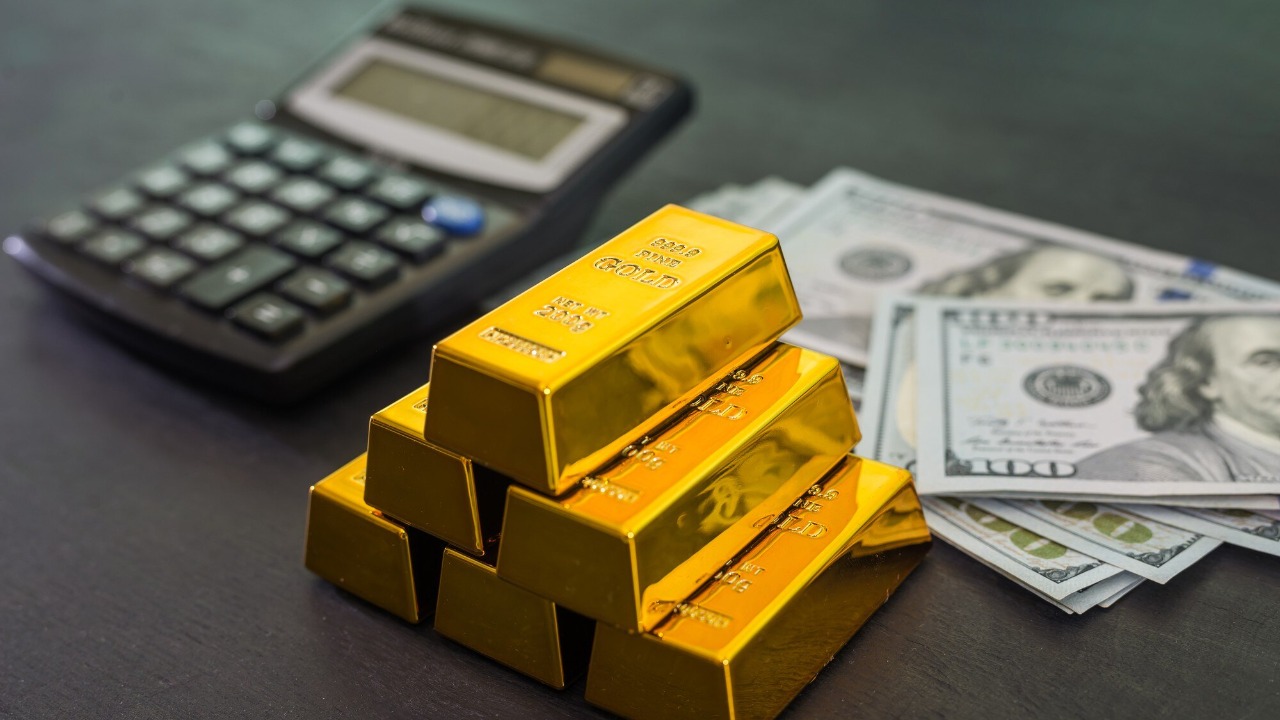
Gold’s blistering run has forced one of Wall Street’s most influential commodity teams to redraw its map for the next cycle. After a year in which the metal has already logged gains of more than 40% in 2025 and notched fresh records, Goldman Sachs is now projecting that the rally still has room to run into 2026, with a higher year‑end target and a clearer view of what could keep prices elevated. For investors trying to decide whether to chase, trim, or simply rebalance, the new forecast offers a detailed blueprint of the forces that could keep bullion in demand even after the initial burst of enthusiasm fades.
I see three pillars behind the bank’s upgraded view: a powerful macro backdrop shaped by interest rates and the dollar, a structural bid from central banks and institutional buyers, and a feedback loop from investor psychology as prices climb toward eye‑catching round numbers. Each of those drivers is already visible in the data, and together they help explain why Goldman Sachs is comfortable talking about gold near $4,900 in 2026 rather than a short‑lived spike that quickly unwinds.
Goldman’s new 2026 target and how it evolved
The most striking change in the outlook is the simple number attached to the end of 2026. Goldman Sachs now expects gold to reach $4,900 by the end of that year, which the bank frames as roughly a 21% gain from the level it referenced on a recent Tuesday. That target is not appearing out of thin air. Earlier internal work from the bank had already argued that gold was “forecast to rise 6% by the middle of 2026” after a powerful run in which the metal climbed more than 40% in 2025 and was on track for a third straight year of double‑digit gains. The new call essentially extends that trajectory, assuming that the same forces that pushed prices to records this year will not disappear overnight.
That upgrade also represents a clear step up from Goldman Sachs’s previous long‑term view. In an earlier iteration, the bank had penciled in a December 2026 forecast of $4,300, only to lift that figure to $4,900 per ounce, citing stronger‑than‑expected demand from “Wes” investors, exchange‑traded fund inflows, and likely central bank buying. That shift, from $4,300 to $4,900, signals that the bank is not just reacting to spot prices but reassessing the underlying demand curve. When a major house raises a multi‑year target by $600, it is effectively telling clients that what looked like a cyclical spike is starting to resemble a structural repricing of the asset.
Macro backdrop: rates, the dollar and a delayed Fed pivot
Underneath the headline target sits a familiar macro story: gold thrives when real yields soften and the dollar loses some of its bite. Analysts at Goldman Sachs have been explicit that the recent volatility in bullion has unfolded as Treasury yields have risen and then retreated, with markets constantly repricing the path of Federal Reserve policy. In mid‑Nov, the bank warned that the next Fed interest‑rate cut could slide into 2026, a delay that keeps nominal yields higher for longer but also raises the odds of a more pronounced easing cycle once it finally begins. That tension, between a “higher for now” stance and the prospect of a sharper pivot later, is central to the bank’s thinking, and it is captured in its discussion of Treasury yields and a divided Fed.
From my perspective, that macro setup helps explain why Goldman Sachs is comfortable projecting further gains even after such a strong year. If the Fed’s first cut indeed drifts into 2026, the dollar could stay supported in the short term, but the eventual shift toward easier policy would likely compress real yields and revive the appeal of non‑yielding assets. The bank’s own materials emphasize that gold’s recent performance has already defied the usual headwinds, with the metal rallying despite periods of firm U.S. data and a resilient currency. When an asset can climb in the face of what should be negative conditions, it suggests that other forces, from diversification demand to geopolitical hedging, are doing more of the heavy lifting than the traditional rate‑sensitive models would imply.
Central banks and structural tailwinds
The most powerful of those other forces is the steady, almost mechanical buying from official institutions. As of September, central banks had added 634 tons of gold to their reserves, a pace that Goldman Sachs describes as “relentless” and a key reason it expects Gold to Reach $4,900 in 2026, Says Goldm. In a separate note dated Nov 16, 2025, the bank highlighted that central banks were likely to keep buying in November, with Central banks seen adding to their holdings around Nov 17 as part of a broader diversification away from traditional reserve currencies. That kind of official sector demand is not about chasing short‑term price moves. It is about long‑term portfolio construction, and it tends to be sticky even when speculative flows ebb.
Goldman Sachs’s own framing of these dynamics leans heavily on the idea of “Historic Gains, Structural Tailwinds.” In a Nov 6, 2025 blog entry titled “Goldman Sachs Revisits Gold Price Target For 2026,” the bank pointed to a combination of reserve accumulation, persistent geopolitical risk, and a desire among emerging‑market policymakers to reduce exposure to the dollar system as the basis for its positive outlook. When I look at that mix, I see a demand profile that is less sensitive to the usual boom‑bust cycles in Western investment flows. If central banks are consistently adding hundreds of tons a year, they effectively put a floor under the market, making it easier for private investors to step in without fearing a sudden collapse in underlying demand.
From $4,000 to $4,900: the psychology of big round numbers
Price levels matter not just for valuation models but for human behavior. When gold first punched through $4,000, it did more than set a new record. It signaled to a broad audience of savers and traders that the metal had entered a new regime. On Oct 6, 2025, reporting highlighted that gold prices had hit a record $4,000, with Investor demand remaining strong as both experienced and first‑time buyers turned to the metal despite the high prices. That kind of broad participation is a hallmark of a maturing bull market. It suggests that the story has moved beyond specialist circles and into the mainstream, where headlines and social media chatter can amplify every new milestone.
Goldman Sachs’s decision to plant a flag at $4,900 taps directly into that psychology. A widely circulated analysis on Oct 12, 2025, framed the question bluntly: “Gold Rally 2026: Can Prices Really Touch $4,900/oz as Goldman Sachs Predicts?” That phrasing, with its focus on whether prices can “really” reach $4,900, captures the way investors often latch onto specific targets as focal points. Once a number like $4,900 is in the discourse, it can become a self‑reinforcing magnet: traders position around it, options markets build strikes near it, and every move toward or away from it is interpreted through the lens of whether the forecast is “on track.” I see that as both a risk and an opportunity. It can fuel momentum on the way up, but it also raises the odds of sharp corrections if the market starts to doubt the narrative.
What could derail or validate the forecast
For all the bullishness embedded in the new target, Goldman Sachs is not blind to the potential pitfalls. In its Nov 16, 2025 commentary, the bank acknowledged that the timing of Fed cuts, the path of Treasury yields, and the behavior of the dollar could all inject volatility into the market. If inflation were to reaccelerate in a way that forced policymakers to keep rates higher for much longer, or if growth surprised so strongly that risk assets outperformed safe havens, the case for a relentless grind higher in bullion would weaken. The bank’s own discussion of how the next Fed move might slip into 2026, and how that interacts with Nov volatility in yields, underscores that the path to $4,900 is unlikely to be a straight line.
At the same time, the bank’s own data points to several ways the forecast could end up looking conservative. The fact that gold has already risen more than 40% in 2025, as noted in the Sep 29, 2025 analysis, shows that the market can move far and fast when the right mix of macro stress and structural demand comes together. The steady accumulation of 634 tons by central banks As of September, the continued buying flagged around Nov 16 and Nov 17, and the persistent appetite from both seasoned and first‑time buyers at $4,000 all suggest that the rally is not purely speculative froth. When I weigh those factors, I see a scenario in which the $4,900 target functions less as a ceiling and more as a waypoint, provided that the macro environment does not shift dramatically against the metal.
For individual investors, the practical takeaway is less about fixating on a single number and more about understanding the forces behind it. Goldman Sachs’s upgraded forecast, its emphasis on “Historic Gains, Structural Tailwinds,” and its detailed tracking of central bank and ETF flows all point to a market that has been reshaped by a mix of policy choices and portfolio rethinks. Whether one chooses to add exposure through physical bullion, large ETFs like SPDR Gold Shares, or diversified miners, the key is to recognize that the bank’s $4,900 call is rooted in identifiable trends rather than pure optimism. If those trends persist, the path outlined for 2026 looks plausible. If they falter, the same framework will help explain why the metal falls short of the mark.
More From TheDailyOverview
- Dave Ramsey warns to stop 401(k) contributions
- 11 night jobs you can do from home (not exciting but steady)
- Small U.S. cities ready to boom next
- 19 things boomers should never sell no matter what

Grant Mercer covers market dynamics, business trends, and the economic forces driving growth across industries. His analysis connects macro movements with real-world implications for investors, entrepreneurs, and professionals. Through his work at The Daily Overview, Grant helps readers understand how markets function and where opportunities may emerge.