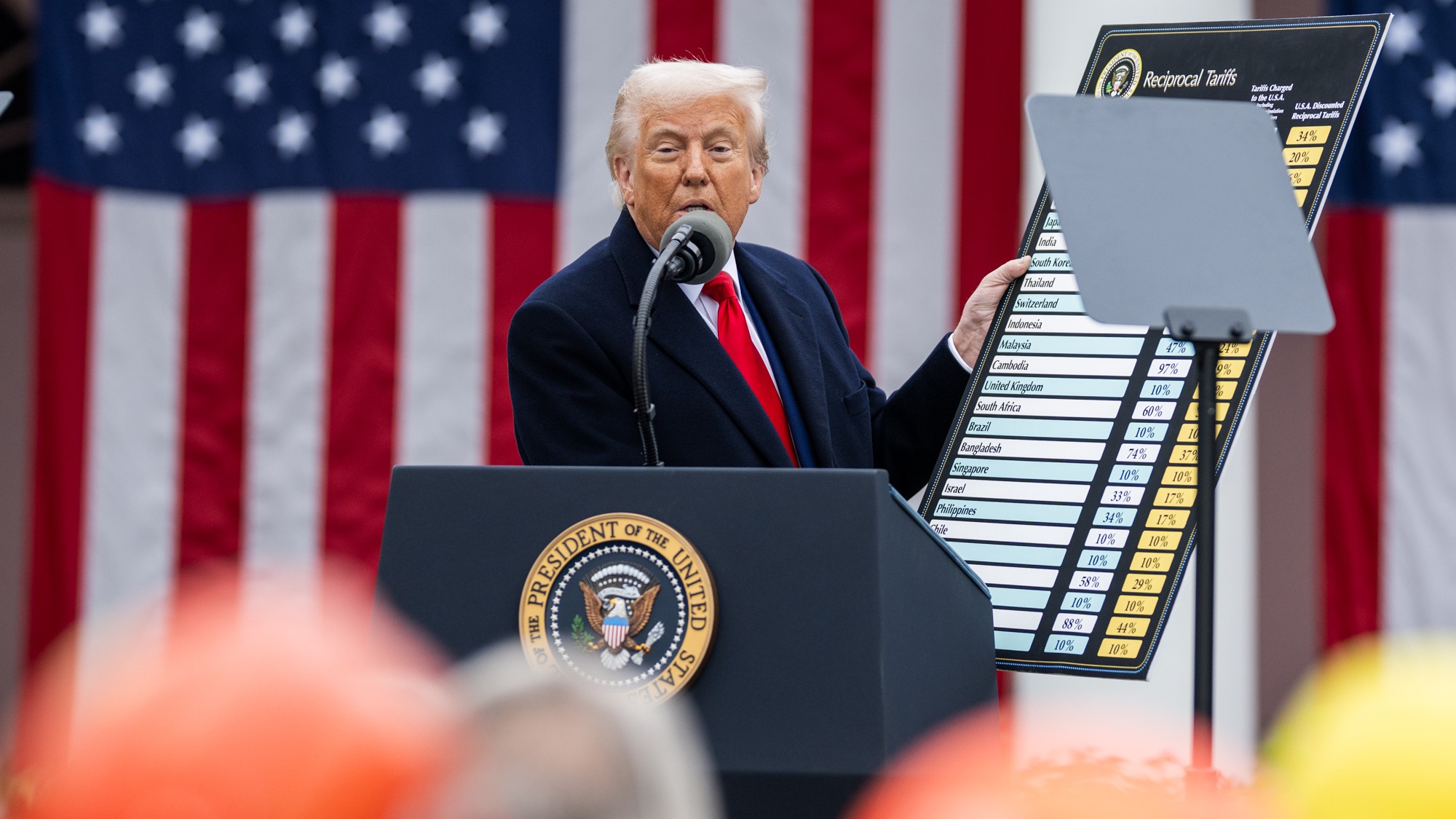
Tariffs are often sold as a way to make foreign exporters pay, but new research on President Donald Trump’s trade policy shows the bill is landing almost entirely in American wallets. Instead of foreign companies slashing prices to keep access to the United States, the costs are being passed through to importers, businesses and households in higher prices and thinner margins.
The latest evidence, built on detailed data from recent duties on countries such as Brazil and India, finds that nearly the entire burden of these trade barriers is being carried inside the United States. The headline promise of making other nations pay has collided with the reality of higher costs for American families and firms.
What the new research actually shows
The core finding is stark: import taxes introduced under President Donald Trump have been absorbed almost completely by American buyers rather than foreign producers. Economists examining the tariffs conclude that importers and consumers in the United States shoulder 96 percent of the tariff burden, meaning foreign exporters have barely cut their prices in response. In practical terms, that means the sticker price on everything from industrial inputs to finished goods has risen for domestic customers instead of being squeezed out of overseas profit margins.
One detailed analysis of the policy describes how Americans bear 96% of the cost of President Trump’s tariffs, with the remaining sliver falling on foreign suppliers that modestly adjust their prices. The study notes that President Donald Trump’s duties on imported goods are paid almost entirely by American importers, their domestic customers and ultimately households, because foreign exporters did not substantially reduce their dollar prices, a pattern documented in the finding that Americans bear 96%.
How the tariffs were structured, and why that matters
To understand why the burden falls this way, it helps to look at how the tariffs were designed. The research zeroes in on Brazil and India, whose exports were targeted with steep, broad U.S. tariffs last year, including a headline rate of 50% on some products. After those duties took effect, the expectation in political speeches was that exporters in Brazil and India would slash prices to keep their foothold in the American market, effectively paying the tax themselves.
Instead, the pattern that emerges is very different. Instead of foreign suppliers absorbing the shock, the American side of the transaction has been forced to adjust, with importers and consumers in the US bearing 96 percent of the tariff burden according to the economists who describe this as America’s own goal. When a 50% duty is layered on top of the original price and the foreign seller keeps charging roughly the same amount, the only way the deal still happens is if the American buyer pays more or cuts back elsewhere.
Who really pays at the checkout
Once the tariff hits the border, the cost does not stay with the importer for long. According to a report by the Kiel Institute for, American consumers are paying the vast majority of the new charges, with the study concluding that the American consumer pays all but 4% of tariff costs. That means higher prices on everyday goods, from electronics assembled with imported components to groceries that rely on foreign-grown inputs, even when shoppers never see the word “tariff” on a receipt.
For businesses, especially smaller manufacturers and retailers, the squeeze is just as real. Analysts describe how well over 90% of the costs of these trade measures are being picked up by US consumers and businesses, a pattern that has prompted warnings that the policy is effectively a tax on the domestic economy, with one summary noting that well over 90% of the burden of Trump tariffs is carried by US consumers and businesses that face higher costs they say we can’t afford. When a midwestern auto parts supplier pays more for imported steel or specialized components, it has to choose between raising prices on a 2024 Ford F-150 bumper, cutting wages, or delaying investment in new equipment.
Why foreign exporters are not footing the bill
The political promise behind tariffs is simple: make foreign producers pay or lose access to the lucrative American market. The data, however, show that foreign exporters have largely held their ground on pricing. A detailed examination by the Kiel Institute finds that US tariffs are mostly paid by American importers and consumers, while foreign exporters paid only a small fraction of the total. In other words, the tariffs did not force companies in Brazil and India to slash their dollar prices in a way that would meaningfully shift the burden overseas.
Additional reporting on the same research, including coverage that highlights how US tariffs are paid almost entirely by Americans according to a German study, reinforces that the intended pressure on foreign firms has not materialized. Analysts note that Americans, not foreign companies, are absorbing the impact, with one account explaining that US tariffs are paid almost entirely by Americans, as a German analysis of the tariff structure makes clear. When foreign exporters can keep charging nearly the same prices and still find buyers, the leverage that tariffs are supposed to create simply does not bite.
The broader economic fallout for American households
The cumulative effect of these dynamics is that everyday Americans are quietly paying more for a wide range of goods, even if they never follow trade policy debates. A News Editor summary of the research notes that Americans are getting hit the hardest by their own country’s tariffs, with economists warning that the measures are contributing to higher U.S. inflation going forward. For a family already stretched by rent, childcare and car payments, a few extra dollars on imported appliances or smartphones can be the difference between saving and sliding into debt.
From my perspective, the most striking part of the new work is how completely it undercuts the idea that tariffs are a painless way to project toughness abroad. The numbers show that Americans, not foreign rivals, are paying almost entirely for Trump’s tariffs, and that the policy has functioned less as a penalty on Brazil and India than as a tax on American importers, businesses and consumers. As long as the duties remain in place and foreign exporters keep their prices high, the real cost of this trade strategy will continue to show up in American bank statements, not in the balance sheets of overseas firms.
More From TheDailyOverview

Grant Mercer covers market dynamics, business trends, and the economic forces driving growth across industries. His analysis connects macro movements with real-world implications for investors, entrepreneurs, and professionals. Through his work at The Daily Overview, Grant helps readers understand how markets function and where opportunities may emerge.

