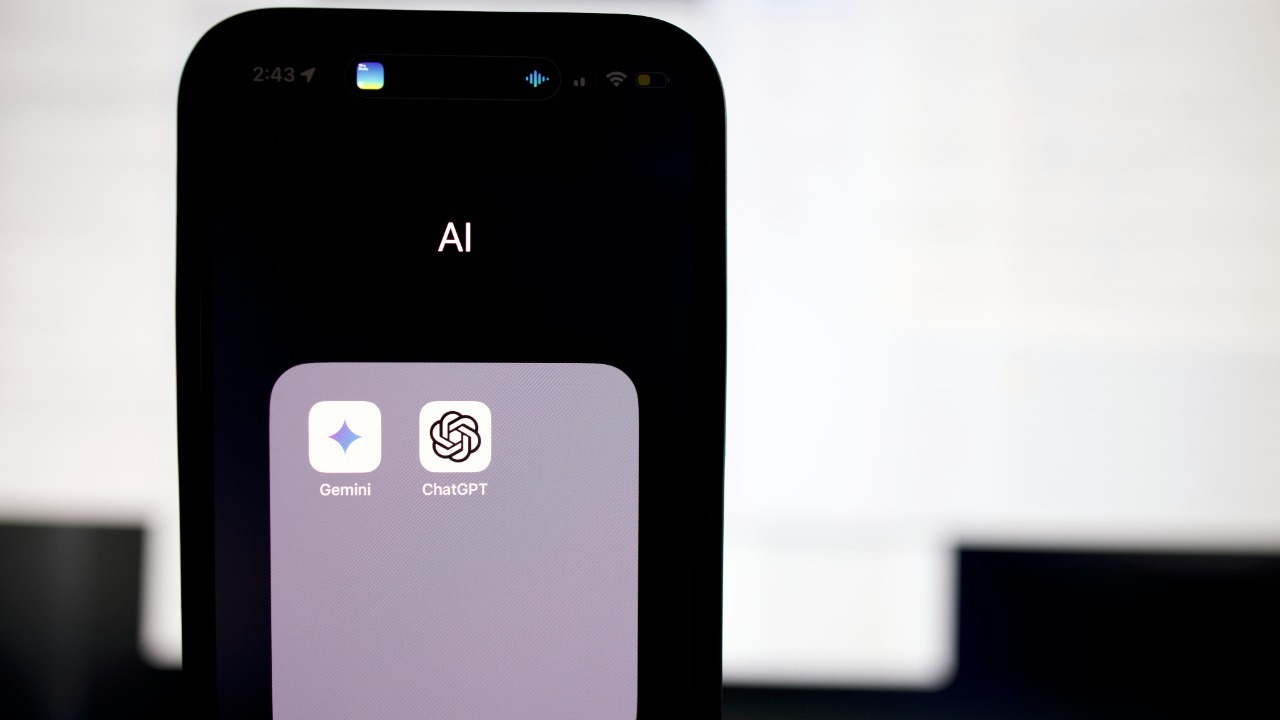
Apple’s decision to lean on Google’s Gemini models for the next wave of Siri and Apple Intelligence has instantly reordered the AI power rankings. Instead of splitting its bets across multiple model providers, Apple has effectively handed Google the most coveted distribution channel in consumer tech and left OpenAI watching from the sidelines. I see this as more than a licensing deal, it is a structural setback for OpenAI’s ambitions to dominate everyday AI usage on phones, laptops, and wearables.
The partnership cements a world in which the two largest mobile ecosystems are now wired directly into Google’s AI stack, while OpenAI is still searching for a comparable path to billions of users. For a company valued at $500 billion and positioning itself as the defining AI platform of the decade, losing that role inside Apple’s ecosystem is a strategic blow that will be hard to reverse.
How the Apple–Google pact actually works
At the core of the deal, Apple and Google have entered a multi-year collaboration that makes Gemini the backbone for the next generation of Apple Foundation Models that will power Siri, Apple Intelligence, and a range of on-device and cloud features. In their joint statement, Apple and Google describe a structure where Apple Foundation Models are trained and enhanced using Google’s infrastructure while still operating within Apple’s privacy framework. That means the AI brains behind features like natural language Siri requests, proactive suggestions in Messages, or real-time photo understanding will be tightly coupled to Gemini’s capabilities rather than to any OpenAI system.
Reporting on the agreement makes clear that this is not a short-term experiment but a foundational bet. One analysis notes that Apple and Google have confirmed a multi-year collaboration to base next-generation Apple Foundation Models on Gemini, effectively locking in Google as Apple’s primary AI partner for several product cycles. Another breakdown of the arrangement explains that Apple’s long-term plan is to fuse its own on-device intelligence with Gemini’s large-scale cloud models to deliver context-aware assistance, multimodal understanding, and real-time spatial grounding across devices, a vision described under the banner of What Is the long-term strategy for Gemini-powered Siri.
Gemini inside 2 billion devices changes the AI map
The real shock to OpenAI is not just that Apple picked a rival model, it is the scale of what that choice unlocks for Google. Reports based on Bloomberg note that if the partnership fully materializes, Gemini will gain access to Apple’s ecosystem comprising over 2 billion active devices, from iPhones and iPads to Macs and Apple Watches, giving Reports of Gemini’s reach a concrete hardware footprint. Combined with Google’s existing dominance on Android, where Gemini is already being woven into system services and flagship apps, this creates a distribution network that no other AI provider can match.
Market analysts have already started to frame this as a decisive advantage. One assessment argues that, combined with its Android dominance, this Apple deal gives Google an unparalleled distribution network for Android and Gemini, effectively marginalizing competitors that lack such embedded access. Another report notes that Alphabet’s AI surge has already helped make it the 4th-ever company to crack a $4 trillion market cap, with investors betting that this Apple alignment will add roughly $1 trillion in market cap in about seven years, a trajectory tied directly to Alphabet’s AI distribution edge.
Why OpenAI is seen as the “big loser”
For OpenAI, the symbolism is brutal. The company has been cast as the upstart that forced Big Tech to pivot to generative AI, yet when Apple had to choose a partner to embed deeply into Siri, it went with Google. One analysis bluntly describes OpenAI as the big loser in this decision, noting that in contrast, Google stands to gain not only from licensing fees but also from validation of its investments in custom chips and efficient data centers, with Apple now experiencing those growing pains firsthand through Google’s infrastructure. Another report characterizes Google’s Apple AI deal as a “huge loss” for OpenAI, underscoring that the most valuable consumer platform outside Android has effectively chosen sides and that side is not OpenAI’s Google rival.
The timing compounds the damage. OpenAI (OPAI.PVT) is reportedly taking early steps to go public, according to the New York Times, setting up 2026 to be the “Year” when it must prove that its business model can scale beyond early adopters and enterprise pilots. Analysts in that coverage argue that OpenAI needed a marquee distribution partner like Apple to continue raising more capital on favorable terms, and losing that slot to Google raises questions about how it will match the reach and data feedback loops that Gemini will now enjoy across Apple’s hardware base, a concern tied directly to OPAI’s trajectory.
Apple’s tightrope: Gemini power without ceding control
Apple is trying to frame the deal as a way to supercharge its AI features without surrendering its privacy-first identity. Under this deal, Apple will use Google’s Gemini AI models and cloud technology to develop upcoming versions of its own Apple Foundational models, but Apple Intelligence will continue to run on Apple’s own infrastructure and will not be directly tied to user accounts related to Google or Gemini. That assurance, aimed squarely at iPhone owners wary of Google’s data practices, is spelled out in detail in coverage explaining that Under the arrangement, Apple keeps operational control of how AI features touch user data.
Technically, the integration is also more nuanced than simply dropping a Google chatbot into iOS. Previous reports that detailed Apple’s deal with Google suggested that Apple would use a “white label” Gemini model capable of running on additional GPUs and servers, with Apple Intelligence trained to work like other large language models while still feeling native to Apple’s ecosystem. Follow-up reporting reaffirms that this setup will power experiences such as richer Siri queries and smarter Search via Siri, with Previous coverage emphasizing that Apple is effectively wrapping Gemini’s capabilities inside its own branded AI layer rather than handing over the user relationship.
What this means for the next decade of AI competition
From an investor and strategic standpoint, the Apple–Google alignment is already being treated as a defining moment in the AI platform race. One detailed market analysis argues that, with this deal, Google is now the premier AI stock, since its models will be deeply embedded across both Android and Apple hardware, making Gemini the default assistant for hundreds of millions of users and the most obvious AI play for the next decade, a thesis built around Gemini’s ubiquity. Another high-profile analysis frames the agreement as good news for Apple and Google but bad news for $500 billion “upstart” OpenAI, arguing that the two tech giants now control the most important AI distribution channels while OpenAI must rely on partnerships that do not touch the operating system layer, a dynamic captured in coverage of What Apple’s AI deal means for the three companies.
In my view, that is why critics are right to describe the pact as a huge blow to OpenAI’s future, even if the company continues to ship cutting-edge models. OpenAI can still thrive in enterprise deployments, developer APIs, and cross-platform apps, but it has lost the chance to be the invisible AI fabric inside iOS in the way Gemini is about to become. As Alphabet’s valuation reflects growing confidence in its AI moat and Apple leans on Gemini to keep pace with rivals, OpenAI now faces a decade in which the default AI experience on both major mobile platforms is powered by its biggest competitor, not by the models it has spent years building.
More From The Daily Overview

Silas Redman writes about the structure of modern banking, financial regulations, and the rules that govern money movement. His work examines how institutions, policies, and compliance frameworks affect individuals and businesses alike. At The Daily Overview, Silas aims to help readers better understand the systems operating behind everyday financial decisions.

