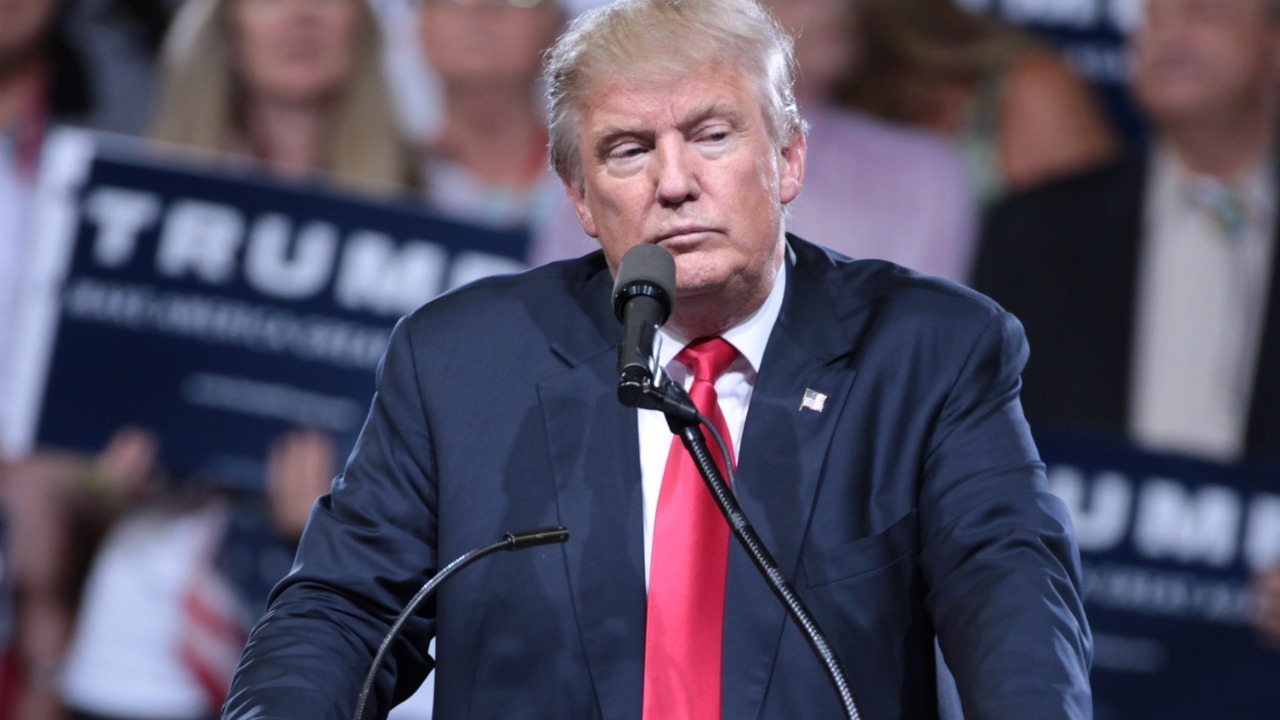
The Trump administration is offering six-figure salaries to technologists to rebuild federal systems, then openly positioning those same roles as a springboard into the private sector. The new Tech Force initiative promises up to $195,000 a year for two-year stints inside government, while marketing itself as a fast track to jobs at the very tech giants whose power Washington claims it wants to rein in. I see a program that is part public service, part talent subsidy for Silicon Valley, and the balance between those missions will shape how the effort is judged.
Tech Force: a high-paid experiment in government tech hiring
At the center of this story is Tech Force, a federal hiring push that treats software engineers and data scientists more like elite consultants than career civil servants. The White House is recruiting roughly 1,000 technologists for two-year appointments, with salaries ranging from $130,000 to $195,000, a range that would have been unthinkable for most federal IT roles a few years ago. The Trump administration is explicit that this is a signature initiative, framed as a way to modernize government systems while making public service competitive with private-sector pay.
Officials describe Tech Force as a cohort-based program, with participants labeled as Fellows and placed across agencies that are struggling to keep up with artificial intelligence and cloud infrastructure. The White House has highlighted that these roles will pay between $130,000 and $195,000 for roughly 1,000 jobs, and that the Trump administration is launching the effort in partnership with companies including OpenAI, Anthropic, and xAI. That framing alone signals that this is not a traditional civil service hiring round, but a hybrid model that treats government as one stop in a broader tech career.
Why Washington is suddenly paying up to $195,000
The salary figures are not a rounding error. Tech Force is explicitly designed to offer compensation that can compete with mid-level roles at major tech firms, at least on base pay. The administration has promoted the fact that the new government program pays tech talent up to $195K, a number that is meant to catch the eye of software engineers who might otherwise never consider a .gov email address. In a labor market where experienced AI engineers can command far more in total compensation, the government is betting that a mix of mission, prestige, and a clear exit ramp will make $195,000 feel like a reasonable tradeoff.
That pay scale is part of a broader narrative shift after a year of federal workforce reductions that cut over 300,000 employees. In that context, a program that advertises salaries up to $195,000 looks like a deliberate attempt to reset how the government talks about its own jobs. A video promoting the initiative underscores that the new government program pays tech talent up to $195K, then delivers them to Amazon and Meta on a track to Silicon Valley careers, making clear that the high pay is tied to a specific kind of worker and a specific kind of career arc, not a general raise for the public workforce.
From “Fellows” to future Big Tech hires
What makes Tech Force unusual is not just the money, but the way it formalizes a revolving door that has long existed informally. Participants are branded as Fellows, a term that evokes elite public-interest programs, but the marketing materials lean heavily on what happens after those two years are up. Reporting on the initiative notes that these Fellows will serve two-year stints at a handful of agencies, then likely move on to roles at the same tech companies that are advising the program, and in some cases to work on their own products too. The structure treats government service as a kind of finishing school for ambitious technologists.
That pipeline is not just implied, it is advertised. One segment promoting the initiative describes how the new government program pays tech talent up to $195K, then delivers them to Amazon and Meta on a track to Silicon Valley careers. Another report on Trump’s Tech Force notes that the program offers $195 salaries as a pipeline to private sector jobs at Amazon, Meta, and Apple. When a government initiative markets itself as a feeder into specific corporations, it raises questions about whose interests are being served by the public investment in training and experience.
Inside the two-year fellowship: agencies, roles, and expectations
For the technologists who sign up, the day-to-day work will be rooted in some of the most powerful parts of the federal government. Tech Force Fellows are slated to serve two-year appointments at agencies including the departments of Defense, Treasury, and State, where they will be asked to modernize legacy systems and embed artificial intelligence into core operations. These are not side projects; they are the systems that handle military logistics, global sanctions, and diplomatic communications, and the people who work on them will gain a deep understanding of how the federal government actually functions.
The administration has framed this as a way to bridge the talent gap between government and the tech industry, with a focus on early-career applicants as well as more experienced technologists who want to rotate through public service. One overview of the initiative notes that at the heart of the U.S. Tech Force program is its focus on bridging the talent gap, and that in addition to early-career applicants, the program also invites mid-career professionals whose experience could benefit both sectors eventually. Another report emphasizes that Tech Force Fellows will serve two-year appointments at Defense, Treasury, and State, with salaries that can reach up to $200,000 depending on experience and federal pay scales, underscoring how unusual it is for these agencies to compete directly with private-sector compensation.
Trump’s bet on Big Tech for AI government workforce
President Trump has made clear that he sees Big Tech as an essential partner in building an AI-ready government workforce, even as his administration criticizes those same companies on other fronts. One report describes how Trump turns to Big Tech for AI government workforce, highlighting that the program is also available to people outside these big firms but is closely intertwined with them. The message is that if the United States wants to keep pace in artificial intelligence, it cannot afford to wall off its public institutions from the companies that dominate the field.
That logic is visible in the way the White House talks about poaching tech giants’ best workers. An analysis of the program notes that the initial cohort will include around 1,000 tech workers who will work on a two-year project to upgrade the government’s tech skills, with options for different locations and remote setups. The administration is not shy about saying it wants to pull talent out of companies like Amazon, Meta, and Apple, then send those workers back into the private sector with a deeper understanding of how Washington thinks. In that sense, Trump’s Tech Force is as much about building a shared language between regulators and the regulated as it is about fixing broken websites.
Defense Tech Force and the national security angle
Alongside the broader Tech Force initiative, the administration is leaning heavily on a national security narrative to justify aggressive hiring. A related effort, described as Defense Tech Force Launches with an Unprecedented Hiring Push, opens 1,000 federal jobs at salary levels that can reach $200,000. The Office of Personnel Management is explicit that it aims to bring in younger technologists, noting that right now only 7% of federal workers are under 30, and that this program is meant to change that demographic reality.
Officials present this as a way to strengthen the connection between public service and the private sector, not to replace one with the other. The Defense-focused initiative is framed as a bridge between service and the private sector, with language that suggests a continuous flow of talent in both directions. A detailed description of the effort notes that OPM aims to bring in 1,000 technologists at salary levels up to $200,000, and that the program is designed to create a bridge between service and the private sector. In practice, that means the same pattern seen in Tech Force more broadly: high pay, time-limited roles, and an expectation that many participants will cycle back into industry with new security clearances and insider knowledge.
Recruiting after 300,000 cuts: narrative shift or structural change?
The timing of Tech Force is as important as its design. It arrives after a year of headlines about federal workforce reductions that cut over 300,000 employees, a scale of downsizing that reshaped entire agencies. Against that backdrop, a program that recruits 1,000 technologists looks less like a net expansion of government and more like a targeted rebuild of specific capabilities. The administration is effectively saying that it is willing to shrink the overall workforce while paying a premium for a narrow slice of high-skill roles.
Commentary around the launch has described it as a massive narrative shift, one that requires thoughtful, proactive communications planning to avoid backlash from career civil servants who have seen colleagues laid off or positions frozen. A detailed LinkedIn analysis notes that after a year of headlines about federal workforce reductions of over 300,000 employees, the Office of Personnel Management is now seeking early-career talent for Tech Force, and that this kind of pivot requires careful messaging. The question is whether this is a one-off experiment or the start of a structural change in how Washington thinks about its own labor market, with a small cadre of highly paid technologists sitting atop a leaner bureaucracy.
Relationship with industry: formalizing the revolving door
What sets Tech Force apart from earlier digital service efforts is how openly it embraces its relationship with industry. Former government tech leaders have noted that another somewhat unique Tech Force quality is its apparent formalization of a relationship with the private sector, where participants are expected to cycle back to the private sector naturally after their government stints. Instead of treating that exit as a side effect, the program bakes it into its pitch, promising that time in government will make Fellows more valuable to future employers.
That approach has clear upsides and risks. On one hand, it can create a cadre of technologists who understand both sides of the regulatory table, which could lead to better policy and more realistic implementation. On the other, it raises concerns about conflicts of interest when people who design or deploy government systems know they will soon be interviewing with companies that stand to benefit from those decisions. A detailed examination of the initiative notes that the relationship with industry is central to Tech Force, and that another somewhat unique Tech Force quality is its formalization of a relationship where participants cycle back to the private sector naturally. That framing makes it harder to argue that this is purely about public service, and easier to see it as a managed revolving door.
Who gets in: early-career coders, Big Tech veterans, and everyone in between
The recruitment strategy for Tech Force is deliberately broad. The program is pitched to early-career coders who might otherwise join a startup, to mid-career engineers at major platforms, and to seasoned architects who want a capstone tour in public service. One overview of the initiative explains that at the heart of the U.S. Tech Force program is its focus on bridging the talent gap, and that in addition to early-career applicants, the program also invites more experienced technologists whose skills could benefit both sectors eventually. That dual focus is meant to create mixed teams where a former Big Tech engineer might sit next to a recent graduate, each learning from the other.
The White House has also been explicit about wanting to poach tech giants’ best workers, not just new graduates. Reporting on the launch notes that the program is starting with an initial cohort of around 1,000 tech workers who will work on a two-year project, with flexible locations and remote setups to make it easier for people to participate without uprooting their lives. Another detailed description of the effort emphasizes that the Trump administration is launching Tech Force with partners such as OpenAI, Anthropic, and xAI, and that the program is available to people both inside and outside these big firms. That mix of recruits is central to the idea that government can temporarily match the talent density of a major tech campus, even if it cannot match the stock options.
Public service or subsidized training ground?
All of this leaves a core tension at the heart of Tech Force. On paper, the program is about strengthening government capacity, especially in artificial intelligence and cybersecurity, after years of underinvestment and workforce cuts. In practice, it is also a publicly funded training ground that sends technologists into agencies like Defense, Treasury, and State for two years, then funnels many of them into roles at Amazon, Meta, Apple, and other giants that already dominate the digital economy. The fact that Trump’s Tech Force offers $195 salaries as a pipeline to private sector jobs is not a side note; it is part of the sales pitch.
Whether that tradeoff is worth it depends on how one values the work done during those two years and how one weighs the long-term influence of alumni who straddle both worlds. Advocates argue that a short, intense burst of public service from 1,000 highly skilled technologists can have outsized impact on critical systems, and that alumni who move into industry will carry a deeper respect for the constraints and responsibilities of government. Critics worry that by paying up to $195,000 to a small group of Fellows, the administration is entrenching a model where public institutions become stepping stones in private careers, rather than destinations in their own right. The reporting on Tech Force, from the description of Fellows who will likely work on their own products to the emphasis on a relationship with industry where participants cycle back to the private sector naturally, makes clear that this is not an unintended consequence. It is the design.
More From TheDailyOverview

Grant Mercer covers market dynamics, business trends, and the economic forces driving growth across industries. His analysis connects macro movements with real-world implications for investors, entrepreneurs, and professionals. Through his work at The Daily Overview, Grant helps readers understand how markets function and where opportunities may emerge.