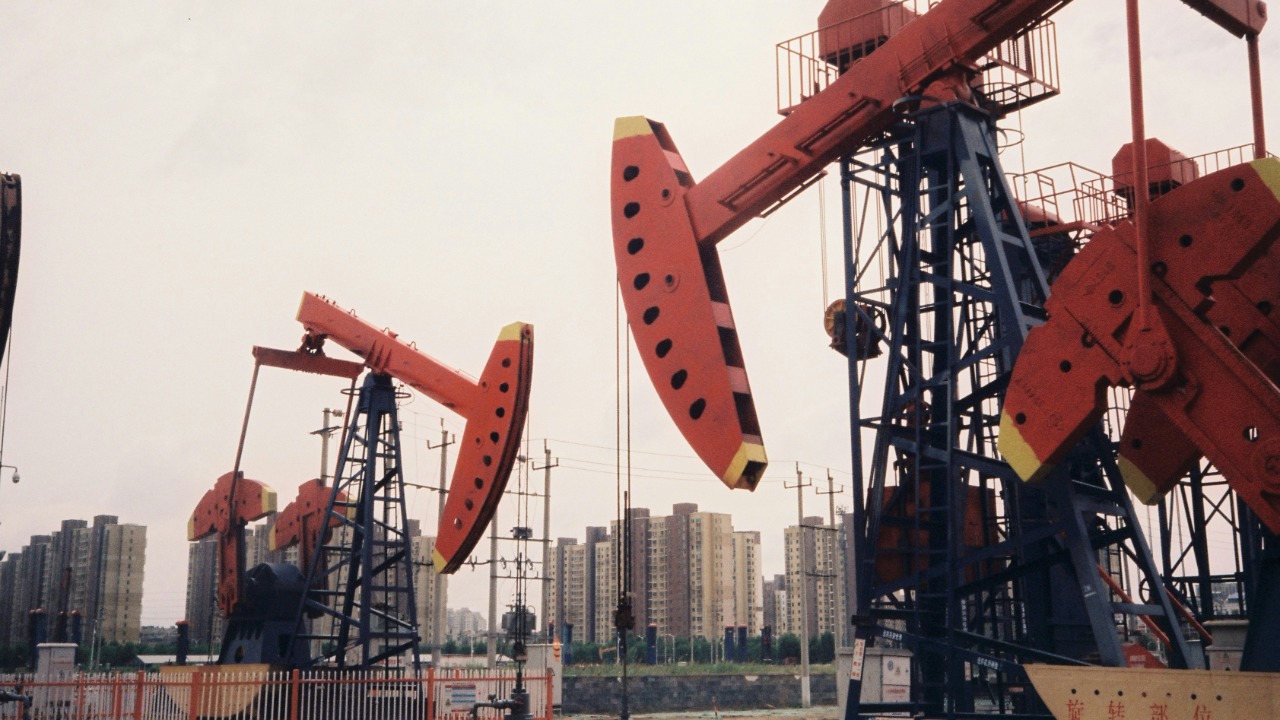
Oil is limping into 2026 with a losing streak that has wiped out much of the post‑pandemic rally, leaving benchmark prices at their weakest levels since the crash year of 2020. After a bruising twelve months, crude is still sliding as traders focus less on geopolitical shocks and more on a familiar problem: too much supply and not enough demand growth. I see a market that has shifted from scarcity panic to a grind of oversupply worries, and the adjustment is reshaping everything from shale drilling plans to gasoline price expectations.
Benchmarks signal a market under pressure
The clearest sign of oil’s rough year is in the benchmark prices that set the tone for global energy markets. Brent, the key international marker, has dropped back toward levels that would have seemed unthinkably low during the supply crunch of 2022, with the contract recently trading around 60.79 USD per Bbl after a marginal 0.10% daily decline, a move that caps a month in which prices fell about 3 percent and underlines how persistent the selling pressure has become for Brent. In the United States, the domestic benchmark has not been spared either, with WTI crude oil futures slipping about 1 percent to roughly $56.9 a barrel on a recent Friday as traders weighed the risk that supply growth is outrunning consumption.
Those levels matter because they sit uncomfortably close to the price bands that many producers use as informal break‑even thresholds for new drilling. When WTI hovers near $56.9 and Brent languishes just above 60.79 USD per Bbl, boardrooms start to revisit capital budgets, and marginal projects in higher cost regions suddenly look less attractive. I read the current pricing as a signal that the market is no longer paying a premium for geopolitical risk, and is instead reverting to a more traditional cycle where fundamentals, not fear, dictate the curve for WTI and its global peers.
From worst year since 2020 to a weak start for 2026
The pain in those benchmarks reflects a broader story: crude has just chalked up its steepest annual loss since the chaos of 2020, when the pandemic crushed demand and briefly sent some contracts into negative territory. That comparison is not perfect, since the world is not locked down and global travel is far healthier than it was six years ago, but the fact that traders are again invoking 2020 as a reference point shows how sharp the reversal has been after the price spikes that followed Russia’s invasion of Ukraine. I see that shift as a reminder that oil’s boom‑bust cycles can compress into surprisingly short windows when financial flows and physical balances line up in the same direction.
The new year has not offered much relief. Oil prices slipped on the first trading day of 2026 as investors looked past lingering geopolitical flashpoints and focused instead on the drumbeat of oversupply worries, a move that came directly on the heels of crude posting its worst annual loss since 2020 and underscored how fragile sentiment has become around Oil. When a market starts a new calendar year by extending the previous year’s downtrend, it usually tells me that traders are still looking for a new equilibrium, and that any rallies are likely to be sold until the supply narrative changes in a convincing way.
Oversupply fears dominate trader psychology
At the heart of the current slump is a simple imbalance: expectations for supply have been rising faster than confidence in demand. Futures curves and analyst notes alike point to a world where producers, from U.S. shale operators to state‑owned giants, have been slow to rein in output even as economic growth cools in key consuming regions. That disconnect has fed a steady drumbeat of talk about a growing global supply surplus, which is exactly the kind of phrase that makes speculative money think twice about betting on a sustained rebound in prices.
Those oversupply concerns are not just a matter of trader mood, they are rooted in concrete forecasts and policy choices. In the United States, the Energy Information Administration has highlighted that growth from key producing regions is no longer enough to offset declines elsewhere, a dynamic that still leaves overall output high even as some basins mature, and that nuance is central to the way I interpret the latest projections from the EIA. When traders see a market where regional growth coexists with broader plateauing, they often conclude that supply will remain ample enough to cap rallies unless demand surprises to the upside.
U.S. production is peaking, not collapsing
One of the more subtle shifts in the current cycle is the way U.S. output is evolving from relentless expansion to something closer to a plateau. In its latest Short Term Energy Outlook, the EIA has forecast that U.S. crude oil production will decrease slightly in 2026 compared with 2025, a change that reflects the difficulty of squeezing ever more barrels out of mature shale plays without a sustained price incentive, and I read that as a sign that the era of automatic year‑on‑year growth is ending. The projected decline is modest, described as only a little less than the 2025 average, but even a small drop is notable after a decade in which “record production” became a near‑annual headline.
That nuance matters for price expectations. A slight decrease in U.S. output does not automatically tighten the global market if other producers step in, but it does change the psychology around how much spare capacity is really available and at what cost. When the EIA signals in its Short Term Energy Outlook that production will edge down rather than surge higher, I see it as a quiet warning that the shale boom cannot indefinitely offset every disruption elsewhere, a point that becomes more important as investors weigh how much downside is left in a market already bruised by the worst annual performance since 2020 and by the prospect that 2026 will bring only a marginal reprieve in Short Term Energy Outlook supply growth.
OPEC’s strategy and the limits of cartel control
Against this backdrop, the role of OPEC and its allies has become more complicated. The group has spent the past few years trying to calibrate output cuts to support prices without ceding too much market share to U.S. shale and other non‑OPEC producers, a balancing act that becomes harder when demand growth is uncertain and inventories are comfortable. Recent commentary has highlighted that increased supply expectations, including from some OPEC members themselves, are weighing on sentiment, and I see that as a sign that the cartel’s internal discipline is under strain whenever prices drift lower for an extended period.
Looking ahead, the key question is whether OPEC can credibly promise tighter balances in a world where other producers are eager to capture any price‑driven opportunity. Analysis of the current cycle has stressed that OPEC has revised its outlook to suggest that additional barrels could come to market over the next year, a shift that feeds the narrative of a looser market and helps explain why many investors believe the price decline could continue into 2026 despite periodic talk of deeper cuts from OPEC. When a producer group that once prided itself on being the swing supplier is perceived as adding to supply expectations, its ability to put a firm floor under prices inevitably comes into question.
Why many forecasts see sub-$60 oil ahead
The combination of resilient supply and tempered demand has led many forecasters to a stark conclusion: average oil prices are likely to be lower in the coming year than they were in the recent past. Several major investment banks, along with the EIA, now expect that benchmark crude will trade below the psychologically important $60 mark on average, a view that reflects both the current spot levels and the shape of the futures curve, which has flattened as traders price in a long period of comfortable balances. I interpret those projections as a sign that the market consensus has shifted from fearing shortages to assuming that any tightness will be short lived.
That expectation of cheaper crude has real‑world consequences. For consumers, sub‑$60 oil can translate into lower gasoline and diesel prices, easing pressure on household budgets and potentially giving central banks a bit more room to maneuver on interest rates. For producers, however, the prospect that prices will Fall Below that threshold Next Year raises hard questions about which projects still make sense, especially in higher cost regions like deepwater fields or oil sands, and those trade‑offs are at the heart of the argument that Oil Prices Are Set to stay under sustained upward pressure from abundant supply according to Oil Prices Are Set style forecasts. When Most major forecasters and the EIA converge on a similar price band, I tend to treat that as a baseline scenario rather than an outlier.
Data, dashboards and the new retail oil watcher
One underappreciated feature of this cycle is how easy it has become for ordinary investors and drivers to track oil’s slide in real time. A decade ago, following intraday moves in Brent or WTI required specialized terminals or niche websites, but today, anyone with a smartphone can pull up charts, futures curves and related equity performance in seconds. That democratization of data has changed the way price moves filter into public consciousness, and it helps explain why swings in crude now show up quickly in conversations about everything from airline ticket prices to the cost of filling a Ford F‑150.
Services that aggregate market information have played a central role in that shift. Platforms such as Google Finance provide a simple way to search for financial security data, including energy stocks and commodity‑linked exchange‑traded funds, alongside currency and cryptocurrency prices, which means that oil no longer sits in a silo for specialists. When I see retail traders reacting almost instantly to headlines about WTI slipping to $56.9 or Brent touching 60.79 USD per Bbl, I am reminded that the feedback loop between physical markets and financial sentiment is tighter than ever, and that this loop can amplify both rallies and sell‑offs.
Winners and losers from cheaper crude
Falling oil prices create a complex map of winners and losers that cuts across countries, companies and consumers. Import‑dependent economies, especially in Asia and parts of Europe, stand to benefit from lower energy import bills, which can improve trade balances and free up fiscal space for other priorities. For households, cheaper crude often feeds through into lower pump prices and heating costs, offering a de facto tax cut that can support discretionary spending on everything from restaurant meals to electronics, and I expect that effect to be particularly visible in car‑centric markets where drivers notice every shift in the price of a gallon.
On the other side of the ledger, producers and their suppliers face a more challenging landscape. National budgets in major exporting countries are often built around assumed oil prices that are comfortably above the current Brent and WTI levels, so a prolonged period near or below $60 can force spending cuts, borrowing or currency adjustments. In the corporate world, exploration and production firms may delay or cancel higher cost projects, while oilfield service companies feel the pinch through reduced drilling activity and lower day rates, and I see that retrenchment as one reason why equity investors have become more selective about energy exposure even as consumers cheer the immediate benefits of cheaper fuel.
What to watch as the market searches for a floor
With crude having logged its worst year since 2020 and early 2026 trading extending the slide, the natural question is where the market might finally find a durable floor. In my view, three variables deserve particular attention: the pace of any supply response from producers as prices stay under pressure, the trajectory of global economic growth and fuel demand, and the willingness of OPEC and its partners to adjust output in a way that convinces traders the surplus is shrinking. If U.S. production follows the EIA’s projection of a slight decline while other non‑OPEC sources also temper growth, the supply side of the equation could quietly tighten even without dramatic policy announcements.
At the same time, demand remains the wild card. A stronger than expected rebound in industrial activity or travel could absorb more barrels than current forecasts assume, while a sharper slowdown would reinforce the bearish narrative that has dominated since crude chalked up its biggest annual drop since 2020. As I weigh those cross‑currents, I see a market that is unlikely to revisit the extremes of the pandemic crash, but that may well spend much of the coming year trading in a lower, choppier range, with every new data point on inventories, rig counts and economic indicators feeding into a debate over whether the worst of the downturn is behind us or whether oil still has further to fall before a new equilibrium emerges.
More From TheDailyOverview

Grant Mercer covers market dynamics, business trends, and the economic forces driving growth across industries. His analysis connects macro movements with real-world implications for investors, entrepreneurs, and professionals. Through his work at The Daily Overview, Grant helps readers understand how markets function and where opportunities may emerge.