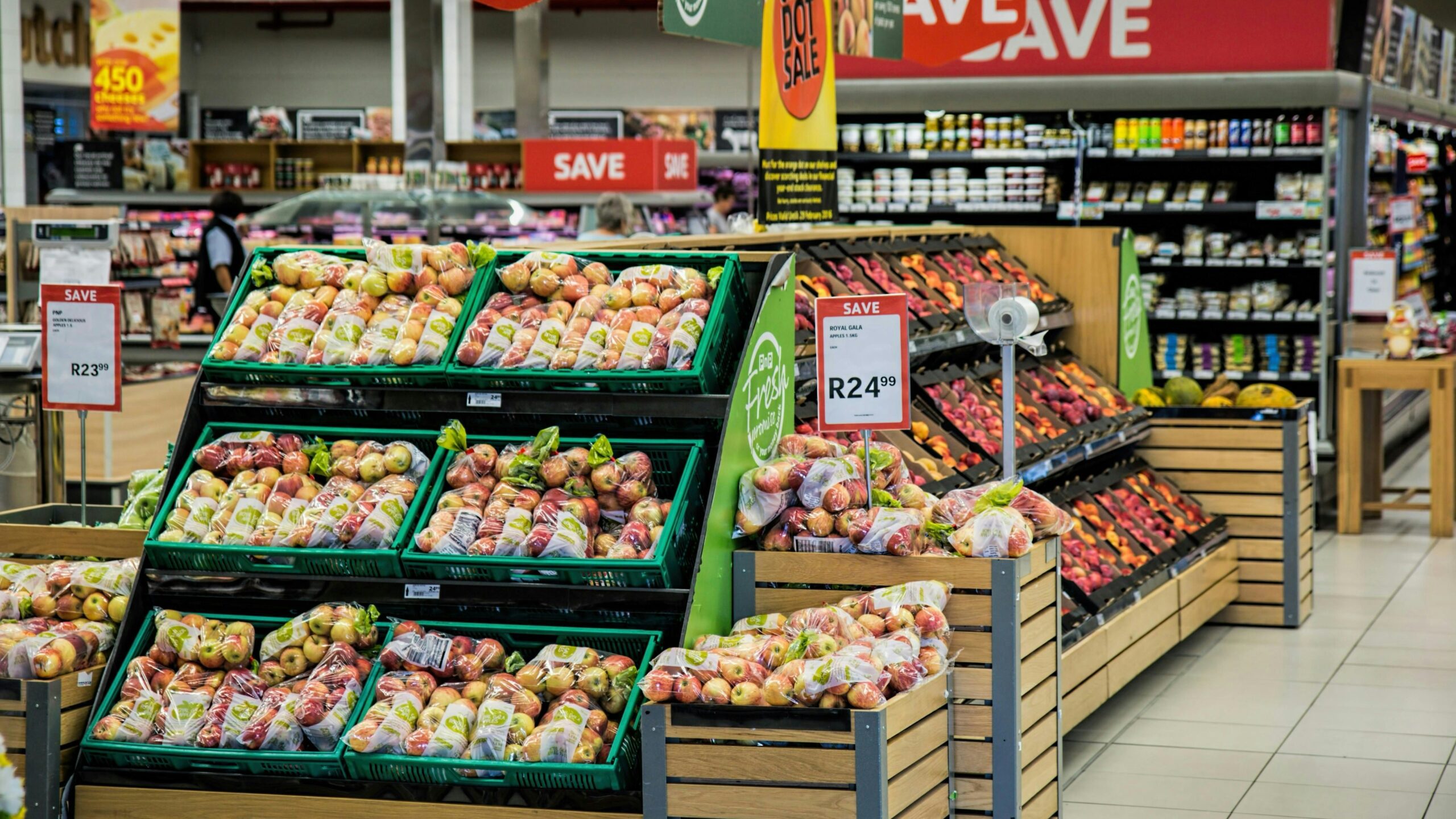
The Bureau of Labor Statistics released its Consumer Price Index report for January 2026, and the numbers at the grocery store are hard to ignore. The food index posted its sharpest monthly increase in three years, accelerating well beyond the pace recorded in December 2025 and catching many shoppers off guard just as broader inflation appeared to be cooling. For households already stretched by years of cumulative price increases, the January data signals that relief at the checkout line is not arriving on schedule.
January’s Food Index Jumped Past December’s Pace
The food index rose 0.7 percent in December 2025 on a seasonally adjusted basis, according to the December CPI release numbered USDL-26-0042. That figure already represented a notable uptick for a single month. But the January 2026 report, designated USDL-26-0186, showed the food category accelerating further still, with the “food at home” segment, the standard proxy for supermarket prices, posting the kind of jump not seen since early 2023. For consumers, that means familiar staples, from pantry goods to fresh produce, are taking a larger bite out of paychecks even as other categories show more restraint.
The acceleration matters because it broke a pattern. For much of 2024 and into 2025, monthly food price gains had been modest enough to suggest the worst of the post-pandemic grocery surge was fading. January’s numbers disrupted that narrative. The January CPI bulletin detailed gains across multiple food-at-home subcategories, indicating the spike was not driven by a single product but by broad pressure across the aisle. When cereals, meats, beverages, and other categories all move higher at once, households have fewer options to trade down, and even careful comparison shopping yields only limited savings.
Coffee and Eggs Tell Different Stories
Two staples illustrate how uneven the grocery picture has become. Coffee prices climbed sharply in January, with Table 6 data showing the category posting one of its largest seasonally adjusted monthly increases in years. The Bureau of Labor Statistics tracks average prices for items like ground coffee per pound through its average price series, and the January readings confirmed that the run-up in global coffee bean markets is now landing squarely on American kitchen counters. Supply disruptions in key growing regions, combined with elevated shipping costs, have pushed roaster input prices higher for months, and retailers appear to be passing those costs along more aggressively rather than absorbing them in margins.
Eggs, by contrast, are on a different trajectory. Retail egg prices reached record highs last year after a bird flu outbreak hit poultry farms across the country, according to reporting from January that traced the impact of avian influenza on supply. Since then, retail prices for eggs have been falling as flocks recover and production stabilizes. That divergence between coffee and eggs highlights a broader reality: grocery inflation is not a single wave but a series of overlapping supply shocks hitting different products at different times. When one category eases, another flares up, making it difficult for families to plan budgets with confidence or rely on any single item as a bellwether for overall relief.
Four Years of Cumulative Pressure on Household Budgets
The January spike lands on top of a staggering cumulative increase. From 2020 to 2024, the all-food Consumer Price Index rose 23.6 percent, according to the USDA’s chart gallery. That four-year surge means a grocery basket that cost $100 in early 2020 ran roughly $124 by the end of 2024, before any additional increases in 2025 or early 2026. Wage gains over the same period offset some of that burden for certain workers, but lower-income households, which spend a larger share of their income on food, absorbed the hit most acutely. For these families, even modest monthly increases compound into painful choices about which items to put back on the shelf.
What makes the January 2026 data especially frustrating for consumers is the timing. Overall CPI growth has been moderating, and energy prices have not repeated the dramatic spikes of 2022. Shoppers might reasonably expect food costs to follow that broader trend downward. Instead, the grocery aisle is behaving as its own economy, driven by weather events, animal disease outbreaks, global commodity swings, and supply chain bottlenecks that do not always move in sync with headline inflation. The gap between cooling overall inflation and stubbornly rising food prices is where household budgets feel the most strain, particularly for renters and fixed-income households that lack room to manoeuver elsewhere.
Why Grocery Inflation Keeps Defying the Broader Trend
Most coverage of CPI data focuses on the top-line number and core inflation, which strips out food and energy. That framing can obscure what is actually happening at the store. Food prices are volatile precisely because they depend on biological and meteorological variables that monetary policy cannot directly control. The Federal Reserve can cool demand for durable goods or housing by raising interest rates, but it cannot make coffee trees grow faster or stop avian influenza from spreading through poultry barns. This structural mismatch means grocery inflation can persist even when the Fed’s preferred measures suggest price stability is within reach, leaving consumers confused when official commentary sounds calmer than their weekly receipts look.
The archived CPI releases provide a useful historical lens. Reviewing monthly food-at-home changes over the past several years reveals a pattern: sharp spikes tend to cluster around supply disruptions rather than demand surges. The post-pandemic period saw both forces collide, but in 2025 and into 2026, demand-side pressure has eased while supply-side shocks keep arriving. That distinction matters for policy. Calls to address grocery inflation through consumer-side tools like broad price caps or across-the-board subsidies may miss the mark if the root causes sit upstream in farm production, global shipping, and commodity markets. Targeted responses (such as disease monitoring in livestock, investments in resilient transportation networks, and diversification of import sources) are more closely aligned with the way food inflation actually behaves.
Reading the Data and Navigating the Months Ahead
For households trying to make sense of the numbers, the official statistics can feel abstract. Yet the underlying data are publicly accessible. The Bureau of Labor Statistics hosts an interactive inflation tool that allows users to explore price changes by category over time, including detailed views of food-at-home components. By comparing current index levels to pre-pandemic baselines, consumers and analysts alike can see which items have driven the bulk of the increase and which have stabilized. That transparency does not lower anyone’s bill, but it can clarify whether a particular month’s jump reflects a new trend or a temporary shock that may reverse.
Policy responses also hinge on how the data are interpreted. The U.S. Department of Labor, which oversees the BLS, uses inflation statistics to inform a range of programs, and the agency’s broader labor policy work intersects with food prices through wages, employment, and worker protections in sectors like agriculture and transportation. If wage growth stalls while grocery costs continue to climb, the real purchasing power of paychecks erodes, even when headline inflation appears under control. Conversely, sustained nominal wage gains can help some households keep pace with higher food costs, though that dynamic can vary sharply by region and occupation.
In the near term, the January 2026 report suggests that volatility in the grocery aisle is not over. Coffee’s surge and eggs’ retreat show that individual categories will continue to move on their own schedules, reflecting conditions far beyond any single store or city. For families, that reality underscores the importance of flexibility, substituting between brands and products when possible, watching unit prices closely, and recognizing that a temporary break in one staple may be offset by pressure in another. For policymakers, the message is equally clear: as long as food inflation is driven by a chain of global and biological shocks, it will not neatly follow the path of the broader economy, and efforts to ease the strain will need to reach well beyond the checkout line.
More From The Daily Overview
*This article was researched with the help of AI, with human editors creating the final content.

Grant Mercer covers market dynamics, business trends, and the economic forces driving growth across industries. His analysis connects macro movements with real-world implications for investors, entrepreneurs, and professionals. Through his work at The Daily Overview, Grant helps readers understand how markets function and where opportunities may emerge.

