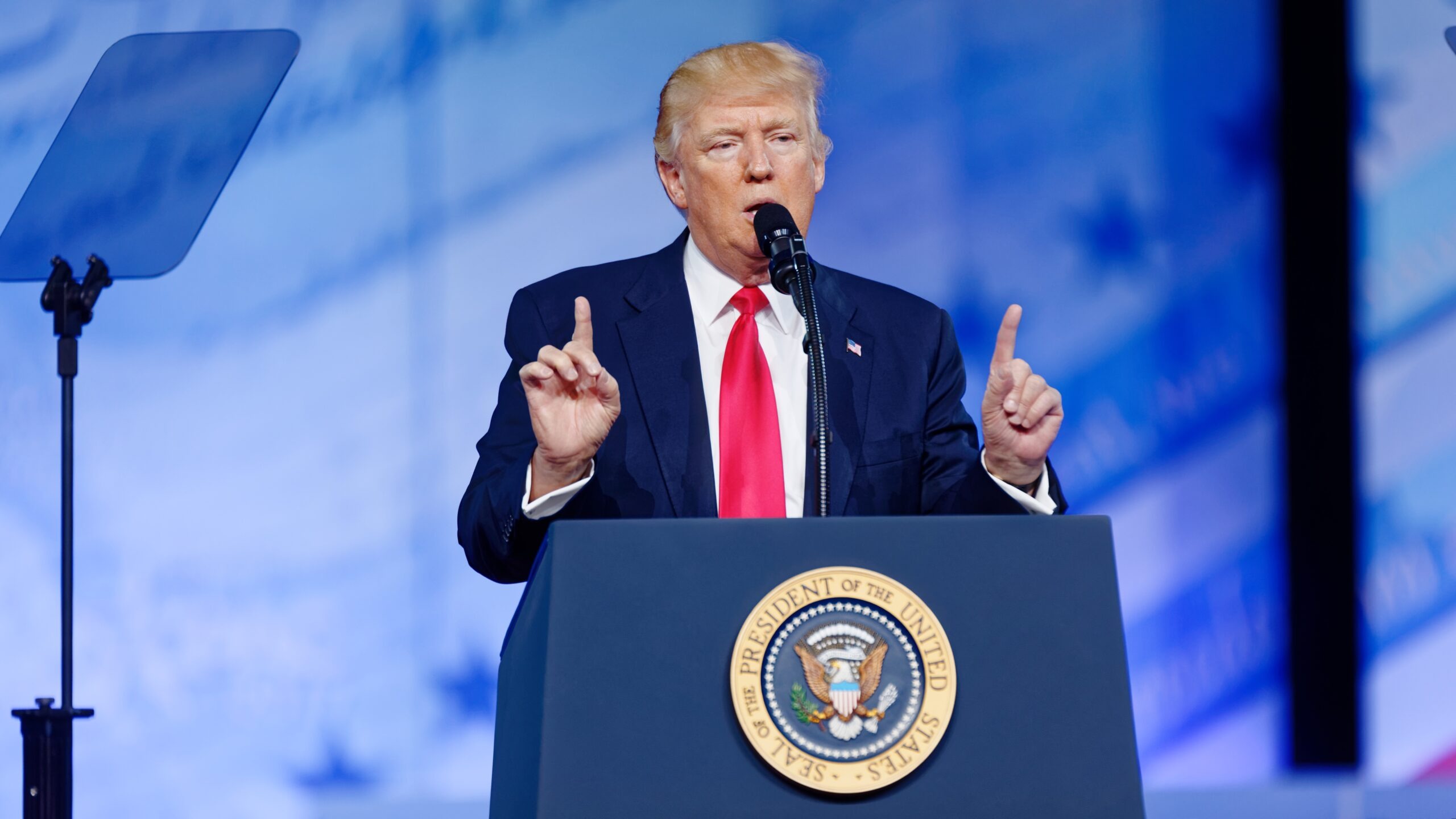
Wall Street suffered its sharpest single-day decline in a month on Monday after the White House announced a sweeping 10% temporary import surcharge on most goods entering the United States. The Dow Jones Industrial Average fell 821.91 points, or 1.7%, to close at 48,804.06, while the S&P 500 dropped 1% to 6,837.75 and the Nasdaq slid 1.1% to 22,627.27. The sell-off rippled across asset classes, sending investors into bonds and gold as traders tried to price in the consequences of a trade policy shift that also complicated U.S.-EU diplomatic negotiations as investors weighed the risk of new tariffs.
A 10% Surcharge With a 150-Day Clock
The trigger for Monday’s rout was a presidential proclamation that imposed a 10% ad valorem temporary import surcharge effective February 24, 2026. The White House invoked Section 122 of the Trade Act of 1974 (19 U.S.C. 2132), a rarely used statute that allows the president to act unilaterally when the country faces “fundamental international payments problems.” The surcharge carries a 150-day expiration window, meaning it would lapse by late July unless extended or replaced by separate legislation, and it applies broadly across product categories rather than targeting a narrow list of strategic imports.
The administration built its case around the size of the U.S. goods trade deficit, which reached $1,197.1 billion in 2025 according to the Bureau of Economic Analysis. That figure, drawn from the BEA’s annual international trade release, represents one of the largest nominal deficits on record and gave the White House its balance-of-payments rationale. Detailed partner data from the BEA’s international factsheets show that gaps with China and the European Union drove much of the shortfall, a point the proclamation cited repeatedly to justify broad rather than country-specific action, even as critics argued that domestic savings and fiscal policy play a larger role than trade rules in shaping the deficit.
Flight to Safety as Equities Tumbled
The scale of the equity decline was notable not just for its point total but for how quickly defensive assets rallied in response. Bonds climbed in a classic flight to safety, and gold futures also gained ground as traders sought hedges against potential inflation from higher import costs. Real-time pricing on global markets dashboards showed yields falling across the Treasury curve, while the dollar initially strengthened on haven demand before giving back some gains as investors reassessed the risk that the surcharge could slow U.S. growth.
AI-linked technology stocks were among the hardest-hit sectors, caught between two headwinds at once: tariff uncertainty and broader questions about the pace of returns on massive AI capital spending. That combination amplified losses in a corner of the market that had been responsible for much of the index-level gains over the prior year, leaving benchmark indices particularly exposed. For individual investors holding broad index funds, the day erased roughly a month of accumulated returns in a single session, a reminder that trade policy can move portfolios as fast as earnings reports and that concentration in a handful of mega-cap names cuts both ways when sentiment turns.
EU Freezes Trade Deal Ratification
The diplomatic fallout arrived almost as quickly as the market reaction. The European Union paused ratification steps for a trade arrangement it had been negotiating with Washington, citing the legal uncertainty created by the new surcharge and its interaction with a recent Supreme Court ruling on tariff authority. That ruling, handed down last week, complicated the framework under which the U.S. can set and adjust tariff rates, leaving EU officials unsure whether any deal they signed would hold up in court or might be undone by future litigation brought by affected importers.
Reporting from the Financial Times added detail to the freeze, noting that EU officials raised specific concerns about whether the negotiated terms of the arrangement could survive judicial review given the shifting authority landscape. The Supreme Court decision did not strike down existing tariffs outright, but it introduced enough ambiguity about the executive branch’s power to impose them that Brussels decided to wait for clarity rather than ratify an agreement that might be unenforceable within months. For companies on both sides of the Atlantic that had been planning supply chains around lower bilateral tariffs, the pause injected a new layer of planning risk, complicating investment decisions in sectors from autos to agriculture.
Why the Legal Mechanism Matters
Most of the tariff actions in recent years relied on national security authorities or emergency economic powers. The decision to reach back to Section 122 of the 1974 Trade Act signals a different legal strategy, one designed to survive the scrutiny that the Supreme Court’s recent ruling invited by tying the surcharge explicitly to balance-of-payments pressures. Section 122 was written specifically for such emergencies, and the 150-day time limit built into the statute may have made it a more defensible vehicle than open-ended executive orders. But the choice also carries a ceiling: the law caps surcharges at 15%, and the temporary nature means the White House would need congressional action or a different legal pathway to make the levies permanent or to ratchet them higher if the deficit fails to narrow.
That distinction matters for businesses trying to decide whether to absorb the cost, pass it to consumers, or restructure sourcing. A surcharge that expires in five months invites a different response than a permanent tariff wall, particularly for industries with long production cycles. Importers may choose to delay large orders or accelerate shipments already in transit to beat the effective date, creating short-term distortions in trade data that could, paradoxically, widen the very deficit the policy aims to shrink. Historical trade flows tracked through the BEA’s interactive tables show that similar policy shocks often produce a temporary surge in imports as firms race the clock, followed by a lull that can obscure the underlying direction of demand and complicate policymakers’ efforts to judge whether the measures are working.
Winners, Losers, and What Comes Next
The immediate sectoral impact of the surcharge is likely to be uneven. Industries heavily dependent on imported intermediate goods (such as autos, machinery, and electronics) face higher input costs that could squeeze margins or push prices higher, while some domestic producers may gain a modest competitive edge if foreign rivals see their products marked up at the border. Data from the BEA’s industry accounts underscore how deeply integrated global supply chains have become, with imported components embedded in everything from consumer appliances to advanced semiconductors. That complexity makes it difficult to cleanly separate “winners” from “losers,” since many firms both import parts and export finished goods, leaving them exposed on multiple fronts.
For financial markets, the key questions now are how trading partners respond and whether domestic politics will allow the surcharge to remain in place for the full 150 days. If major partners opt for targeted retaliation rather than broad countermeasures, investors may gradually look past the shock and refocus on earnings and growth. But if the EU freeze hardens into a wider standoff or other countries challenge the measure at the World Trade Organization, volatility could persist as traders game out scenarios for supply chains, inflation, and central bank policy. In the meantime, portfolio managers are likely to keep one eye on Washington and another on high-frequency indicators, using tools such as BEA trade releases and real-time market data to gauge whether Monday’s sell-off was a one-day repricing or the start of a longer reprieve from the risk appetite that defined the past year.
More From The Daily Overview
*This article was researched with the help of AI, with human editors creating the final content.

Grant Mercer covers market dynamics, business trends, and the economic forces driving growth across industries. His analysis connects macro movements with real-world implications for investors, entrepreneurs, and professionals. Through his work at The Daily Overview, Grant helps readers understand how markets function and where opportunities may emerge.

