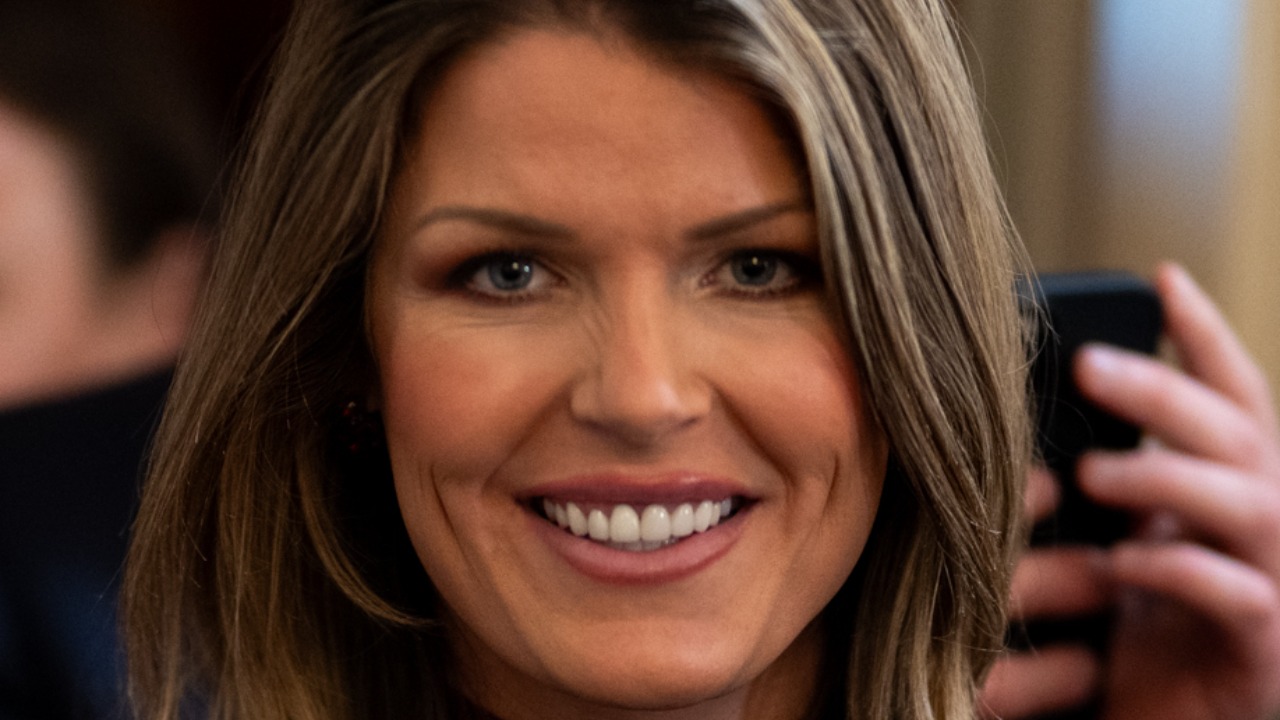
Interim U.S. attorney Lindsey Halligan is trying to steady a politically explosive prosecution while fending off a federal judge’s suggestion that she is simply carrying out President Donald Trump’s wishes in the criminal case against former FBI director James Comey. Her sharp pushback, and the Justice Department’s unusually public defense of her, have turned a routine pretrial hearing into a test of how far the judiciary can go in questioning prosecutorial motives.
At the same time, Halligan’s own courtroom admissions about how the grand jury handled Comey’s indictment have given his defense team fresh ammunition, raising the stakes of every clash she has with the bench. The result is a case that now doubles as a referendum on prosecutorial independence, grand jury integrity and the lingering political aftershocks of the Trump–Comey feud.
Halligan’s appointment and the judge’s “puppet” provocation
The confrontation did not arise in a vacuum. Halligan, who was appointed interim U.S. attorney in late September, stepped into the Comey case only days before the indictment was returned, inheriting a politically fraught file already shadowed by Trump’s public attacks on the former FBI director. According to one account of the charging process, Halligan was the only prosecutor to sign the indictment, a detail that has fueled questions about how much institutional backing the case truly has and whether her late arrival in September left her scrambling to master a complex record before taking it to a grand jury, as reflected in reporting that Halligan “was appointed interim U.S. attorney in late September, mere days before Comey was indicted” in one detailed account.
Those timing questions set the backdrop for a tense hearing in which a federal judge openly pressed Halligan on whether she was acting as Trump’s proxy rather than as an independent prosecutor. In a pointed exchange described in coverage of the hearing, the judge suggested that Halligan was functioning as a “puppet” for the president, implying that the prosecution of Comey, who is accused of lying in a case that defense lawyers say was unfairly singled out, might be driven more by politics than by law. Halligan rejected that characterization, insisting that she was exercising her own judgment and that the case rested on evidence presented to a grand jury, a position that has been scrutinized in live coverage of the Comey hearing.
Trump’s pressure campaign and the political backdrop
To understand why the “puppet” line landed so hard, it helps to recall how aggressively Trump has pushed for Comey to face criminal charges. According to one reconstruction of events, the day after a key development in the case, Trump publicly demanded via a social media post that Attorney General Pam Bondi prosecute Comey, James and pressed the Justice Department to act, underscoring how personally invested the president has been in seeing his former FBI director in the dock. That same analysis notes that the grand jury that initially heard evidence in the case had no authority to indict anyone, a procedural wrinkle that critics say makes the prosecution look less like a neutral application of law and more like the product of sustained political pressure, as laid out in an opinion analysis.
That history is why the judge’s reference to Halligan as a potential Trump “puppet” resonated beyond the courtroom, tapping into a broader debate over whether the Justice Department under Trump can credibly claim independence in cases involving his political adversaries. Halligan’s defenders argue that she is being unfairly cast as an instrument of the White House simply because she is pursuing charges against a figure Trump has vilified, while critics say the president’s explicit calls for Attorney General Pam Bondi to target Comey make it impossible to view the prosecution as fully insulated from politics. The tension between those narratives has turned Halligan’s personal credibility into a proxy for the Justice Department’s institutional integrity.
The grand jury bombshell and Comey’s bid to dismiss
Halligan’s own statements about the grand jury process have now become central to Comey’s effort to get the case thrown out. In a hearing that took place on Nov 18, 2025, she acknowledged that a full grand jury never saw the final indictment it handed up against Comey, a revelation that defense lawyers immediately seized on as a “bombshell” suggesting that the charging document did not receive the level of scrutiny the law contemplates. That admission, which came as she was explaining how the case had been presented, has been cited by Comey’s team as evidence that the indictment is structurally flawed and should be dismissed, a claim that tracks with live updates describing how “Lindsey Halligan says full grand jury never saw final indictment it handed up against Comey” on Nov 18, 2025.
Comey’s lawyers have now formally asked that his indictment be dismissed, arguing that what they describe as “fundamental errors” in the grand jury process violate his rights and undermine the legitimacy of the prosecution. In filings and in court, they have pointed to Halligan’s admission about the full grand jury never seeing the final charging document, as well as to the compressed timeline of her appointment in September, to argue that the case was rushed and mishandled. Reports on Nov 20, 2025, note that Halligan, the lead federal prosecutor in Comey’s criminal case, said in court earlier in the week that a full grand jury did not review the final indictment, a detail that has become a centerpiece of Comey’s motion to dismiss, as described in coverage of how Comey asks for his indictment be dismissed.
Justice Department backlash against the bench
Instead of quietly absorbing the judge’s criticism, the Justice Department has mounted a rare public counterattack, signaling that it views the “puppet” suggestion as an unacceptable encroachment on executive branch prerogatives. In accounts of the latest hearing, Interim U.S. attorney Lindsey Halligan is described as having scolded the federal judge for questioning her independence, a move that underscored how personally she took the insinuation that she was acting at Trump’s direction rather than her own. The department then backed her up, with officials criticizing the judge’s comments as undermining confidence in prosecutors who are supposed to be treated as officers of the court, a dynamic captured in reporting that the Justice Department “attacks judge after prosecutors’ stumbles in Comey case” and that Interim Lindsey Halligan directly confronted the bench over the remark in a Nov 21, 2025 account.
That pushback reflects a broader institutional concern that if judges feel free to label prosecutors as political puppets, it could chill aggressive enforcement in any case that touches on powerful figures. Yet it also carries risks for Halligan, who is already under scrutiny for the grand jury irregularities and for the timing of her September appointment. By going on offense against the judge, she has raised the temperature in a courtroom where she still needs to persuade the same jurist that any procedural missteps do not warrant tossing the indictment, a delicate balancing act that will shape both her own reputation and the Justice Department’s standing in politically charged prosecutions.
Halligan’s public defense and the stakes for the Comey case
Outside the formal filings, Halligan has also taken the unusual step of defending herself in public, signaling that she understands how much her personal credibility now matters to the fate of the case. In one account of her response, she “fired back” at the judge who implied she was a Trump puppet, insisting that she is not controlled by anyone and that her decisions are grounded in the evidence and the law. That report describes her as pushing back against the notion that she is merely carrying out the president’s vendetta against Comey, framing the prosecution instead as a straightforward application of statutes to alleged false statements, a stance detailed in coverage of how Lindsey Halligan fires back at the judge’s characterization.
The stakes of that personal defense are high. If the judge ultimately agrees with Comey’s lawyers that the grand jury errors Halligan has acknowledged are “fundamental” and that the indictment should be dismissed “twice over,” as one summary of the defense argument puts it, the ruling will not only vindicate Comey but also raise serious questions about Halligan’s stewardship of the case and the Justice Department’s decision to press forward under such politically charged circumstances. On the other hand, if the court allows the prosecution to proceed despite the irregularities, Halligan’s refusal to accept the “puppet” label and her insistence on her own independence will become part of a broader narrative about prosecutors navigating intense political crosswinds while still trying to hold a former FBI director, James B. Comey, to account, a narrative that has been closely tracked in detailed coverage of how Comey seeks dismissal of the charges.
More From TheDailyOverview
- Dave Ramsey says these two simple questions show whether you’re rich or poor
- Retired But Want To Work? Try These 18 Jobs for Seniors That Pay Weekly
- IRS raises capital gains thresholds for 2026 and what’s new
- 12 ways to make $5,000 fast that actually work

Grant Mercer covers market dynamics, business trends, and the economic forces driving growth across industries. His analysis connects macro movements with real-world implications for investors, entrepreneurs, and professionals. Through his work at The Daily Overview, Grant helps readers understand how markets function and where opportunities may emerge.

