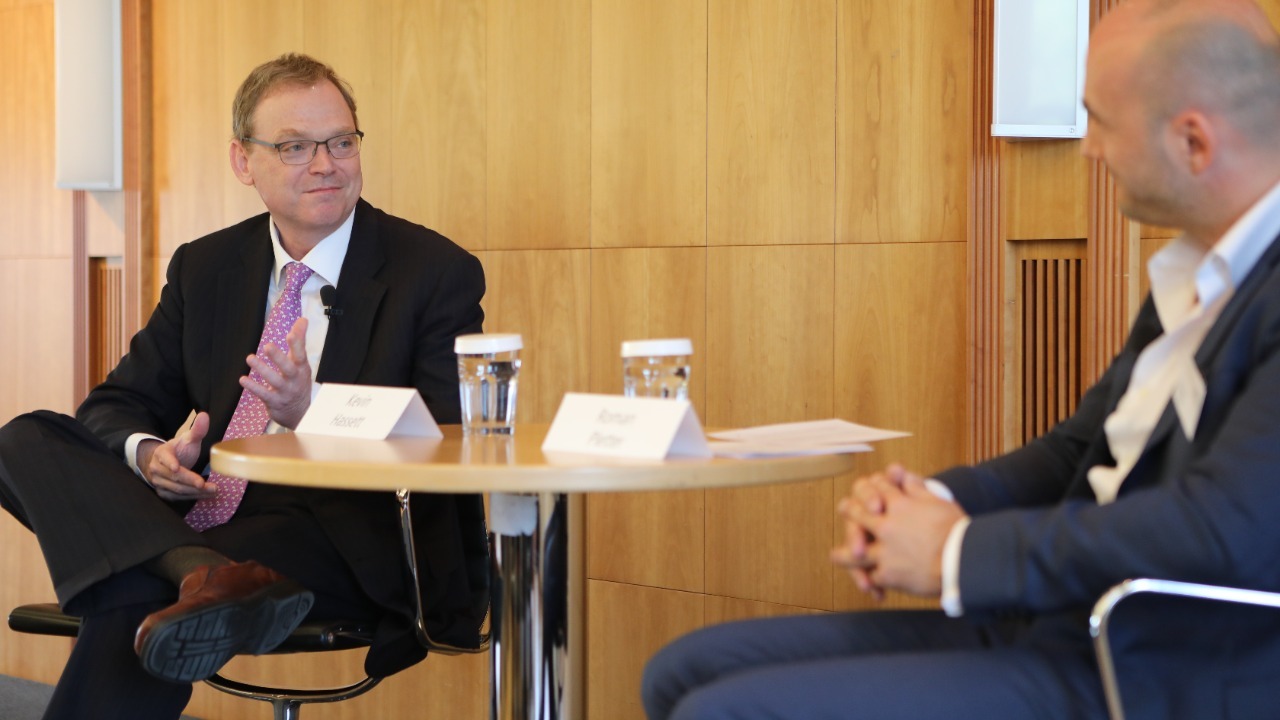
Kevin Hassett is turning up the pressure on the Federal Reserve, arguing that policymakers are moving too slowly to unwind the high interest rates that defined the last inflation fight. His warning that the Fed is “behind the curve” on cuts lands at a moment when growth is strong, markets are jittery and the White House is eager to lock in economic momentum heading into another election year.
I see his critique as more than a routine skirmish over basis points. It is a test of how quickly the Fed should pivot from restraining inflation to protecting growth, and of how much weight central bankers should give to political and market signals when the data are sending mixed messages.
Hassett’s charge: the Fed is moving too slowly
At the heart of Kevin Hassett’s argument is a simple claim: the Federal Reserve waited too long to start cutting and is now trimming rates at a pace that does not match the economy’s cooling inflation backdrop. As a top White House economic voice and a candidate to lead the Fed, he has framed the current stance as overly restrictive, warning that keeping borrowing costs elevated risks choking off an expansion that has otherwise held up better than many expected. In his view, the central bank is not just slightly late, it is materially out of sync with where conditions on the ground already are.
Hassett has used his platform as a Top White House economic advisor to argue that the Fed is not cutting interest rates quickly enough, even as inflation pressures ease and growth remains solid. He has tied that critique to a broader case that lower rates would reinforce the administration’s efforts to sustain hiring and reduce the U.S. trade deficit, positioning monetary policy as a missing piece of a pro‑growth strategy rather than a neutral backdrop.
The NEC director’s case for faster easing
Hassett has sharpened that message in his role as National Economic Council chief, presenting the Fed’s caution as a policy error rather than a mere difference in judgment. From his vantage point inside the West Wing, the economy’s resilience gives the central bank room to move more decisively, and he has suggested that the current trajectory of gradual cuts risks leaving households and businesses stuck with unnecessarily high borrowing costs. I read his comments as an attempt to redefine the debate: instead of asking whether the Fed should cut, he is asking why it is not cutting more aggressively.
As National Economic Council Director Kevin Hassett put it, the Federal Reserve is moving too slowly in cutting rates despite robust U.S. growth, and the Fed’s slower pace of easing ahead risks leaving policy tighter than necessary. By casting the central bank as lagging the data rather than leading it, he is effectively arguing that the traditional “risk management” approach should now tilt toward guarding against an unnecessary slowdown rather than against a resurgence of inflation.
Strong GDP and the Trump agenda
Part of what gives Hassett confidence to push for faster cuts is the strength of the recent growth numbers. He has pointed to third‑quarter GDP as evidence that the economy is expanding solidly even with higher rates, which in his telling means the Fed can afford to ease without immediately reigniting price pressures. I see this as a strategic use of the data: strong output becomes not a reason to keep policy tight, but a buffer that allows for a quicker normalization of borrowing costs.
According to The National Economic Council Director, the third‑quarter GDP data signals that President Donald Trump’s trade agenda is working, with the benefits clearly shown in the data. By linking GDP performance directly to President Donald Trump’s policies, Hassett is not only defending the administration’s economic record, he is also arguing that monetary policy should now complement that strategy rather than restrain it.
Labor market signals and the “behind the curve” warning
Hassett’s critique also leans on labor market indicators that, while still solid, are starting to show subtle signs of cooling. Weekly jobless claims remain historically low, but the direction of travel matters for a policymaker who worries that the Fed could overshoot. In my reading, he is effectively saying that waiting for a clear deterioration in employment before cutting more aggressively would be a mistake, because by the time the damage is obvious it will be harder to reverse.
Recent data showed that claims for unemployment benefits for the week of Dec 20 came in at 214,000, a decrease from the prior week’s 224,000 and less than the Dow Jones forecast. Those figures underscore that the jobs market is still absorbing higher rates, but they also highlight how quickly conditions can shift, which is precisely why Hassett argues that the Fed should not wait for a spike in layoffs before accelerating its easing cycle.
Bond market reaction and the cloudy rate path
Financial markets have been trying to front‑run the Fed’s next moves, and the bond market in particular has treated every new data release as a referendum on the likely pace of cuts. When growth and labor numbers come in stronger than expected, yields tend to rise as traders price in a slower easing path, only to fall back when investors conclude that the central bank will eventually have to respond to softer inflation. I see this push and pull as a sign that markets are not fully convinced by the Fed’s current guidance.
Recently, 10‑year Treasury yields dipped as investors digested stronger GDP figures that, paradoxically, made the future rate path look more uncertain. The move reflected a tug of war between those who think robust growth will keep the Fed cautious and those who believe that, over time, moderating inflation will force policymakers to deliver more cuts than they currently signal, a tension that sits at the center of Hassett’s “behind the curve” warning.
Hassett’s message to markets: the Fed is far behind
Hassett has not limited his criticism to the pace of cuts; he has also suggested that the Fed’s communication is out of step with what markets and the real economy are already anticipating. By arguing that the central bank is far behind the curve, he is effectively telling investors that the current policy stance is an anomaly that will eventually have to be corrected. In my view, that kind of message can embolden traders to bet on a more aggressive easing cycle than the Fed itself is willing to endorse.
In one widely circulated commentary, HASSETT argued that The Federal Reserve Is Falling Far Behind the Curve on Rate Cuts, warning that the pressure on policymakers to act continues to build. By framing the issue in such stark terms, he is signaling to markets that he sees a significant gap between where rates are and where they should be, a gap that could close quickly if the Fed eventually concedes that it misjudged the balance of risks.
Political stakes for the White House and the Fed
Behind the technical debate over basis points lies a more political question: how much should the Fed take into account the White House’s priorities when setting policy. Hassett’s dual role as a senior adviser and a potential Fed chair makes that tension especially visible, because his public comments blur the line between economic analysis and political advocacy. I read his interventions as an attempt to nudge the central bank toward a stance that better aligns with President Donald Trump’s growth‑first agenda.
At the same time, the Federal Reserve is keen to preserve its independence, which means it is unlikely to respond directly to pressure from any administration, even when that pressure comes from someone like Hassett who is steeped in macroeconomic analysis. The more he insists that the Fed is behind the curve, the more central bankers may feel compelled to demonstrate that their decisions are driven by their own reading of inflation, GDP and employment, not by political demands, setting up a delicate balancing act as the next phase of the easing cycle unfolds.
What “behind the curve” means for households and businesses
For households and companies, the phrase “behind the curve” can sound abstract, but the consequences are concrete. If the Fed keeps rates higher than necessary for too long, mortgage borrowers, car buyers and small firms refinancing their debt all pay more than they otherwise would, which can gradually sap spending and investment. I see Hassett’s argument as a warning that this drag is already building beneath the surface, even if headline growth and jobs data still look solid.
When Hassett and others say the central bank is lagging, they are effectively arguing that the cost of money is out of sync with the underlying inflation trend, and that this mismatch will eventually show up in slower hiring, weaker capital spending and more cautious consumer behavior. For a business owner weighing whether to expand a factory or a family deciding whether to move from renting to owning, the difference between a timely rate cut and a delayed one can be the difference between going ahead with a plan or shelving it indefinitely.
The road ahead: data, expectations and Fed credibility
Looking forward, the clash between Hassett’s call for faster easing and the Fed’s more measured approach will be mediated by the data. If inflation continues to drift lower while GDP and employment hold up, the case for quicker cuts will strengthen, and the central bank may find it easier to adjust without appearing to bow to political pressure. If, instead, price pressures prove sticky or growth reaccelerates, policymakers will feel vindicated in their caution, and Hassett’s warnings will look premature.
For now, investors are left to navigate a landscape in which a senior White House figure is publicly arguing that the Fed is behind the curve, while the central bank insists that its path is appropriate given the information it has. As one Kevin Hassett Warns US Is Falling Behind The Curve On Rate Cuts, Report framed it, the interest rate debate is now as much about expectations and credibility as it is about the latest release. I see that tension defining the next chapter of U.S. monetary policy, with every new data point either reinforcing or undermining the claim that the Fed has fallen behind the curve on rate cuts.
More From TheDailyOverview

Grant Mercer covers market dynamics, business trends, and the economic forces driving growth across industries. His analysis connects macro movements with real-world implications for investors, entrepreneurs, and professionals. Through his work at The Daily Overview, Grant helps readers understand how markets function and where opportunities may emerge.

