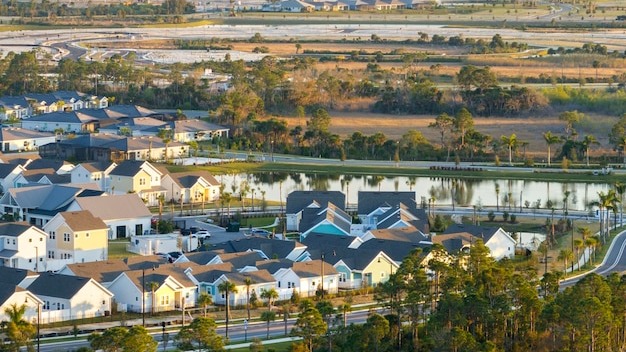
Across the country, renters and would‑be buyers are confronting record prices, scarce listings, and mortgage payments that swallow entire paychecks. The search for a villain has focused on easy targets, from greedy landlords to faceless Wall Street funds, but the evidence points to a more complicated story. America’s housing crisis is the product of policy choices, financial engineering, and demographic shifts that have quietly compounded for decades.
To understand who is really responsible, I look at three overlapping forces: the rules that decide what can be built and where, the money that floods into housing and inflates prices, and the investors and institutions that treat homes as financial assets first and shelter second. Together, they explain why the market is so strained even as some analysts predict a “reset” rather than a crash.
Decades of underbuilding and restrictive rules
The most basic driver of today’s shortage is that The United States simply has not built enough homes. Researchers estimate that the U.S. has a housing shortage of 3.8 m units, a gap that reflects Years of construction lagging behind population and household growth. A detailed overview of the housing crisis in the United States notes that decades of under‑building have produced shortages with national implications, drawing on census data to show how the Median size of a new single‑family home in the United States grew even as supply fell short. That mismatch between bigger houses and too few of them is a structural failure, not a passing cycle.
Policy choices have made that failure worse. Zoning restrictions have, in the words of one synthesis, artificially constrained supply, locking in low‑density neighborhoods and blocking multi‑family buildings even where demand is intense. Many cities have restrictive zoning laws that make it difficult to build apartments or convert existing properties, a pattern that one analysis of the U.S. housing crisis traces to “Many” local rules and Not In My Backyard politics that limit new construction Many. A congressional report adds that Meanwhile, other zoning and land use laws simply block new housing altogether, and that Many of these rules effectively reserve land for standalone single‑family houses on larger lots, shutting out more affordable options Meanwhile.
Local resistance and regulatory costs
When new housing is proposed, it often runs into fierce neighborhood resistance. That resistance to new construction, experts say, is why restrictive zoning and regulatory barriers top the list of forces driving America’s housing crisis, with one account detailing how local opposition slows or kills projects that could ease pressure on prices resistance. Jim Tobin, president and CEO of a major builders’ group, has put a number on it, estimating that regulations can add roughly $94,000 in costs to a typical new home, a burden that ultimately lands on buyers. In practice, that means a starter subdivision can be priced out of reach before a single foundation is poured.
At the federal level, policymakers are only beginning to grapple with how these local rules feed a national affordability crunch. Buddy Hughes, Chairman of the Board of the National Association of Home Builders, told lawmakers that The United States is facing a housing affordability crisis and that layers of regulation unnecessarily make housing more expensive, underscoring how permitting, fees, and mandates stack up on every project Buddy Hughes. A separate policy review warns that Decades of restrictive zoning and local control have created a long list of root causes that current proposals from the Trump administration fail to address, even as those proposals risk turning the housing crisis into a retirement crisis by pushing households to tap savings to cover rising rents Decades of. When I look at that record, I see a bipartisan failure to confront the local veto power that keeps supply chronically tight.
Cheap money, high rates, and a financialized market
Rules alone do not explain why homes have become so expensive so quickly. The financial plumbing of the housing market has also been distorted. One analysis argues that Artificially increasing the amount of capital available for the residential home mortgage market and distorting interest rates has driven the priciest housing in history, as years of ultra‑low borrowing costs encouraged buyers to bid up prices and investors to chase yield in real estate Artificially. Another economist notes that Baby boomers paid just 40% of what younger generations are paying today for the exact same house, adjusted for inflation, a gap that reflects how credit expansion and asset inflation have outpaced wage growth. Think about that, the author urges, as a measure of how policy choices have shifted wealth toward existing owners.
Now the pendulum has swung to the other extreme. Elevated mortgage rates, coupled with already high home prices, are effectively pricing out millions of households, particularly first‑time buyers who face stagnant wage growth relative to housing costs Elevated. Since the pandemic, home price appreciation has outpaced wage growth, making starter homes less attainable for many, as Bill, a senior investment strategist for research at U.S. Bank Asset Management Group, has observed Since the. Analysts warn that the U.S. housing market now faces a potential price correction as home prices reach unsustainable, bubble‑like levels, driven by years of cheap money and speculative demand that could go bust in 2026 Sep. Over time, though, the economy and markets are at least as impacted by demographic shifts as by interest rates, a point that regular market commentary makes when it notes how aging populations and smaller households reshape demand with implications for investors and policymakers alike Over.
Investors, institutions, and the shrinking starter home
Into this constrained, financially charged market have stepped powerful investors. Increased investor activity is not something everyone has welcomed with open arms, and Both the media and politicians have decried the growing role of institutional investors in the housing market, especially in entry‑level segments Increased. One nonprofit that tracks these trends describes How institutional investors are contributing to the housing crisis by purchasing affordable homes and removing so‑called “NOAHs” (naturally occurring affordable housing) from the market, citing research that According to The Brookings Institution, homeownership in Ameri has been eroded in neighborhoods where corporate buyers are most active How. The Bigger Picture For investors like Blackstone, scale is an advantage that allows them to move quickly when opportunities arise, consolidating large portfolios as one of the largest corporate landlords in the housing market Bigger Picture For. When those portfolios target starter homes, they directly compete with families who plan to live in the properties rather than use them to generate financial returns.
Commentators have started to connect these dots more bluntly. Guess who is really to blame for America’s housing crisis, one recent opinion piece asks, before pointing out that Home prices keep rising and that One reason is that today’s houses are bigger and more expensive than the modest bungalows of previous generations, even as investors treat them as yield machines Guess. A broader overview of America’s affordability problem notes that the crisis has spread geographically beyond booming coastal metropolises like New York and San Francisco and also up the income scale, ensnaring middle‑class households that once took homeownership for granted New York and. When I weigh that evidence, I do not see investors as the sole culprit, but I do see how their strategies magnify the damage done by scarce supply and easy credit.
The “Great Housing Reset” and what comes next
More From TheDailyOverview
*This article was researched with the help of AI, with human editors creating the final content.

Elias Broderick specializes in residential and commercial real estate, with a focus on market cycles, property fundamentals, and investment strategy. His writing translates complex housing and development trends into clear insights for both new and experienced investors. At The Daily Overview, Elias explores how real estate fits into long-term wealth planning.