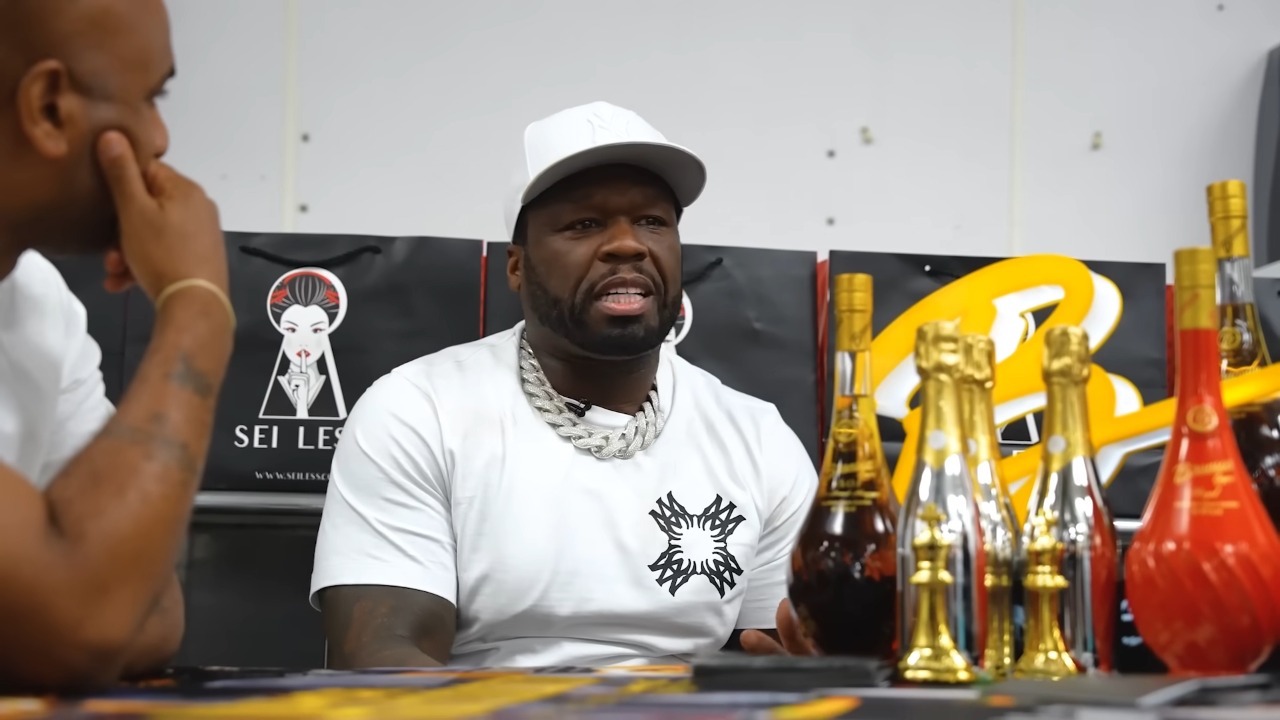
In a corner of the Deep South that national investors often skip, Curtis “50 Cent” Jackson has quietly assembled one of the most aggressive celebrity real estate plays in the country. Instead of chasing luxury towers in coastal hubs, he is buying vacant lots, historic facades and tired civic buildings in a mid‑sized Louisiana city that has spent years fighting population loss and economic drift. His bet is simple and unusually bold: turn ignored blocks into a self‑contained entertainment machine that can mint content, jobs and long‑term cash flow at the same time.
What looks from the outside like a string of opportunistic deals is, up close, a tightly structured push to control land, tax incentives and cultural narrative in downtown Shreveport. By pairing a headline‑grabbing $50 million commitment with dozens of smaller acquisitions, Jackson is trying to prove that a rapper can build a durable property empire in a place Wall Street rarely maps, and do it by treating neglected streets as undervalued assets rather than lost causes.
The overlooked city at the center of 50 Cent’s bet
To understand why this strategy matters, I start with the city itself. Shreveport, Louisiana is a regional hub on the Red River, long tied to oil, casinos and the military, but it has struggled to keep young residents and private capital. Downtown blocks are dotted with handsome but underused buildings, the kind of streetscape that can either slide into deeper vacancy or flip into a dense entertainment core if someone is willing to take the risk. Jackson is effectively wagering that the latter is still possible, and that a celebrity‑driven studio district can reprice the entire grid.
His focus is not on the city’s leafier suburbs but on the older commercial spine, where civic landmarks, small businesses and empty storefronts sit side by side. Mapping his purchases against places like the Shreveport Municipal Auditorium and the nearby Central Business District, it is clear he is not just buying random parcels. He is clustering around civic and cultural anchors, betting that proximity to historic venues, government offices and riverfront infrastructure will make his holdings more valuable once the district fills in.
From rapper to landlord: how the portfolio took shape
The shift from touring artist to major landlord did not happen overnight. Reporting shows that Since May 2024, Jackson has been on a steady buying spree across downtown Shreveport, Louisiana, targeting both vacant land and existing structures. Over the past two years, Over the same period he has also negotiated leases for civic properties, giving him control over key buildings without having to own every brick outright. It is a hybrid model that lets him scale quickly while keeping capital free for construction and production.
By late 2025, one account estimated that 50 Cent owns ‘in the range of 20 properties’ in this Louisiana city and is believed to be its largest private owner of downtown real estate. Another report framed him as one of the largest property owners in the core, underscoring how quickly his footprint has grown relative to local landlords. That scale matters: once an investor controls that many addresses in a compact grid, they can shape tenant mix, event programming and even the feel of the streets in a way that smaller owners simply cannot.
The $50 million headline number and what it really buys
The figure that grabbed national attention was a $50 million investment package tied to Jackson’s plan to build out a full entertainment district. City officials have treated that $50 m commitment as both a development blueprint and a marketing tool, signaling to other investors that if they are willing to follow his lead, public incentives will be on the table. For Jackson, the number is less about a single project and more about a multi‑year pipeline of studio facilities, hospitality concepts and public‑facing attractions that can feed each other.
Local analysis of Shreveport Investment notes that 50 Cent has made it his mission to revive the area, treating the $50 figure as a starting point rather than a cap. The structure of the deal matters: instead of a one‑off subsidy, the city is effectively tying tax breaks and infrastructure support to his ability to generate film, television, sports and entertainment activity. That aligns with his own business model, which depends on a steady flow of G‑Unit productions to keep soundstages, hotels and restaurants full.
Buying cheap, thinking big: Jackson’s ground game
Behind the big numbers is a granular acquisition strategy that looks more like a local developer’s playbook than a celebrity vanity project. One report details how He purchased a 150-foot-by 150-foot vacant lot for just $12.50 per square foot, a total of $281,250, according to The Shreveport reporting. That kind of pricing is only possible in markets that national capital has largely written off, and it gives Jackson room to invest heavily in construction and placemaking while still keeping his basis low.
He has also been willing to move quickly when opportunities surface. Coverage of his expansion notes that There was a new development in early November when Curtis “50 Cent” Jackson made another downtown purchase, adding to the list of buildings he has acquired so far. That pattern, scooping up properties as they hit the market, is how he has gone from outsider to central player in the local real estate ecosystem in barely two years.
G‑Unit Studios and the entertainment district blueprint
Real estate is only one side of the equation. Jackson’s real leverage comes from his ability to fill those buildings with cameras, crews and audiences. Earlier in the buildout, local television reported that Curtis 50 Cent Jackson signed his leasing agreement to create Gunit Studios in Shreport, a cornerstone move that signaled he was not just land‑banking but actively preparing to shoot. The studio brand, G‑Unit Film and Television Louisiana, has already spent at least $3 million in the city since 2023, according to separate reporting, giving the project a production track record rather than just a promise.
City leaders have now gone further, granting Cent Approved For Downtown Entertainment District In Shreveport status that allows him to transform Shrevep’s core into a designated zone for film, nightlife and tourism. Another account notes that Shreveport, LA — Curtis “50 Cent” Jackson has secured city council approval to pursue a $5‑billion‑scale transformation modeled on Tyler Perry’s studio empire in Atlanta. The comparison to Tyler is not accidental; Jackson is explicitly trying to replicate that vertically integrated campus model in a smaller, cheaper market.
Social media, swagger and the optics of buying a city
Jackson has not left the storytelling to local officials. On his own channels, he has framed each acquisition as another step in a long march toward dominance. In one widely shared clip, Rapper 50 Cent is set to purchase another property in downtown Shreveport, with the deal in negotiation but expected to close soon after the previous owner placed it on the market. The message is clear: he is not waiting for perfect conditions or outside validation, he is simply buying what he wants and daring others to keep up.
Short‑form videos have amplified that posture. One widely circulated segment noted that 50 Cent is expanding his entertainment empire in Shreveport Louisiana and that the city continues to cut him some incredible deals to support that growth. By broadcasting the favorable terms and the speed of his expansion, Jackson is both burnishing his own brand and putting subtle pressure on local leaders to keep the pipeline of approvals and incentives flowing.
Tax breaks, incentives and the politics of ignored markets
None of this would be possible without a city government willing to bend its incentive playbook around a single investor. Officials have been explicit that, In order to support 50 Cent’s ambitions to create a hub for film, television, sports and entertainment much as Tyler did in Atlanta, they are prepared to say, if you bring projects here, we will incentivize you. That has included discussions of a supplemental 2% tax structure tied to the entertainment district, as well as breaks on certain city‑owned properties that Jackson is leasing or renovating.
From Jackson’s perspective, these tools are not handouts but part of the basic math of building in a place with lower rents and thinner private capital. Since 2023, Since he set his sights on Shreveport, Unit Film and Television Louisiana has been using those incentives to stretch production budgets and justify the relocation of shoots that might otherwise land in Atlanta or New Orleans. The politics are delicate, but the trade‑off is clear: the city is betting that foregone tax revenue today will be outweighed by jobs, tourism and a revived tax base once the district is fully built out.
Jobs, shoots and the promise of a new production hub
For residents, the most tangible test of Jackson’s strategy will be whether it delivers steady work and visible activity on the streets. State officials have already signaled that Film Louisiana expects multiple 50 Cent projects coming in 2026, a pipeline that could keep crews, caterers and local vendors busy for months at a time. If those productions stack up, they will also justify more permanent investments in soundproof stages, post‑production suites and training programs for local talent.
Jackson’s own rhetoric has leaned heavily on that jobs narrative. Coverage of his plans notes that Nov reporting framed his holdings as both a personal empire and a potential engine for thousands of positions if the district reaches full build‑out. The question is not whether he can bring a few headline projects to town, but whether he can sustain a rhythm of shoots and events that turns Shreveport into a reliable node in the national production network rather than a one‑off curiosity.
Why ignored markets may be the next frontier for celebrity investors
Jackson’s Louisiana experiment hints at a broader shift in how celebrity capital might move in the next decade. Instead of competing for trophy assets in New York or Los Angeles, he is using his brand to unlock value in places like downtown Shreveport, where a cluster of underused civic and cultural sites, from the Caddo Parish Courthouse to the Shreveport Convention Center, can be reimagined as part of a larger entertainment ecosystem. The fact that he can buy a 150-foot lot for $12.50 per square foot and still talk credibly about a Tyler‑scale studio model shows how much room there is to experiment outside the usual coastal corridors.
Other ignored markets are watching closely. Regional leaders from nearby parishes and cities, including those anchored by institutions like Louisiana State University Shreveport and the Barksdale Air Force Base, see in Jackson’s playbook a template for how to court high‑profile investors without ceding total control. If his $50 million bet pays off, it will not just validate one man’s property empire, it will rewrite the map of where cultural infrastructure can live in the United States and how much overlooked downtowns are really worth when someone is willing to think bigger than the vacancy rate.
More From TheDailyOverview

Elias Broderick specializes in residential and commercial real estate, with a focus on market cycles, property fundamentals, and investment strategy. His writing translates complex housing and development trends into clear insights for both new and experienced investors. At The Daily Overview, Elias explores how real estate fits into long-term wealth planning.

