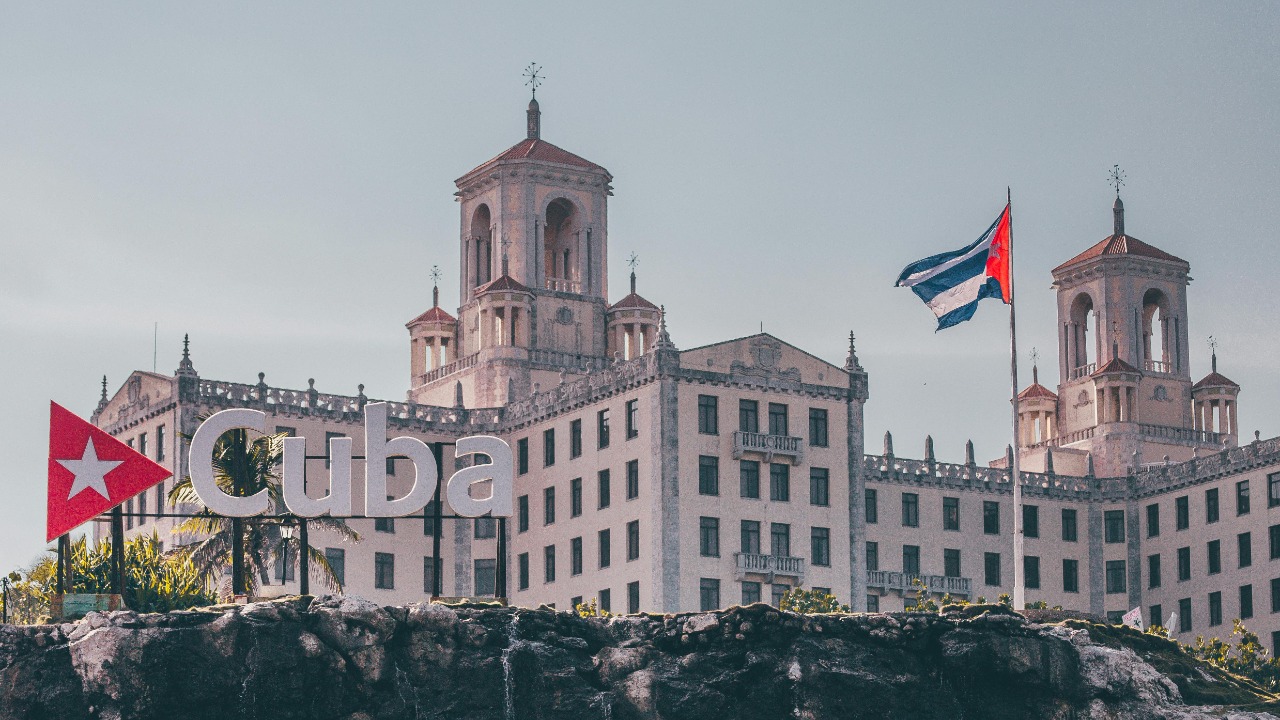
Talk of a rapid regime change in Cuba under President Donald Trump is no longer a fringe idea, it is an explicit policy goal that markets are starting to price in. A swift political shift on the island could jolt U.S. stocks, from airlines and cruise operators to telecoms and defense names, as investors reassess both risk and opportunity in America’s closest Caribbean neighbor. I see a scenario where a Cuba “takeover” narrative, even short of full intervention, becomes a volatility event that tests how far Wall Street believes Washington is willing to go.
The stakes are unusually high because Cuba sits at the intersection of geopolitics, sanctions law and tourism economics, and each of those channels feeds directly into listed U.S. companies. If the Trump administration turns regime change rhetoric into concrete steps, the shock to sentiment could be immediate, even if the economic payoff takes years to materialize.
From rhetoric to roadmap: how serious is Washington about Cuba?
The Trump administration has moved from vague hostility toward Havana to a defined objective of ousting the current leadership in Cuba by year end. According to one account, officials are “aggressively pursuing regime change in Cuba by the end of the year,” with the effort framed as a follow on to the capture of Venezuela’s Nicolás Maduro and backed by a sense that the window to act is closing, a push described by Investing. That same reporting notes that The Trump team sees Cuba as the next domino after Venezuela, suggesting a continuity of strategy rather than a one off outburst.
Trump himself has reinforced that narrative, reportedly declaring after Maduro’s fall that “Cuba is ready to fall,” a phrase that signals not just confidence but intent toward Cuba. Yet analysts quoted in that same context caution that what may ultimately “save” Havana from direct U.S. intervention is its limited economic appeal compared with Venezuela’s oil wealth, a reminder that political will still has to contend with cost benefit calculations in Washington.
Strategic chessboard: Cuba as a security and sanctions flashpoint
Behind the regime change talk lies a deeper strategic goal, to end Cuba’s role as a staging ground for U.S. adversaries. Policy specialists argue that any new approach would “prioritize concrete outputs,” including finally shutting down the island’s function as a platform for geopolitical rivals and dealing with figures granted refuge on the island, a set of objectives laid out in detail for Cuba. That framing turns the country into a security asset or liability, not just a tourism story, which is exactly the kind of shift that can reprice defense, cybersecurity and surveillance stocks.
At the same time, Trump has already tightened the legal perimeter around Havana through the COINS Act, which codifies and expands outbound investment controls. The law explicitly adds Cuba to a list of “country of concern” jurisdictions alongside China, Hong Kong and Macau, a designation that raises the bar for U.S. capital and technology flows into the island, as spelled out in the COINS Act. For markets, that combination of security framing and legal constraint means any sudden thaw or takeover scenario would not be a clean opening, it would be filtered through a sanctions architecture that investors now have to model explicitly.
Tourism, airlines and cruise lines: the fast money trade
If there is a near term “winner” from a friendlier post regime change environment, it is the travel and hospitality complex. Analysts tracking the sector argue that the travel and hospitality industry could be the most immediate beneficiary of any policy that opens Cuba to U.S. tourism and business, with U.S. carriers able to ramp up flights into Havana and other provincial airports quickly, a prospect highlighted in recent coverage of Cuba. That logic extends to cruise operators that once marketed Havana as a marquee port of call and could revive those itineraries if sanctions ease.
Hotels could also potentially expand management contracts or reenter the Cuban market, with some reports flagging that brands which previously exited would be eager to return, alongside cruise operators such as Norwegian Cruise Line among others, a set of opportunities described in detail for Hotels. For equity investors, that points to a classic reopening trade, where airline, lodging and cruise stocks rally on expectations of new routes and room nights long before the first American tourist checks into a renovated Malecón hotel.
Telecoms, engagement economics and the cost of reversal
Beyond tourism, a more open Cuba would unlock demand in sectors that have been starved of capital and technology. One analysis of engagement argues that Business Monitor International estimates that the Cuban telecommunications market will grow 24% this year and will reach a subscriber base that attracts global carriers, with several U.S. firms already offering roaming in Cuba, a growth profile laid out by Business Monitor International. For U.S. telecom and infrastructure providers, regime change that leads to regulatory clarity could turn that forecast into concrete contracts for towers, fiber and 5G equipment.
There is also a clear price tag if Washington swings back toward isolation instead of engagement. Researchers who modeled a rollback of U.S. policies on Cuba concluded that a reversal would cost the U.S. economy $6.6 billion and affect 12,295 American jobs over a multi year period, largely through lost travel, agriculture and services exports, a warning quantified in a study of $6.6 billion. For markets, that figure is a reminder that the Cuba debate is not just about Havana’s future, it is about measurable gains or losses for American workers and listed companies.
Historical playbook and proximity risk: what past openings tell investors
Investors do not have to guess entirely in the dark about how a Cuba shift might play out, there is a recent historical template. Under President Barack Obama, Washington took a first step toward normalization with Havana, easing restrictions on educational exchanges and even some elements of marketing trips, a policy evolution documented in a study of the Obama era. That opening triggered a flurry of airline route announcements, hotel management deals and telecom agreements, even though the embargo remained largely intact, showing how quickly corporate America can move when the political signal turns green.
Geography amplifies the market impact. Research on conflicts and crises in the Western Hemisphere finds that proximity to the United States tends to magnify financial spillovers, with one analysis noting that the average line starts indexed at 95 and then slopes upward over the following 24 months as markets digest the shock, a pattern described in detail using the benchmark of 95. Cuba, sitting just 90 miles from Florida, is the textbook case of that proximity effect, which is why any sudden escalation or breakthrough is likely to reverberate through U.S. equities more than a similar event in a distant region.
More From TheDailyOverview
*This article was researched with the help of AI, with human editors creating the final content.

Grant Mercer covers market dynamics, business trends, and the economic forces driving growth across industries. His analysis connects macro movements with real-world implications for investors, entrepreneurs, and professionals. Through his work at The Daily Overview, Grant helps readers understand how markets function and where opportunities may emerge.

