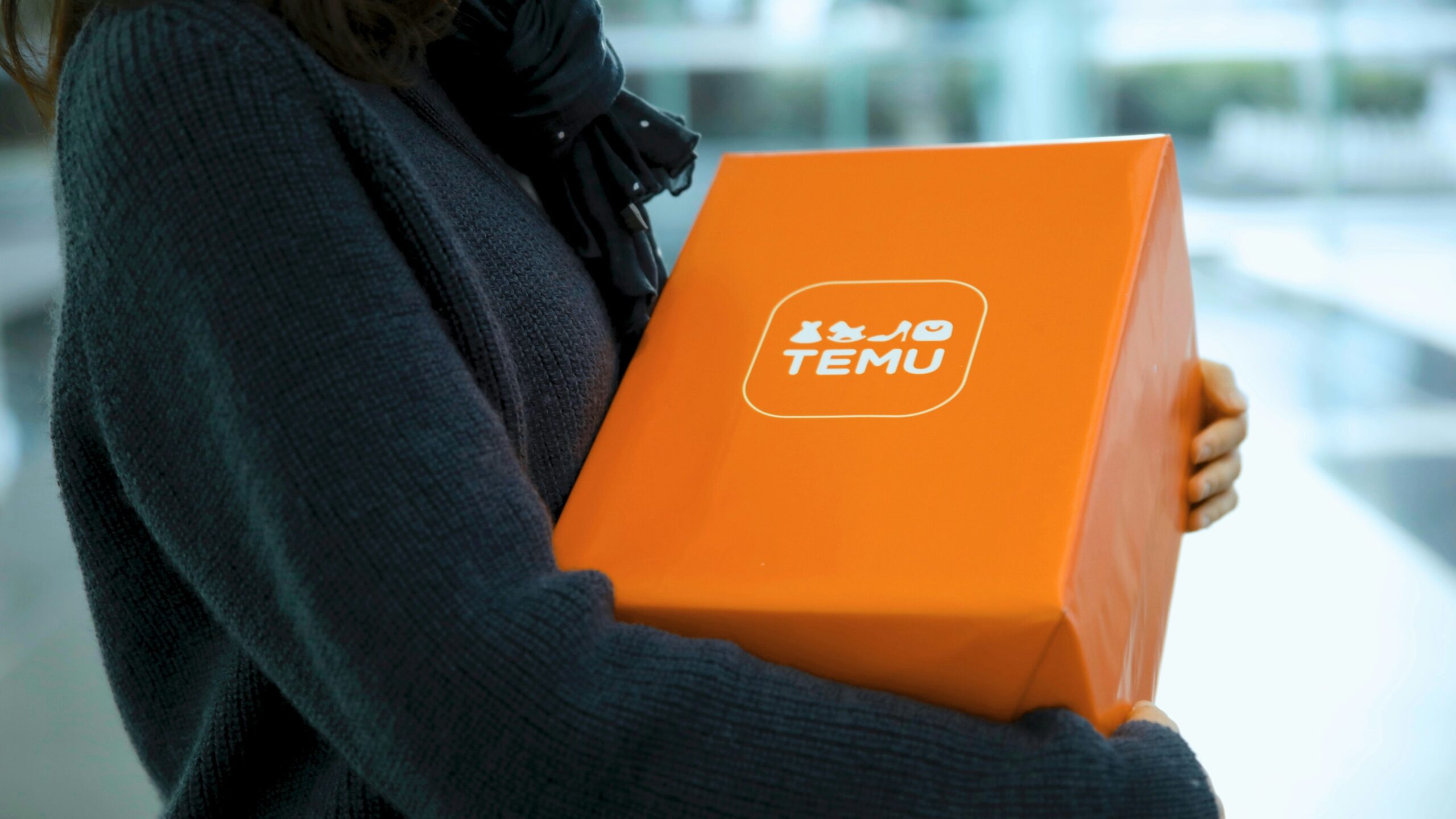
The White House’s decision to suspend duty-free treatment for low-value imports strikes directly at the business model that made Temu one of the fastest-growing shopping apps in the United States. By eliminating the so-called de minimis exemption, which allowed packages valued under $800 to enter the country without customs duties, the administration has removed the single largest cost advantage that Chinese direct-to-consumer platforms relied on to undercut domestic retailers. For Temu, a company built almost entirely on shipping inexpensive goods one parcel at a time from Chinese warehouses, the policy change amounts to an existential threat and helps explain why brutal tariffs are accelerating Temu’s collapse in the U.S.
The $800 Loophole That Built an Empire
Temu’s rapid U.S. expansion depended on a provision of trade law known as Section 321, which set an $800 threshold below which imported goods faced no tariffs and minimal customs scrutiny. As explained in a Department of Homeland Security release on the front-line customs workforce, the original aim of this regime was to streamline processing for travelers and small shippers, not to underwrite a global discount-retail revolution. But as cross-border e-commerce exploded, platforms like Temu turned the exemption into a high-volume logistics strategy, shipping millions of individual parcels per day directly to American doorsteps while paying zero import duties on nearly all of them.
The scale of this strategy is staggering. According to Customs and Border Protection trade statistics, the number of low-value shipments surged from 134 million in 2015 to 1.36 billion in 2024, a trend highlighted in CBP’s own enforcement brief on the end of the de minimis loophole. That tenfold increase over less than a decade reflects not just growing consumer demand for cheap imports but the deliberate structuring of supply chains to exploit the exemption. Each of those 1.36 billion parcels bypassed much of the tariff system that traditional retailers and their suppliers must navigate, creating a pricing gap that platforms like Temu used to attract budget-conscious shoppers and to pressure competitors that rely on containerized imports and domestic warehousing.
How the New Tariff Regime Works
The White House policy document issued in July 2025 does not simply raise rates on a handful of product categories. It establishes a nationwide suspension of duty-free de minimis treatment for all countries, as laid out in the presidential action formally suspending de minimis across the board. Under the new rules, every low-value parcel entering the U.S. now faces some form of customs assessment. The policy lays out two main duty mechanisms: a per-package flat fee and an ad valorem percentage calculated on the declared value of the goods. Shippers must also file origin declarations for each package, adding a layer of compliance cost and processing time that did not previously exist for sub-$800 shipments.
For a platform that ships items often priced between $2 and $15, even a modest per-package duty can erase profit margins entirely. A flat fee of several dollars on a $5 phone case or a $3 hair clip does not just reduce Temu’s margin; it can double the effective cost of the product before it reaches the buyer. While an ad valorem duty may be less punishing for slightly higher-priced goods, the origin-declaration requirement introduces friction at every step. CBP’s snapshot of a typical day in 2024 shows officers processing millions of parcels daily; adding documentation requirements to that volume will inevitably slow clearance times and raise logistics costs for high-volume shippers. In effect, the regulatory environment now favors consolidated freight and established customs brokerage over the atomized, parcel-by-parcel model that Temu perfected.
Enforcement Pressure and the Fentanyl Connection
The policy rationale extends well beyond trade economics. Enforcement agencies have long argued that the flood of uninspected de minimis parcels created a security gap. DHS data has linked the surge in low-value shipments to seizures of counterfeit goods and narcotics, including fentanyl precursors, that moved through the same customs channels as legitimate e-commerce orders. The administration framed the de minimis suspension partly as a border-security measure, tying it to the broader effort to disrupt fentanyl supply chains originating in China. The targeted cutoff for China and Hong Kong, which took effect in early May 2025, months before the broader global suspension, underscored that Chinese platforms were the primary focus of the crackdown.
CBP has stated publicly that it is ready to enforce the end of the de minimis exemption, and the agency’s posture suggests that compliance will not be optional or loosely monitored. In its enforcement communications, CBP emphasizes that the same officers who screen for trade violations also confront illicit flows of synthetic drugs, a dual mission that heightens scrutiny on small parcels. The combination of duty collection and enhanced screening means that Temu’s core logistics model, which depended on speed and minimal friction at the border, now faces resistance at every point of entry. Competitors with U.S.-based warehousing and established customs brokerage relationships, such as Amazon, are far better positioned to absorb these changes because their goods already clear customs in bulk before reaching distribution centers, allowing them to spread compliance costs across larger shipments.
Consumer Costs and Broader Economic Fallout
The immediate effect for American shoppers is straightforward: prices on Temu will rise. The platform has limited ability to absorb new per-package duties without passing costs to buyers, and its value proposition has always rested on being the cheapest option available. Once prices climb even modestly, the gap between a Temu listing and a comparable product on Amazon or Walmart narrows enough to shift purchasing behavior. Shoppers who tolerated longer shipping times and uncertain quality did so primarily because of rock-bottom prices. Remove that incentive, and the calculus changes fast, particularly for lower-income households that had come to rely on Temu for basic household items, clothing, and small electronics.
The tariff shock also lands in an economy already showing signs of strain. Research from university economists has described growing pessimism among consumers, driven by higher borrowing costs and uncertainty over trade policy, with tariffs feeding into rising inflation expectations. Higher prices on ultra-cheap imports may not move headline inflation as dramatically as tariffs on autos or steel, but they do erode purchasing power at the margin. For millions of Temu users, the loss of extreme discounts on everyday goods will feel like yet another squeeze on already tight budgets, even as domestic retailers argue that the playing field is finally being leveled after years of competing with untaxed rivals.
Temu’s Strategic Options in a Post-De Minimis World
For Temu, the end of de minimis is not the end of the road, but it forces a fundamental strategic rethink. One option is to pivot toward localized inventory, leasing or building U.S. warehouses and importing goods in bulk, as more traditional retailers do. That would allow Temu to clear customs at the container level, potentially benefiting from economies of scale and more predictable duty treatment. However, this approach demands heavy capital investment and undercuts the asset-light model that allowed the company to grow so quickly. It also requires deeper relationships with customs brokers and logistics providers that specialize in navigating the complex tariff schedule documented in CBP’s broader trade statistics, a very different skill set from simply optimizing app downloads and user engagement.
Another path is to shift more of the duty burden onto third-party sellers, effectively reclassifying Temu as a marketplace rather than a retailer of record. In practice, though, small manufacturers and exporters in China are even less equipped than Temu to handle U.S. customs compliance, and pushing duties downstream could drive many of them off the platform. Temu could also try to lean into higher-margin categories (such as branded electronics accessories or home goods) where a few extra dollars in duties have less impact on demand. But that strategy risks diluting the app’s identity as a place for ultra-cheap finds. Meanwhile, the company must navigate increasing reputational scrutiny, with critics questioning whether its model was ever sustainable without what many policymakers now describe as a loophole in border enforcement.
However Temu responds, the broader implication of the de minimis suspension is clear: the era of frictionless, duty-free micro-imports is over. For consumers, that means fewer shockingly low prices and a reversion toward more conventional retail dynamics, where shipping times, product quality, and customer service matter as much as price. For policymakers, the move represents a bet that tighter border controls and a more level competitive field are worth the trade-off in consumer surplus. And for cross-border platforms everywhere, Temu’s scramble to adapt is a warning that regulatory arbitrage can be a powerful growth engine, until the rules change.
More From The Daily Overview
*This article was researched with the help of AI, with human editors creating the final content.

Grant Mercer covers market dynamics, business trends, and the economic forces driving growth across industries. His analysis connects macro movements with real-world implications for investors, entrepreneurs, and professionals. Through his work at The Daily Overview, Grant helps readers understand how markets function and where opportunities may emerge.

