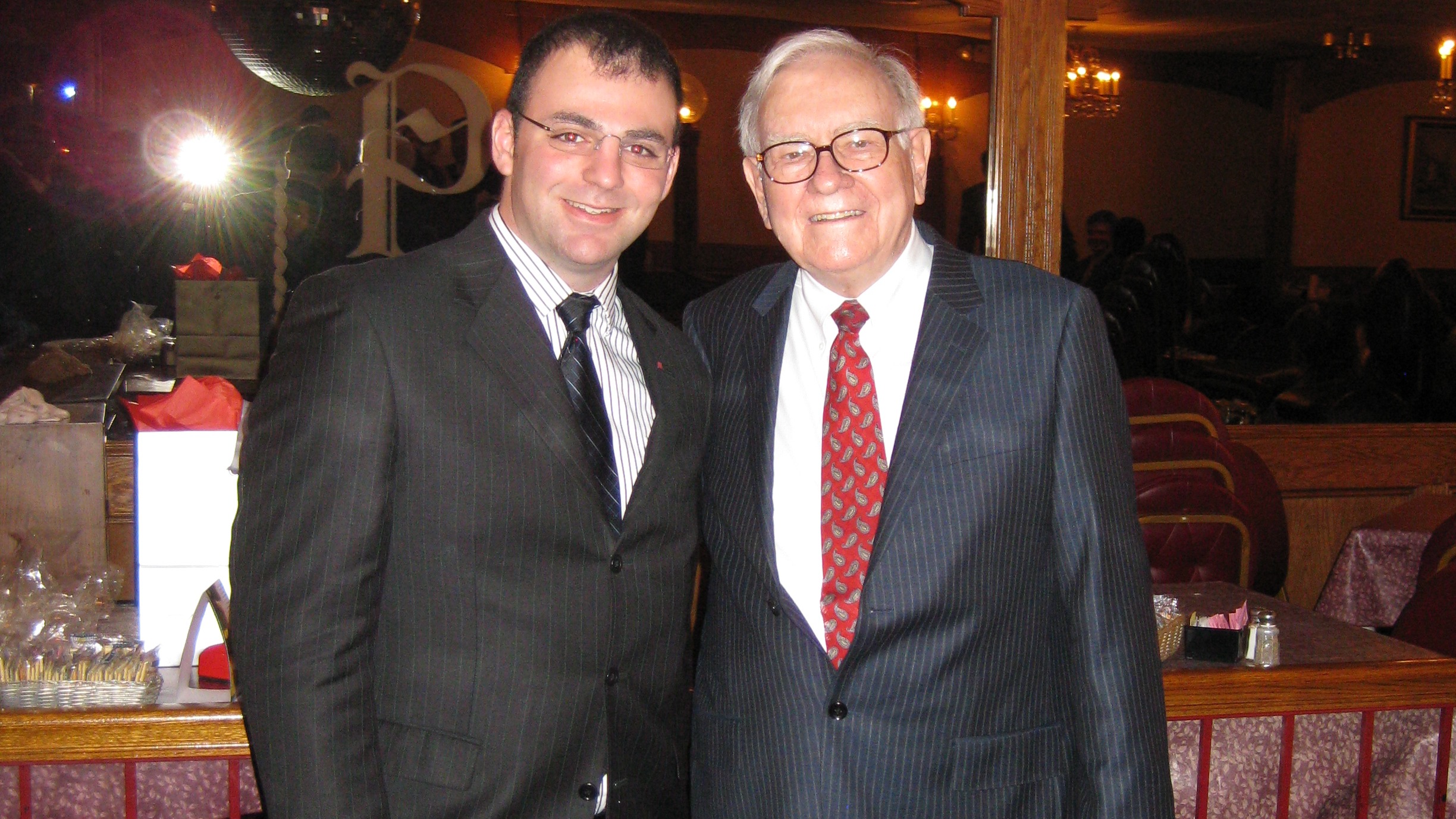
Copying Warren Buffett a decade ago was not a thought experiment for Wall Street, it was a live option for any investor willing to buy the same stocks he did and sit tight. If I had simply mirrored his flagship vehicle in 2016, the gap between my net worth today and the one I actually have would be measured in six figures for even modest starting sums. The numbers behind Berkshire Hathaway’s performance, and the specific bets that powered it, show just how much richer a disciplined Buffett follower would be.
What buying Berkshire in early 2016 would look like today
The cleanest way to “copy Buffett” in 2016 was to buy Berkshire Hathaway itself and let Warren Buffett and his team allocate capital on my behalf. Berkshire Hathaway closed at $129.77 on Jan. 29, 2016, a level that reflected decades of prior compounding but still left plenty of room for future gains as Berkshire Hathaway Stock Continued To Rally. An investor who put, say, $10,000 into the stock at that $129.77 price effectively hired Buffett’s entire operation, from insurance float to railroad cash flows, for less than the cost of a midrange used car.
Over the following years, Berkshire Hathaway kept climbing as its collection of operating businesses and equity stakes grew in value and the market began to talk about the possibility of a $1 trillion market cap. The simple act of buying and holding Berkshire Hathaway in that 2016 window, rather than trading in and out of hot themes, would have turned a five-figure stake into a significantly larger nest egg by early 2026, even before counting any tax advantages from low turnover. That is the core of the “how much richer” story: a single, diversified holding that quietly compounded while many trendier names came and went, as highlighted by the long arc of Berkshire Hathaway.
How Berkshire stacked up against the S&P 500
To understand what copying Buffett really bought me, I have to compare Berkshire’s performance with the broad market that most retirement savers use as their benchmark. Over the past two decades, Berkshire Hathaway and the 500 have traded periods of outperformance, but Berkshire’s ability to weather shocks has been a defining feature. Over the long sweep, Berkshire Hathaway and the index have “danced a complex tango” in returns, with Berkshire’s diversified operating base and fortress balance sheet underscoring its resilience against market fluctuations that periodically rattled the 500, as shown in long term analyses of Berkshire Hathaway and.
Looking at more recent performance, particularly over the last three years from October 2021 to October 2024, Berkshire Hathaway has held its own against the S&P 500 despite a backdrop of inflation, rate hikes and tech-driven rallies. Analyses that are Looking at this period show Berkshire Hathaway delivering annualized returns that sit right alongside the index, a reminder that the conglomerate is no longer the small-cap rocket ship it once was but still a formidable compounder. For an investor who bought in 2016, that means the “Buffett premium” has not come from wild swings or speculative surges, but from steady, benchmark-level gains with a risk profile shaped by insurance, railroads and utilities rather than meme stocks, as reflected in comparative studies of Berkshire Hathaway.
The Apple effect: Buffett’s 2016 pivot that supercharged returns
The real kicker for anyone who mirrored Buffett in 2016 is not just owning Berkshire, but owning what Berkshire bought that year. Apple was the pivotal move. Apple was ripe when Buffett took his first bite of Apple in 2016, a decision that looked cautious at the time because he had long avoided high-profile tech stocks. Since that initial purchase, Apple has generated returns of almost 700% for Berkshire, turning what began as a large but conventional position into a cornerstone of the conglomerate’s equity portfolio and a major driver of its market value.
For a small investor copying that allocation through Berkshire, the Apple effect has been transformative. Instead of trying to time Apple directly, I would have captured that almost 700% surge indirectly, with Buffett and his lieutenants handling the sizing and the patience. By the end of 2023, Apple had become a dominant holding inside Berkshire, illustrating how one well-timed, high conviction decision can reshape a portfolio’s trajectory. Analyses of Buffett’s holdings describe how the legendary investment in Apple sits alongside other long term winners, but it is Apple that stands out as the emblem of his willingness to evolve, as detailed in breakdowns of Apple.
Inside the Buffett playbook: concentration, patience and “true alpha”
Copying Buffett in 2016 was not just about stock tickers, it was about adopting his philosophy of concentration and patience. Portfolio studies that dig into his holdings talk about Jul and frame the analysis around Uncovering True Alpha and Where the Magic Happens, arguing that the ultimate test of an active manager is the ability to generate returns above a passive benchmark after costs. In Buffett’s case, that “true alpha” has come from a handful of monumental wins, like Apple, that more than offset a long tail of smaller, slower moving positions, a pattern that any investor who mirrored Berkshire would have benefited from.
What stands out when I look at his portfolio is how comfortable he is letting winners run instead of constantly trimming them to rebalance. The legendary investment in Apple is a prime example, but the same mindset applies across Berkshire’s mix of insurers, industrials and consumer brands. Analyses of his holdings show that while many positions are modest, his big wins are monumental, and that asymmetry is exactly what most individual investors struggle to replicate on their own. By buying Berkshire in 2016, I would have outsourced that discipline to a manager whose entire framework is built around letting compounding do the heavy lifting, as highlighted in research on Uncovering True Alpha.
What the numbers say about wealth, compounding and ordinary investors
To put the wealth impact in perspective, it helps to zoom out from Berkshire’s ticker and look at what Buffett’s fortune represents on a per person basis. According to the Population Clock at the U.S. Census Bureau, there are currently 342,788,829 Americans alive today (give or take a small margin), a figure that underscores just how concentrated Buffett’s wealth is relative to the broader population. Analyses that lean on the Population Clock and Census Bureau data use that 342,788,829 number to illustrate how, if his Berkshire Hathaway fortune were spread evenly across all Americans, each person would receive a meaningful sum, a thought experiment that highlights both the scale of his success and the power of long term compounding.
Those same breakdowns estimate that Buffett’s track record translates into roughly a 13.68% return per year over his investing lifetime, a rate that, if sustained, turns modest annual savings into substantial wealth over a few decades. For an investor who simply bought Berkshire in 2016 and held on, the realized return over the past decade would not match that lifetime 13.68% figure exactly, but it would still reflect the same underlying engine: disciplined capital allocation, selective concentration and a refusal to chase fads. The gap between that path and the more common pattern of frequent trading and scattered bets is the gap between an account balance that quietly swells and one that struggles to keep up with inflation, as illustrated in discussions that draw on According to official Census data.
More From TheDailyOverview
*This article was researched with the help of AI, with human editors creating the final content.

Grant Mercer covers market dynamics, business trends, and the economic forces driving growth across industries. His analysis connects macro movements with real-world implications for investors, entrepreneurs, and professionals. Through his work at The Daily Overview, Grant helps readers understand how markets function and where opportunities may emerge.

