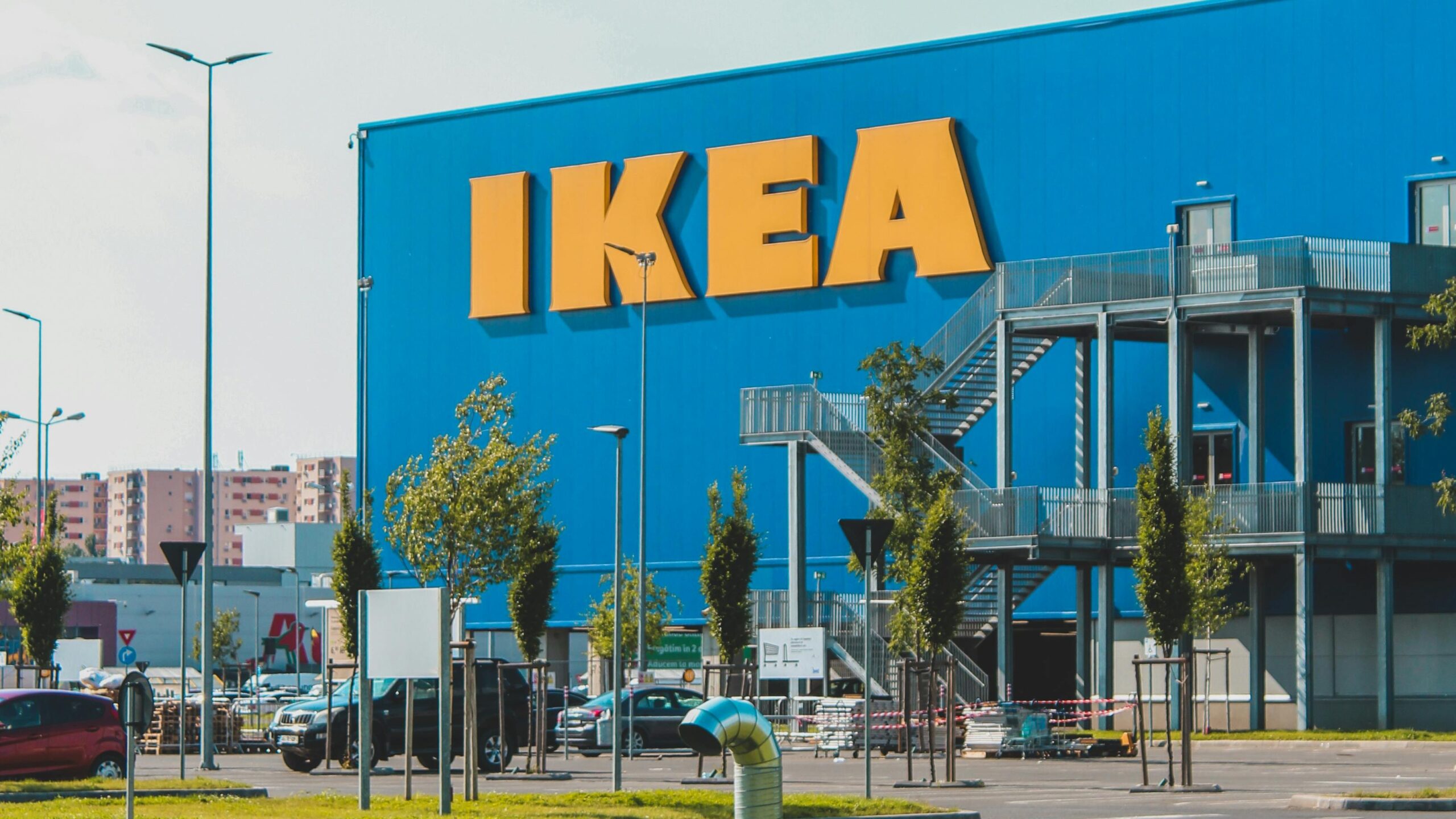
IKEA U.S. says it has 10 new store openings planned for 2026, adding four newly announced locations to six that were already in the pipeline. The expansion targets a mix of first-time markets, urban infill sites, and suburban corridors, signaling a deliberate push to close coverage gaps in regions that have long lacked a nearby store. For shoppers in Oklahoma, Colorado, the Chicago suburbs, and central Los Angeles, the wait for flat-pack furniture and Swedish meatballs is about to get shorter.
Four New Cities Join the 2026 Roster
The retailer’s FY25 Annual Summary, released alongside the expansion news, named Culver City, Tulsa, Gurnee Mills, and Fort Collins as the latest additions. Each location fills a distinct gap. Culver City is planned as a more centrally located Los Angeles-area option, giving many shoppers an alternative to driving to larger stores elsewhere in the region. Tulsa, meanwhile, will be the first IKEA in Oklahoma, a state whose nearest current option sits hours away across the border in Texas or Kansas. The company framed these four additions as part of a broader effort to reach more than 90 percent of U.S. households with either a store or a planning studio within a reasonable drive.
Gurnee Mills adds another access point for the greater Chicago area, where existing stores in Schaumburg and Bolingbrook already draw heavy traffic. Fort Collins extends the company’s Colorado footprint beyond the Denver metro, positioning the brand closer to rapidly growing communities along the northern Front Range. Together, these four bring the confirmed 2026 opening count to 10, combining with six locations that had been announced earlier in the fiscal year. The geographic spread suggests IKEA is not simply doubling down on coastal population centers but is also testing demand in mid-sized cities where housing growth has outpaced retail infrastructure. According to the company’s annual summary, the goal is to put stores closer to where people live, work, and commute, rather than relying solely on distant destination sites.
Phoenix and Chantilly Fill In the Map
Two of the previously announced sites offer useful detail about the formats IKEA is deploying. In the Phoenix metro area, the company confirmed a small-format store slated to open early 2026. That unit will complement the existing full-size store in Tempe and a Plan and Order point in the area, giving Arizona shoppers three distinct ways to interact with the brand. The smaller footprint is designed to emphasize curated room settings, digital ordering tools, and efficient pickup options, with large items shipped from regional distribution centers rather than stored on site. IKEA has described the new Phoenix concept as part of a broader test of how compact locations can serve as neighborhood anchors while still delivering the core assortment customers expect. Details released in the company’s announcement of its Arizona formats indicate that flexible merchandising and omnichannel services are central to the design.
On the East Coast, a full-size store is planned for Chantilly, Virginia, at 4320 Chantilly Shopping Center Drive, with a spring 2026 opening window. Northern Virginia already has an IKEA in Woodbridge, but the Chantilly location targets the fast-growing Dulles corridor, where residential construction has accelerated over the past several years and traffic patterns increasingly tilt westward. Placing a store inside an established shopping center rather than on a standalone pad also reflects a broader industry trend: repurposing existing retail real estate instead of building from scratch. IKEA’s statement on the Chantilly project notes that the company will retrofit a former big-box space, a move that can shorten construction timelines and reduce environmental impact compared with greenfield development.
A Hybrid Growth Strategy Takes Shape
The 10-store plan is worth examining not just for where IKEA is going but for how it is getting there. The mix of city-center formats in Culver City, small-format units in Phoenix, and traditional big-box entries in places like Tulsa and Fort Collins amounts to a hybrid growth model. Rather than applying a single template nationwide, the company is matching store size and format to local market conditions. A dense urban core gets a compact footprint; a mid-size metro with available land gets a full warehouse; a sprawling Sun Belt region with heavy car traffic gets a blend of large and small concepts linked by online fulfillment.
That flexibility carries strategic advantages. Smaller stores cost less to build and staff, which lowers the risk of entering unproven markets and allows IKEA to test new merchandising approaches without overcommitting capital. If a Fort Collins or Tulsa location underperforms, the financial exposure is different from a flagship warehouse in a coastal city. At the same time, the city-center concept in Culver City tests whether IKEA can compete for foot traffic in walkable neighborhoods where rent per square foot runs significantly higher and parking is constrained. The company is essentially running parallel experiments across different retail environments in a single calendar year, gathering data on how customers move between in-store browsing, click-and-collect orders, and home delivery when multiple formats coexist in the same region.
One open question is whether the pace can hold. Opening 10 stores in a single year would represent a sharp acceleration for IKEA U.S., which has historically added locations at a slower clip. As with many retail buildouts, permitting and construction timelines can shift, and there is no guarantee that all projects will hit their initial target dates. The company has not publicly detailed contingency timelines if any of these openings slip, so the 2026 goal should be understood as an ambition rather than a fixed deadline. Still, the decision to pursue a mix of new construction, retrofits of existing retail boxes, and smaller footprints may help spread risk by reducing dependence on any single project or municipality.
What This Means for Shoppers in New Markets
For residents of Tulsa, Fort Collins, and other newly announced cities, the practical impact is straightforward: shorter drives, lower delivery costs, and access to the full in-store experience that online shopping cannot fully replicate. IKEA’s model depends heavily on customers touching, testing, and visualizing products in person before buying. The showroom walkthrough, the as-is section, and the food court are all designed to extend dwell time and increase basket size. That experience has been unavailable to many Oklahomans without a road trip. A local presence can also make pickup options more practical and expand how shoppers combine online ordering with in-person visits.
The Culver City location could reshape shopping patterns for a different reason. Los Angeles residents who currently drive to the Burbank or Carson stores often face heavy traffic, a deterrent for quick visits or last-minute purchases. A city-center store accessible by transit or a short local drive changes the calculus for impulse trips and smaller basket sizes, such as décor, lighting, and kitchen accessories. It also puts IKEA in closer competition with local home goods retailers and design boutiques that have historically benefited from the brand’s absence in central L.A. neighborhoods. For many urban customers, the ability to see products in person and then have larger items delivered from a regional warehouse could make IKEA a more frequent, everyday option rather than an occasional destination outing.
Gaps in the Expansion Picture
The announcement leaves several details unresolved. IKEA U.S. has not disclosed projected job creation numbers for any of the 10 locations, nor has it released square footage estimates for the four newly announced stores. So far, IKEA’s announcements have not included details such as projected job creation, square footage for the newly announced stores, or any local planning and infrastructure disclosures that may emerge as projects move forward. Those negotiations typically unfold over months as planning commissions evaluate site plans, environmental impacts, and community feedback. Without those figures, it is difficult to quantify the precise economic boost each store may deliver in terms of direct employment, construction spending, and secondary effects on nearby businesses.
There are also unanswered questions about how the new locations will integrate with IKEA’s broader sustainability and digital strategies. The company has emphasized goals around renewable energy, circular product design, and reduced emissions in transportation, but it has not specified which of the 2026 stores will feature on-site solar, electric vehicle charging, or expanded buy-back and resale programs. Similarly, while the Phoenix small-format store and the Chantilly retrofit illustrate a more flexible approach to real estate, IKEA has not detailed how inventory will be allocated among warehouses, smaller outlets, and e-commerce fulfillment centers as the network grows denser. For now, the 10-store plan offers a clear signal that the company is willing to experiment with format and geography, even as the finer points of operations, hiring, and sustainability roll out closer to opening day.
More From The Daily Overview
*This article was researched with the help of AI, with human editors creating the final content.

Grant Mercer covers market dynamics, business trends, and the economic forces driving growth across industries. His analysis connects macro movements with real-world implications for investors, entrepreneurs, and professionals. Through his work at The Daily Overview, Grant helps readers understand how markets function and where opportunities may emerge.

