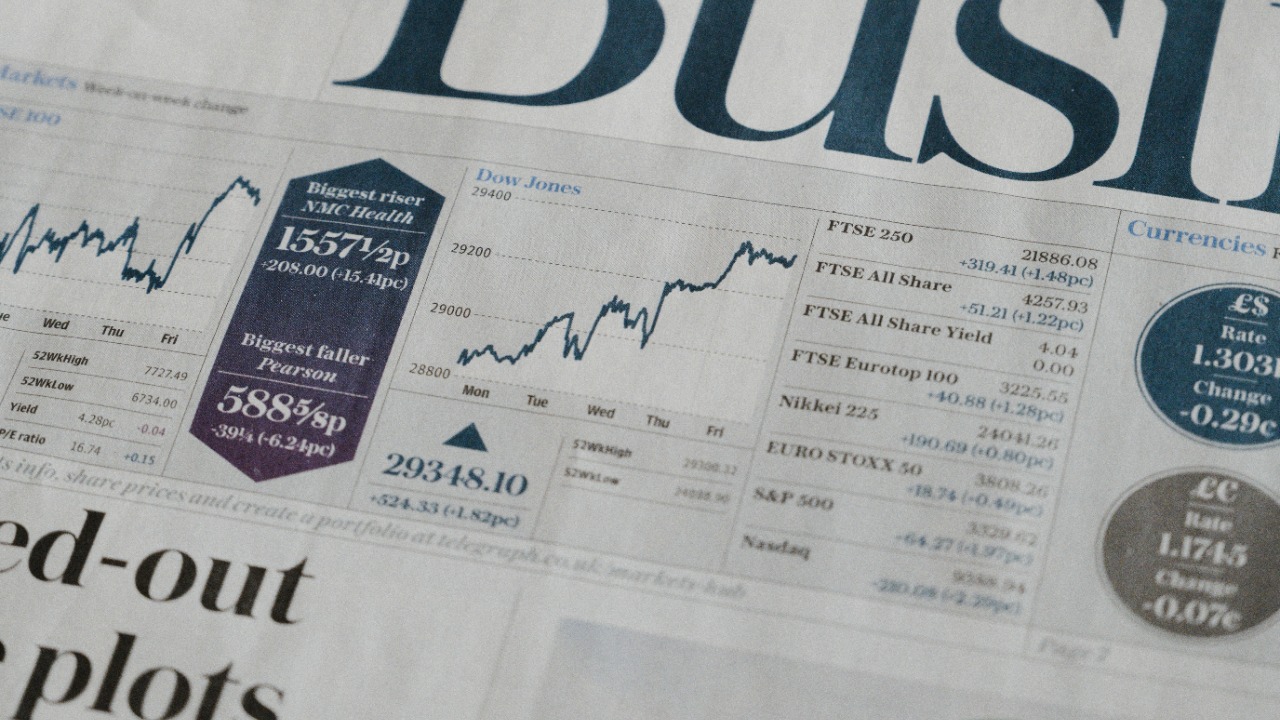
Inflation anxiety that dominated the early 2020s is giving way to something closer to relief, even as memories of price spikes still shape how Americans shop, save, and vote. At the same time, the Dow Jones Industrial Average has vaulted to record territory, with the Dow Jones Industrial Average crossing 50,000 and signaling a powerful shift in market psychology under President Donald Trump. The combination of easing price fears and surging stocks is reshaping the economic narrative, but the story is more complicated than a simple return to the calm of the last Trump era.
From crisis to “normal-ish”: inflation expectations reset
After years of sticker shock, the public mood around prices is finally stabilizing, even if no one would call life cheap. Since President Trump took office, the White House points to headline inflation running at 2.4%, a level officials frame as proof that President Trump “ended Biden’s inflation crisis” and restored something close to price stability for American workers and businesses. That 2.4% figure, highlighted in a recent administration summary of how American workers win, is now echoed by private forecasters who see inflation settling near that range.
Oxford Economics, for example, is projecting that U.S. price growth will average 2.4% in 2026, a forecast that underpins expectations for Federal Reserve rate cuts and a gentler cost-of-living trajectory. In its outlook, the firm links that 2.4% path to a scenario in which the Fed can gradually ease policy without reigniting the kind of surge that rattled households earlier in the decade, a view that has been picked up in Oxford Economics Predicts coverage. That convergence between official messaging and independent forecasts is a big reason inflation fears are ebbing, even if the scars from the last price spike are still visible in family budgets.
Markets roar as The Dow smashes through 50,000
Wall Street has seized on the cooling inflation narrative with gusto. The Dow surged by 1,200 points in a single session to close above 50,000 for the first time, a milestone that capped a sharp rebound from a tech-led sell-off and underscored how quickly sentiment has flipped from panic to euphoria. Live market coverage described how the Dow vaulted those 1,200 points to finish at 50,000, with traders treating the level as both a psychological victory and a signal that the economy may be heading for a “soft landing” rather than a hard fall.
That rally did not come out of nowhere. Earlier coverage noted that The Dow had already “surged above 50,000 points” as investors shrugged off worries about artificial intelligence stocks and focused instead on resilient growth and the prospect of Federal Reserve interest rate cuts. Reports described how The Dow pushed through 50,000 points on a Friday as investors bet that the worst of the AI-driven volatility was behind them. Another account highlighted how The Dow Jones Industrial Average “soared” past 50K as tech names like Nvidia and Meta snapped back from earlier losses, with Dow Jones Industrial riding that furious rally to a record close.
Soft-landing hopes meet lingering inflation reality
Behind the market fireworks, the macro story is one of cautious optimism. Economists at one major advisory firm expect U.S. growth to rebound to 2.2% in 2026, driven by a mix of fiscal support, easier monetary policy, and stronger productivity. Their Key takeaways emphasize that inflation will stay above the Federal Reserve’s 2% target but should continue to cool, a backdrop that would allow the central bank to cut rates without losing credibility. That view lines up with the Fed’s own messaging, which stresses that inflation is still a concern but no longer an emergency.
In a recent speech, a Federal Reserve vice chair described how growth had been supported by strong consumer spending and business investment, including heavy outlays on artificial intelligence, while also pointing to an estimated longer run growth rate of 2.2%. The remarks, detailed in a Feb transcript, framed the current environment as one where supply-side improvements and easing bottlenecks are helping inflation drift lower without crushing demand. That is the textbook definition of a soft landing, and it is exactly the scenario markets are now pricing in.
Consumers feel better, but not fully healed
On Main Street, the mood is improving but still fragile. A recent survey of consumer sentiment found that Americans are more upbeat than forecasters expected, with the reading of 36 beating economists’ projections as households responded to slower price increases and a strong job market. Coverage of that survey, reported by Max Zahn and featuring a Pharmacist interviewed by News anchor Linsey Davis, underscored how relief at the grocery store and gas pump is starting to outweigh frustration, even if budgets remain tight.
Yet the lived experience of inflation is still painful for many families. One analysis noted that Americans now pay an average of $265 per month in utilities, with that $265 bill up 12% in just a year as rising energy and service costs squeeze household cash flow. That detail, highlighted in a broader look at how Rising costs are reshaping affordability, shows why many voters still say they feel worse off even as headline inflation cools. For a family that was already stretched, a double-digit jump in a basic bill like electricity or heating is a constant reminder that the inflation crisis may be over on paper but not in their monthly statements.
What the data and experts say about the next phase
Under the surface of the feel-good market headlines, experts are still debating how durable this calm will be. At a recent University of Virginia Darden School of Business Economic and Market Outlook event, a live audience poll found that 55% of attendees believed the economy is currently in an AI bubble, a result that captured both excitement and unease about the technology boom. That 55% figure, reported in a poll recap, suggests that even among sophisticated investors and executives, there is skepticism about how long AI-driven gains can last without a correction.
Market professionals are also rethinking how they value growth stories. One analysis of the recent rebound noted that Investors are moving away from rewarding “potential” and are now punishing companies that cannot prove how AI will protect their margins, a shift that has contributed to the shakeout in speculative names. That dynamic was captured in a Feb dispatch on how professional money managers are taking back control from over-leveraged retail traders. It is a reminder that the same forces pushing The Dow to 50,000 could also amplify volatility if earnings or AI adoption disappoint.
More From The Daily Overview
*This article was researched with the help of AI, with human editors creating the final content.

Grant Mercer covers market dynamics, business trends, and the economic forces driving growth across industries. His analysis connects macro movements with real-world implications for investors, entrepreneurs, and professionals. Through his work at The Daily Overview, Grant helps readers understand how markets function and where opportunities may emerge.

