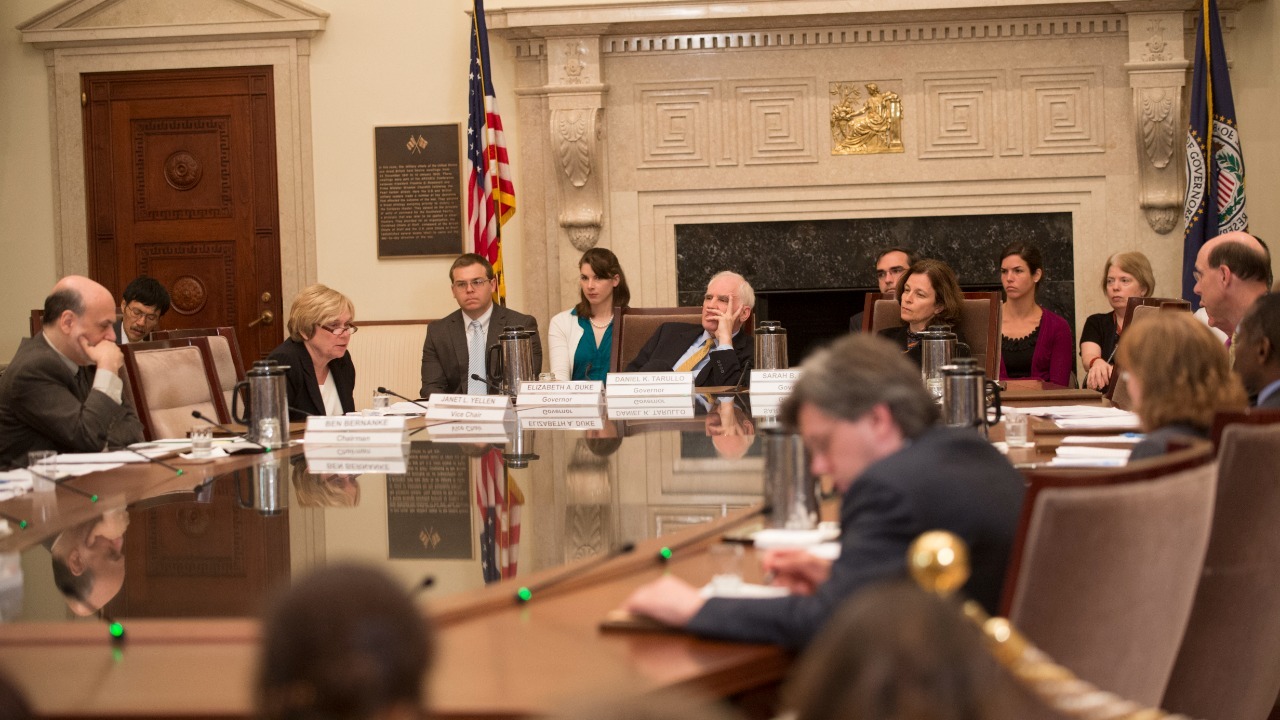
The Federal Reserve has now cut interest rates for the third straight meeting, but the decision was anything but unanimous. Three officials broke ranks, arguing that with inflation still running above target, easing policy again risks repeating past mistakes rather than locking in the progress already made. Their dissents offer a rare window into the internal debate over how much inflation is “good enough” before the Fed can safely declare victory.
I see those objections as a warning flare for households and markets that have grown used to the idea that rate cuts will keep coming. The dissenters are effectively saying that price pressures remain too sticky, especially in key categories like housing, and that moving too fast now could force even harsher medicine later.
The split decision behind the third rate cut
The rate setting Federal Open Market Committee voted 9-3 to cut its benchmark again, lowering the target range to between 3.5% and 3.75%. That move, the third reduction this year, followed a familiar pattern: most policymakers backed a modest cut to support growth, while a vocal minority argued that the Fed was easing into an economy that still looks too warm. The decision left the federal funds rate in a range that is historically low by pre pandemic standards, even as inflation remains above the central bank’s 2 percent goal.
Officials framed the move as a balancing act between slowing growth and still elevated prices, but the three “no” votes underscored how contested that balance has become. Live coverage of the meeting highlighted that the Fed lowered rates to 3.50% to 3.75% even as policymakers openly acknowledged that its dual mandate of maximum employment and stable prices is still in tension. That tension is exactly where the dissenters have chosen to plant their flag.
Jeff Schmid’s warning: policy may no longer be restrictive
One of the clearest objections came from Jeff Schmid, president and CEO of the Federal Reserve Bank of Kansas City. In a formal dissent statement, he argued that with repeated cuts, the stance of policy is drifting toward neutral or even easier, at a time when inflation is still above target and underlying price pressures have not fully normalized. In his view, the funds rate is now only “modestly, if at all, restrictive,” which means each additional cut risks stoking demand before inflation has been fully tamed.
I read Schmid’s position as a direct challenge to the narrative that the Fed can safely pivot to a more growth friendly posture. He is effectively saying that the central bank is easing into an economy where core prices, especially in services, remain too high to justify a rapid retreat from tight policy. His December dissent was not a one off protest either, as reporting on the 9-3 vote again noted that this was the second straight meeting where he opposed a cut. That persistence signals a deeper concern that the committee is underestimating how stubborn inflation can be once it seeps into wages and expectations.
Governor Stephen Miran’s push for a different kind of dissent
Not all dissenters thought the Fed was easing too much. Governor Stephen Miran, who has quickly become one of the most closely watched voices on the committee, favored a steeper half point reduction rather than the quarter point move that ultimately passed. Coverage of the decision noted that three dissenting votes were cast, and that Governor Stephen Miran stood out by arguing that the Fed should cut more aggressively now to avoid a sharper slowdown later. In his view, the risks have shifted from inflation to growth, and the central bank should respond accordingly.
That puts Miran in an unusual position, dissenting from the same decision as Jeff Schmid but for almost the opposite reason. Where Schmid sees a danger that policy is no longer restrictive enough, Miran appears to worry that the Fed is clinging too tightly to its inflation fight even as the economy loses steam. Reporting on the December meeting described how the Fed is now the outlier among major central banks in how it sequences cuts and balance sheet moves, and Miran’s stance reflects a broader debate over whether the United States is risking a policy error by moving too slowly toward easier conditions.
Inflation progress is real, but not enough for the hawks
To understand why some officials still see inflation as “too high,” it helps to look at the data they are watching. The current U.S. inflation rate is 3.0 percent for the 12 month period ending in September, according to one widely cited measure, and the index for all items less food and energy rose 3.0 percent over the same span. Within that, the shelter index increased 3.6 percent, a reminder that housing costs remain a major driver of household pain. Another analysis of the same period notes that the current U.S. inflation rate is 3.0%, which is a big improvement from the peaks of the last few years but still above the Fed’s target.
From the hawkish perspective, that gap matters more than the progress already made. Officials like Jeff Schmid argue that as long as core inflation and shelter costs are running above 2 percent, declaring mission accomplished is premature. Earlier warnings from within the system pointed in the same direction. In November, two Federal Reserve officials publicly opposed the idea of a December cut, with one account noting that two Federal Reserve officials oppose an interest rate reduction because inflation had not cooled enough to justify it. Their concern was that easing too soon could entrench a new, higher normal for price growth, especially in sectors like rent, medical care, and services that are slow to adjust.
Market expectations, political pressure, and the risk of a policy mistake
Markets had largely priced in another quarter point move, especially after the Fed already delivered a cut of 0.25 percent in late October. By the time Federal Reserve Board Chairman Jerome Powell announced that the Fed cuts interest rates by 25 bps again in December, investors were already focused on how many more reductions might follow in 2026. The central bank itself has signaled a cautious path, with one analysis noting that Federal Reserve Cuts Rates, Signals Cautious Path Ahead With New Treasury bill purchases and only limited additional easing penciled in for next year.
Layered on top of that are political crosscurrents that the Fed cannot ignore, even if it insists on its independence. President Donald Trump has repeatedly pressed for lower rates, and analysts like David Seif have noted that David Seif, chief economist for developed markets at Nomura Securities, expected the Fed to skip a December cut precisely because inflation, while cooling, remained above target. Another report quoted Seif saying that There is a large segment of the Fed that is uncomfortable with a December cut, underscoring how unusual it is for the committee to move ahead with easing when internal resistance is this visible.
Why the dissenters think inflation is still the bigger threat
For the hawkish dissenters, the core argument is that the Fed is risking its hard won credibility on inflation for relatively modest gains in growth. They point to the fact that the central bank has already cut rates three times this year, with one account noting that the central bank cut rates for the third time even as limited government data clouded the economic outlook. In that environment, they argue, it is safer to hold policy steady and wait for clearer evidence that inflation is truly anchored at 2 percent rather than assume that recent progress will continue on its own.
Those concerns were visible in the official summary of the meeting as well. A detailed recap noted that the FOMC dissents included both hawkish and dovish objections, a rare configuration that highlights just how narrow the consensus has become. Another live account of the decision emphasized that the Federal Reserve cut interest rates even as its dual mandate remained in tension, a phrase that neatly captures the dissenters’ fear: that by prioritizing short term support for growth, the Fed could end up reigniting the very inflation it has spent the last several years trying to extinguish.
More From TheDailyOverview

Grant Mercer covers market dynamics, business trends, and the economic forces driving growth across industries. His analysis connects macro movements with real-world implications for investors, entrepreneurs, and professionals. Through his work at The Daily Overview, Grant helps readers understand how markets function and where opportunities may emerge.

