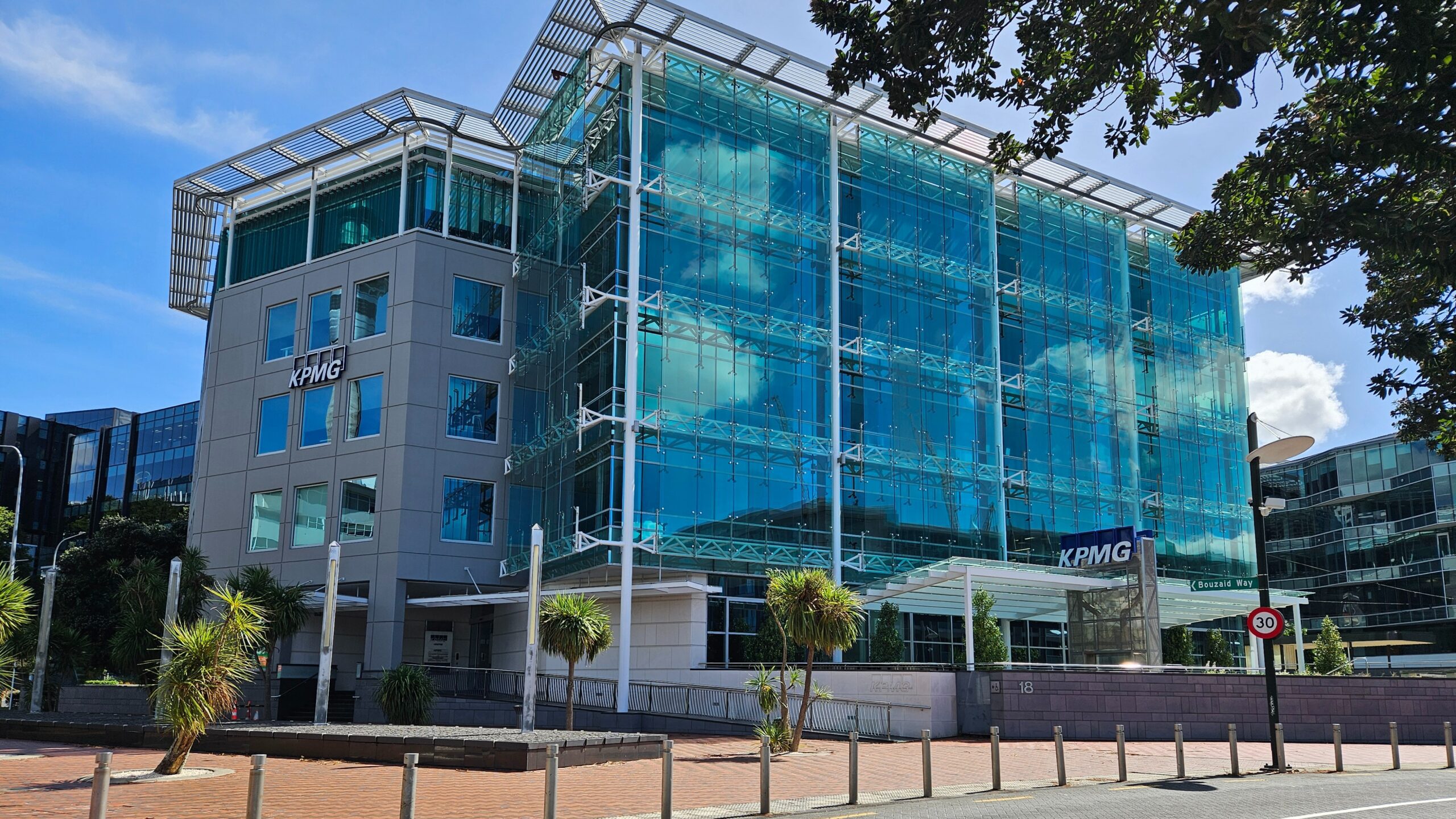
When KPMG cut the ribbon on its $450 million Lakehouse complex in Orlando, the firm expected a bustling corporate campus, not a pandemic-era ghost hotel. The $450 m project, the largest capital bet in the firm’s 120-year history, was quickly branded a Covid boondoggle as travel froze and classrooms sat empty. Today, that same site is being reimagined as a quiet engine room for KPMG’s artificial intelligence push, turning an overbuilt training center into a strategic lab for the next wave of white-collar automation.
From the outside, the Lake Nona property still looks like a resort, with palm-lined walkways and a lakeside pool framing a sleek glass-and-concrete block. Inside, the mood has shifted from generic leadership seminars to AI bootcamps, data labs and experimental tools that KPMG hopes will redefine how audits, tax work and consulting are done. I walked through how the campus was built, how it stumbled and how it is now being wired into a $2 billion AI strategy.
The $450 million bet that hit a pandemic wall
Long before anyone had heard of Covid, KPMG set out to build a single destination that would concentrate its U.S. learning, culture and innovation programs in one place. The firm chose Orlando’s Lake Nona district, turning a patch of Florida real estate into a purpose-built hub that local boosters describe as a Lake for corporate education. KPMG spent $450 million on the Lakehouse, a figure repeated across its own materials and external reporting, and executives framed it as a once-in-a-generation investment in people rather than another downtown office tower.
On paper, the Lakehouse was designed as a Professional Learning, Development and Innovation Center KPMG, a campus that local partners in Lake Nona promote as a Professional Learning magnet with cutting-edge classrooms and field environments. Internal descriptions cast it as the cultural home of one of the Big Four, a place where new hires and partners alike would cycle through for intensive programs that blended technical training with firm values. Then the timing went sideways.
From cultural home to “Covid boondoggle”
KPMG Lakehouse officially opened in January 2020, just weeks before global travel collapsed and corporate offsites were cancelled. According to reporting that traces the build-out, KPMG Lakehouse had been years in the making, but its first real test coincided with lockdowns and a sudden shift to Zoom. Instead of hosting thousands of staff, the complex sat largely idle, its hotel-style rooms empty and its lecture halls repurposed for socially distanced experiments. Inside KPMG circles, the Orlando Lakehouse was quickly tagged as a $450 million Covid misfire, a label that later surfaced in outside commentary that described the site as a Covid boondoggle.
The original operating plan had been aggressive. During its first year, KPMG said it would bring roughly 800 employees per week through the facility, a cadence that would add up to more than 1 million hours of in-person professional development, according to During early briefings. Instead, the Lakehouse had to pivot to hybrid formats and limited cohorts, while critics inside and outside the firm questioned whether a $450 million campus made sense in a world of remote work. One widely shared account from a visitor described candid conversations with KPMG staff who were still debating whether the Lakehouse, and the broader Lakehouse experiment, would ever fully pay off.
What $450 million buys in Lake Nona
Walk the property today and it is clear where the money went. The KPMG Lakehouse is a $450 million training facility in Florida, with a footprint that includes hotel-style rooms, restaurants, classrooms and outdoor spaces that would not look out of place at a tech company retreat. The KPMG Lakehouse is described as a $450 m complex that The Big Four firm designed as a hub of training, culture and collaboration, a description that matches both internal branding and external tours of The KPMG Lakehouse. Short video clips from visitors show a polished interior with digital walls, open collaboration zones and a lobby that feels more like a boutique hotel than a training center.
Marketing materials emphasize that KPMG, one of the Big Four professional services firms, selected Lake Nona to host a Big Four scale campus that can sleep hundreds of people at once. Social posts from inside the complex highlight that KPMG calls Lake House its cultural home and that it flies client-facing employees there around once a year for professional training, noting that Lake House is full most of the year. One widely shared short asks what a $450. million corporate training center looks like and answers that KPMG’s Lakehouse in Florida is a sprawling, glassy complex that challenges the stereotype of beige conference rooms, as seen in Lakehouse walk-throughs.
Recasting Lakehouse as an AI factory
The real pivot, though, is not architectural. It is strategic. According to one detailed account, KPMG opened its Lakehouse learning and innovation center in Orlando in January 2020 and is now using it to train a new generation of staff for the AI era, a shift that aligns with the firm’s broader pivot toward artificial intelligence described in According analyses. KPMG’s own materials now frame the Lakehouse as part of a wider innovation services network, positioning the Orlando site as a physical anchor for KPMG innovation programs that blend client workshops with internal experimentation.
External observers now describe the Orlando Lakehouse as a site where KPMG has begun sharing its AI strategy and investment plans with analysts, using the campus as a backdrop for briefings on a $2 billion generative AI roadmap. One research note points out that KPMG shared its AI strategy and investment plans at a global analyst event at KPMG Lakehouse, its training and development facility, underscoring how the firm is turning the campus into a stage for its KPMG GenAI narrative. Another commentary, circulated widely online, bluntly calls the Orlando Lakehouse a $450 m Covid misstep that is now becoming a secret weapon for the AI revolution, a framing that captures how Inside KPMG thinking has shifted from damage control to opportunity.
Inside the “secret” AI lab
Behind the glossy lobby, KPMG has carved out spaces that function as an AI incubator for its own staff and for clients. A detailed brochure describes an innovation laboratory that offers an immersive approach to help organizations leverage the capabilities of Salesfor and other platforms, branding it as an AI Incubator for the new digital workforce and positioning it as a core part of KPMG’s AI Incubator strategy. That incubator is explicitly tied to the Lakehouse, which KPMG promotes as a place where cross-functional teams can experiment with new tools before they are rolled out across the firm.
Public descriptions of the campus highlight small but telling details, such as a KPMG-branded “GEN AI Invaders” arcade game tucked into one of the common areas. One social post notes that Lakehouse has bits of flair located throughout, such as the KPMG-branded GEN AI Invaders arcade game, but that the large, modern building is ultimately focused on preparing staff for the AI revolution, a detail that shows how GEN themes are woven into the décor. Another version of the same description underscores that Lakehouse has bits of flair located throughout, such as the KPMG-branded GEN AI Invaders arcade game, reinforcing how the Invaders motif is used to make AI feel tangible rather than abstract.
More From TheDailyOverview
*This article was researched with the help of AI, with human editors creating the final content.

Grant Mercer covers market dynamics, business trends, and the economic forces driving growth across industries. His analysis connects macro movements with real-world implications for investors, entrepreneurs, and professionals. Through his work at The Daily Overview, Grant helps readers understand how markets function and where opportunities may emerge.