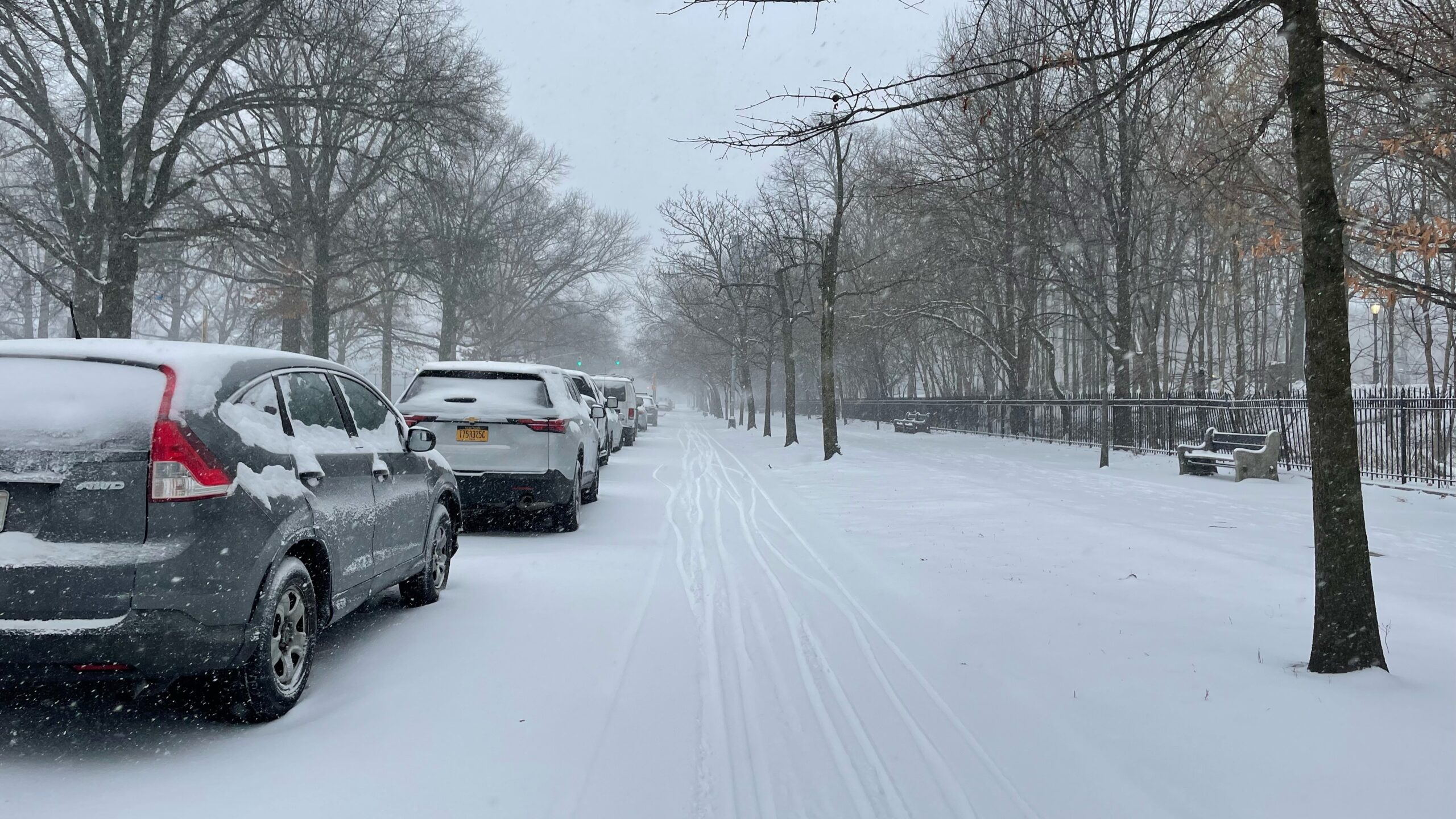
A brutal Arctic blast has collided with the most power-hungry corner of the U.S. economy, sending electricity prices spiking across the Mid-Atlantic just as households crank up their heat. In America’s data center alley, where server farms already dominate local demand, the latest winter storm has turned a long‑running tension between digital growth and grid reliability into a very expensive stress test.
What began as another round of frigid weather has quickly become a real-time lesson in how much strain artificial intelligence, cloud computing, and streaming now place on the same wires that keep homes warm. As prices jump and outages ripple outward, the question is no longer whether data centers matter for the grid, but how quickly regulators and utilities can adapt to a world where a cold snap in Virginia can echo across the entire Eastern power system.
The storm that hit a digital nerve
The latest blast of Arctic air did not just blanket roads and runways, it slammed directly into the heart of the country’s largest power network at the moment when demand was already near its limits. Grid operator PJM, which coordinates electricity for a vast swath of the eastern United States, saw consumption surge late on Saturday night as temperatures plunged and furnaces roared to life. By Sunday morning, the system that ties together industrial Midwest cities, Mid‑Atlantic suburbs, and the booming data center corridor of northern Virginia was pushing toward levels that had previously only been seen during record cold earlier in January 2025.
What made this storm different was not only the cold, but where the pressure landed. The same region that hosts the world’s densest cluster of server farms, often described as a global hub for cloud computing, is stitched into PJM’s network as just another load pocket, yet its appetite for power has grown far faster than traditional planning assumed. As the storm intensified, real‑time wholesale prices in that corridor reflected the squeeze, with real‑time prices topping $1,000 per megawatt‑hour on Saturday morning in some locations before easing back, a sign of just how tight the balance between supply and demand had become.
Record demand and soaring prices in data center alley
By the time Sunday arrived, the combination of household heating, industrial use, and relentless digital demand had turned the Mid‑Atlantic into a case study in what happens when a traditional winter peak collides with a structural shift in electricity consumption. In Virginia, home to the world’s largest data center hub, Power prices surge as grid operators brace for record demand during the storm, reflecting both the cold and the sheer scale of server farms that now line the highways of Loudoun County and beyond. Wholesale electricity was trading around $600 per megawatt-hour in Virginia, Maryland and Washington after earlier topping $1,200, levels that would have been unthinkable in more stable conditions. Those figures underscore how quickly scarcity pricing can kick in when a grid that was designed around predictable seasonal peaks is asked to serve a 24/7 digital backbone.
Inside PJM’s footprint, planners are already looking beyond this storm to what comes next. The operator has warned that it expects an all‑time winter demand record on Tuesday, driven in part by data center electricity needs layered on top of traditional heating loads. That forecast is not just a weather story, it is a structural one, reflecting how the rise of artificial intelligence and cloud services has turned what used to be a relatively flat industrial load into a constantly rising baseline. When a cold snap arrives on top of that, the result is exactly what the region is now seeing: price spikes, strained infrastructure, and a scramble to keep both homes and hyperscale facilities powered.
Outages, frigid homes, and the human cost
Behind the market charts and grid forecasts are households watching their lights flicker and their bills climb. As the storm swept across the eastern United States, local distribution networks began to buckle, with nearly 900,000 customers without power on Sunday across states including North Carolina, Georgia, Virginia and Alabama. Those outages were driven by ice‑laden branches, high winds, and equipment pushed to its limits, but they landed hardest on families already stretched by high heating costs. For residents in older housing or on fixed incomes, a few hours without electricity in subfreezing temperatures can quickly become a health risk rather than a mere inconvenience.
The financial strain is just as real. As frigid weather grips large parts of the country, households are already grappling with high winter heating bills, and experts have been warning that How frigid weather U.S. electric grid can translate directly into higher prices. When wholesale power costs spike into the hundreds or thousands of dollars per megawatt‑hour, those costs eventually filter down to consumers through fuel adjustment clauses and future rate cases. For low‑income customers, that means a winter like this one can leave lasting financial scars, even if the lights stay on.
Grid operators race to avoid blackouts
While local utilities repair downed lines and restore service, regional grid operators are engaged in a different kind of triage, juggling power plant availability, fuel supplies, and demand forecasts to keep the broader system intact. The current storm is not confined to one state, it is a Massive storm that threatens more than 35 states, stretching from the Plains to the East Coast. That scale matters because it limits the ability of one region to lean on another for imports; when everyone is cold at the same time, there are fewer spare megawatts to go around. In that context, PJM’s warnings about record demand are not just cautionary notes, they are signals that the margin for error is shrinking.
Utilities inside this footprint are also confronting the reality that their traditional resource mix may not be sufficient for a world of more frequent extreme weather and surging data demand. Dominion has said extended frigid conditions could strain its ability to deliver electricity to homes and businesses, a concern that reflects both fuel logistics and the sheer scale of its service territory, which stretches into Mississippi, Texas and through wholesale arrangements and interconnected markets. When a single cold front can simultaneously affect gas production, pipeline capacity, and electric load across that many states, the risk of cascading failures grows, and operators are forced into increasingly aggressive conservation appeals and contingency planning.
Data centers, AI, and the next winter crunch
Even as crews clear ice from lines and generators hum at full tilt, the storm is sharpening a longer‑term debate about how much digital growth the grid can accommodate without major upgrades. The corridor often called Power prices surge data center alley is already home to thousands of megawatts of server capacity, and new projects tied to artificial intelligence and cloud services are lining up for interconnection. Grid planners have acknowledged that data center electricity needs are a key driver of the all‑time winter demand record PJM now expects, and that reality is forcing a rethink of everything from transmission expansion to demand response. If each new cluster of AI‑optimized servers effectively adds the load of a small city, then storms like this one will only grow more challenging.
At the same time, the broader U.S. grid is in the midst of an energy transition that complicates the picture. As more renewable generation comes online and older fossil plants retire, the system becomes cleaner but also more dependent on flexible resources and robust transmission. The current storm has highlighted how Follow your favorite data center projects can no longer be treated as marginal additions; they are central to planning for reliability. For regulators, utilities, and technology companies alike, the lesson is clear. Without faster investment in grid hardening, new lines, and smarter demand management, the next time Arctic air sweeps across the Mid‑Atlantic, the price of keeping America’s digital backbone online could be even higher.
More From TheDailyOverview
*This article was researched with the help of AI, with human editors creating the final content.

Grant Mercer covers market dynamics, business trends, and the economic forces driving growth across industries. His analysis connects macro movements with real-world implications for investors, entrepreneurs, and professionals. Through his work at The Daily Overview, Grant helps readers understand how markets function and where opportunities may emerge.