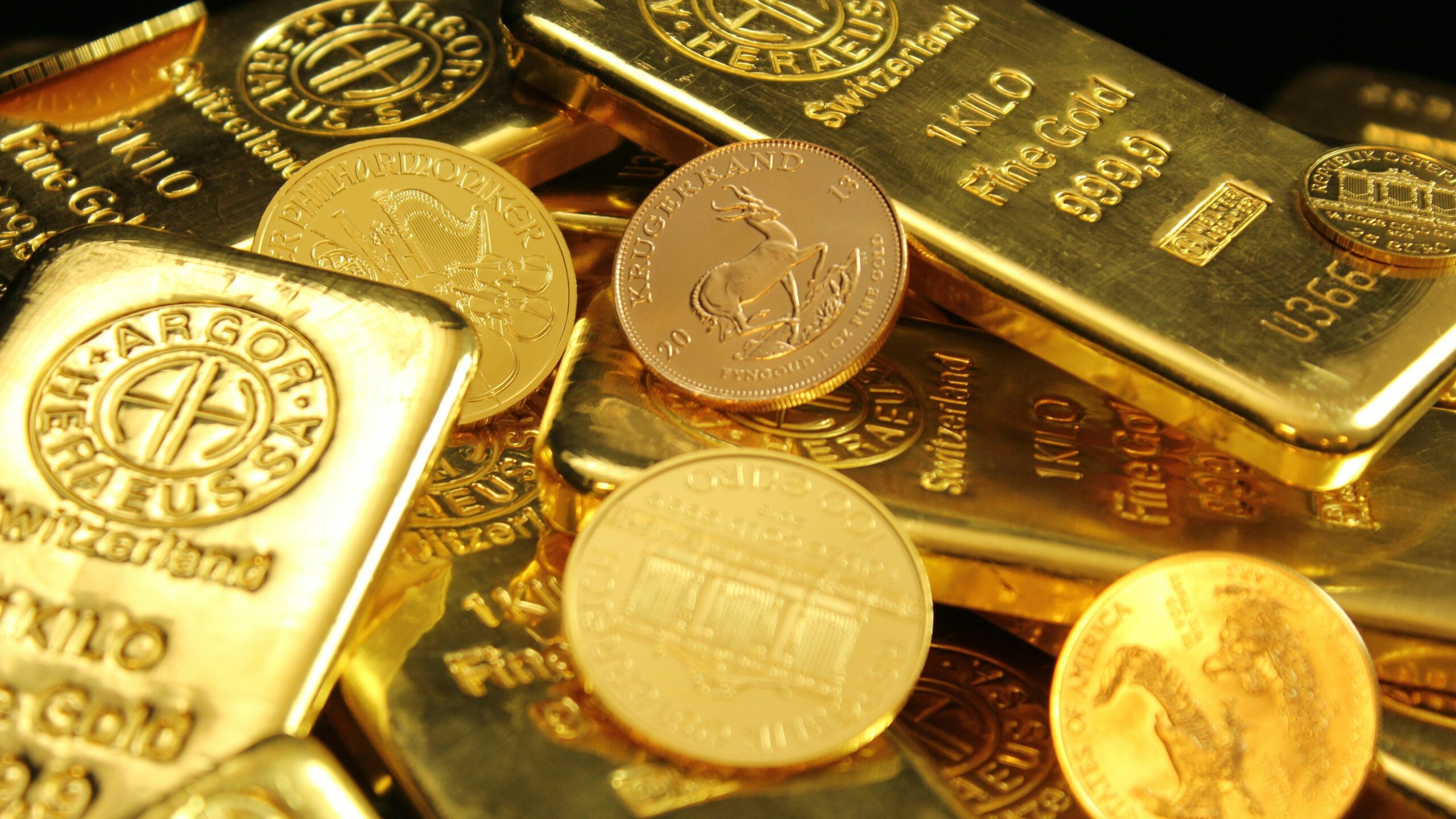
When hedge fund manager David Einhorn says gold is catching up with, and may surpass, United States Treasurys as the world’s favorite reserve asset, he is pointing to a shift that is visible in official data. Central banks are reshaping their balance sheets, using bullion and non‑dollar currencies to hedge against rising U.S. debt and doubts about the long‑term purchasing power of the dollar. The numbers that agencies and central banks publish do not mention Einhorn by name, but they describe the same trend he highlights.
Three strands stand out in that data: a measurable rise in the role of gold in official reserves, a slow erosion of the dollar’s share of foreign‑exchange holdings, and an internal policy debate at central banks about how far they should go in reducing exposure to U.S. government debt. Taken together, these strands help explain why an investing veteran would argue that gold is starting to rival Treasurys as the anchor of the global system.
Gold’s climb in official reserves
A detailed report from the European Central Bank, released in June 2025, offers a clear view of gold’s comeback in reserves. In that publication on the international role of the euro, the ECB presents data and staff calculations on how global reserves are split between currencies and bullion. Drawing on figures from the International Monetary Fund and the World Gold Council, the report includes the reserve‑share numbers that analysts cite when they say gold is “overtaking” some traditional assets. When Einhorn warns that gold is catching up to Treasurys, his claim lines up with the same type of tables that ECB economists use to track how central banks store their wealth.
The ECB document shows that bullion has shifted from a legacy holding, often left untouched for many years, to an actively managed part of reserve strategy. In one section, ECB staff note that more than 698 metric tons of gold purchases by central banks were recorded in a recent 12‑month period, based on World Gold Council data, and they treat those flows as part of a broader move to rebalance reserves. Because the publication is an official ECB document, it reflects how one of the world’s major monetary authorities interprets the changing composition of reserves, rather than how private commentators might prefer to frame it. That institutional view supports Einhorn’s warning: the shift toward gold is no longer just a contrarian trade, it is visible in central‑bank statistics.
Dollar dominance under quiet pressure
Gold’s rise is only half the story. The other half is the slow squeeze on the dollar’s share of foreign‑exchange reserves, which central banks track under the IMF’s Currency Composition of Official Foreign Exchange Reserves, or COFER, framework. According to an IMF data brief on world COFER aggregates for the first quarter of 2025, the institution publishes totals and shares for allocated reserves held in currencies such as the U.S. dollar, the euro, and others. That brief explains that COFER covers foreign‑exchange holdings and excludes gold, which appears in a separate line on central‑bank balance sheets. Even so, the way the dollar behaves inside COFER helps explain why policymakers might look more kindly on bullion.
There is also a technical wrinkle in the IMF record that analysts need to handle with care. One IMF communication describes COFER aggregates for the first quarter of 2025, while another, separate brief provides updated totals and the U.S. dollar share for the second quarter of 2025. The second document states that total foreign‑exchange reserves increased to $12.94 trillion in that period, and that figure applies to currencies only, not to gold. In the same set of tables, the IMF notes that around 93 percent of those allocated reserves were reported by 80 participating economies, underscoring how broad the coverage is. Viewed together, the first‑ and second‑quarter releases show a pattern: the stock of FX reserves is growing, and the share held in dollars is under close watch, even if the exact quarter‑by‑quarter percentage is not spelled out in the material cited here.
Einhorn’s warning in that context
Set against this backdrop, Einhorn’s claim that gold is overtaking U.S. Treasurys as the top reserve asset looks less like a dramatic forecast and more like a blunt reading of central‑bank data. The ECB’s June 2025 report, which draws on IMF and World Gold Council series, shows gold taking a larger slice of total reserves, while the IMF’s COFER tables separate out a growing pile of currency holdings that now sits alongside that bullion. When investors and policymakers look at those two sets of numbers together, many conclude that Treasurys no longer enjoy the same unchallenged status they once did.
Einhorn adds a narrative that the official documents do not spell out. He links gold’s rise to concerns about U.S. fiscal policy and the long‑term value of the dollar, and he suggests that central banks are hedging against the risk that Washington’s debt path could weigh on the currency. The ECB and IMF publications are more neutral, but their structure allows for that reading. The ECB devotes a full chapter to the role of gold in reserves, and the IMF’s COFER framework tracks the dollar’s share of a $12.94 trillion FX pool without including bullion at all. That separation makes it easier for policymakers to adjust their mix of Treasurys and gold without changing the headline currency totals that markets watch.
What the ECB and IMF data do, and do not, show
Both institutions provide high‑quality statistics, but they answer different questions, and that difference often gets lost in market commentary. The ECB report on the international role of the euro is designed to show how the single currency compares with the dollar and other units in trade invoicing, international debt, and reserves. To build its reserve charts, the ECB combines IMF data on currency holdings with World Gold Council figures on bullion, then uses its own staff calculations to express everything as shares of a global total. In one of those charts, ECB staff work with a sample of 6,743 individual reserve‑asset observations, giving them a broad base for comparing bullion to individual currencies or to specific asset classes.
The IMF’s COFER data briefs, by contrast, focus only on foreign‑exchange reserves. The first‑quarter aggregates describe how much of the allocated FX pool is held in the dollar and other currencies, while the second‑quarter update confirms that total FX reserves climbed to $12.94 trillion in 2025. Those documents state that COFER is a currency dataset and that it does not cover gold. That means no one can look at COFER alone and say that gold has surpassed Treasurys; they have to combine COFER with gold data, as the ECB does, and then interpret how the pieces fit together. When commentators skip that step, they risk overstating how much of the shift away from the dollar is already locked in.
Why reserve managers might listen to Einhorn
From a central banker’s point of view, Einhorn’s argument is not only about returns, it is also about risk management. The ECB report shows that reserve managers already treat gold as a strategic holding, using World Gold Council and IMF data to monitor its share alongside currencies. The IMF’s COFER briefs show that the pool of FX reserves, dominated by the dollar, has grown to $12.94 trillion in 2025, which is a large exposure to the credit and inflation profile of a single country. In addition, the ECB notes that roughly 80 percent of surveyed reserve managers now report having a formal framework for adjusting their gold holdings, which suggests that diversification is part of routine policy rather than a one‑off move.
More From The Daily Overview
*This article was researched with the help of AI, with human editors creating the final content.

Grant Mercer covers market dynamics, business trends, and the economic forces driving growth across industries. His analysis connects macro movements with real-world implications for investors, entrepreneurs, and professionals. Through his work at The Daily Overview, Grant helps readers understand how markets function and where opportunities may emerge.

