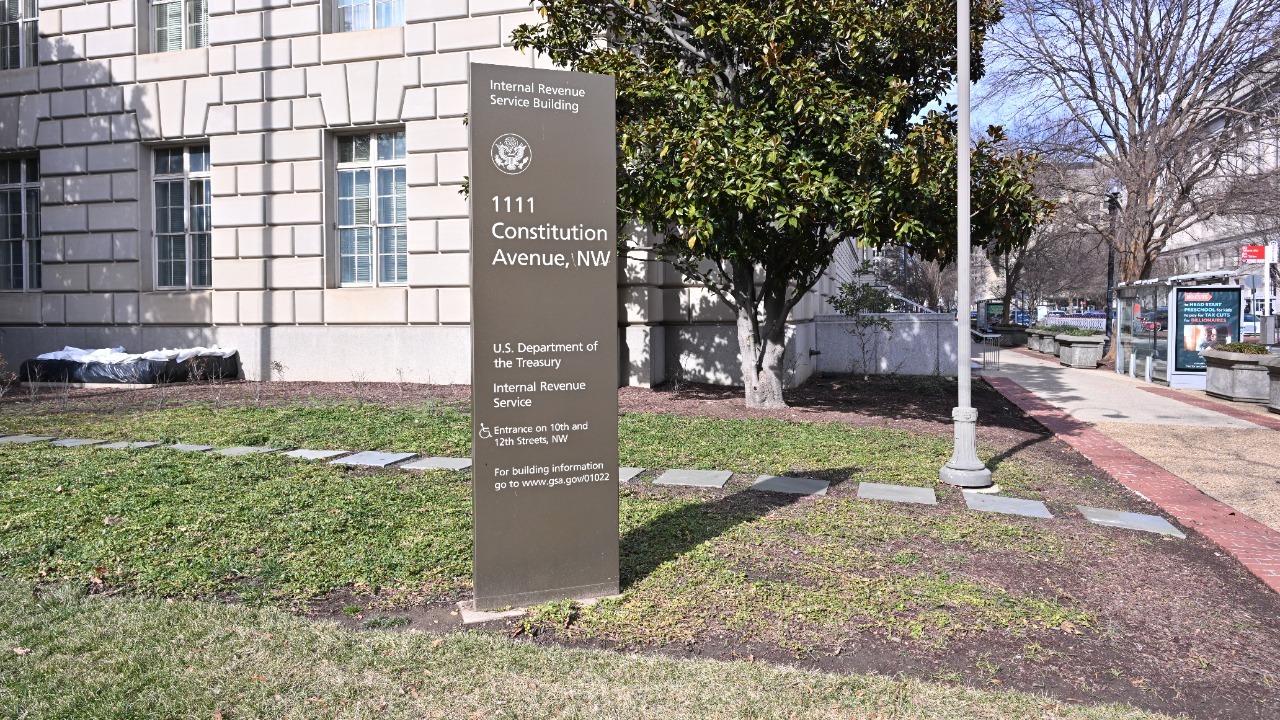
The Internal Revenue Service is paying out adoption credit money that its own earlier reading of the law had ruled out. The agency says it has started issuing automatic refunds to taxpayers who carried an unused adoption tax credit forward from earlier years, and more than 50,000 taxpayers have already received one.
No new form is required to get the money. The IRS is adjusting accounts on its own, which puts the burden on families to read the notice that follows and check that the amount matches their 2025 return.
Why the IRS is sending adoption credit refunds
In a news release dated October 16, 2026, the IRS said the Treasury Department clarified its reading of the Working Families Tax Cuts law. Under that clarification, adoption credit amounts carried forward from 2020 through 2024 can increase the refundable portion of the credit for tax year 2025 only, up to the limit of $5,000 per qualifying child.
That reverses how the agency first handled the new refundable credit. According to a March 4, 2026 release from Sen. Kevin Cramer, the IRS had interpreted the law to make carryforward amounts ineligible for refundability, which affected families who filed from 2020 to 2024. The change was announced during a House Ways and Means Committee hearing, and the IRS said at the time that it would pursue remedies after the filing season rather than ask families to change how they filed.
Tracking an automatic adjustment: A notice decoder and a refund status tracker spreadsheet match the two jobs an adoptive family faces once the IRS adjusts a 2025 account: reading what the adjustment notice says happened to the money, and logging when the refund was issued against when it actually arrived. Both are in The IRS Refund Recovery Kit.
How the refundable portion works
The adoption credit has long been a non-refundable credit, meaning it could cut a tax bill to zero but not produce a refund beyond that. Families who could not use the full credit in one year could carry the unused amount forward. The IRS adoption credit page says the non-refundable portion can be carried forward for a maximum of five years, after which any remainder is lost.
Beginning with tax year 2025, the same IRS page says, a portion of the credit is refundable up to $5,000 per qualifying child. For 2025, qualified adoption expenses are limited to $17,280 per child. The full credit is available to filers with modified adjusted gross income of $259,190 or less, a reduced credit applies between $259,191 and $299,189, and no credit is available at $299,190 or more.
The October fix ties those two pieces together. A family still holding an unused carryforward from an adoption in an earlier year can have that amount count toward the refundable $5,000 on its 2025 return, which can turn a credit that only reduced tax into cash.
Who gets the money automatically and who waits
The IRS says refunds and adjustments began in late September and will continue until they are complete, with most eligible refunds expected to be finished by the end of the year. Taxpayers generally do not need to file an amended return.
Timing depends on how and when the 2025 return was filed. The agency says people who filed before April 15, 2026 should receive the adjustment automatically. Returns filed under an extension, and accounts with identity theft indicators, account freezes, dependency conflicts or other issues, will be reviewed later in 2026.
The IRS did not publish a total dollar figure for the refunds or an average payment. The amount for any one family depends on the size of its carryforward, its other tax for 2025 and the $5,000 per-child ceiling.
The notice that follows the adjustment
The IRS says affected taxpayers should receive a notice, generally within 30 days of the adjustment. It will show the amount and whether the adjustment was paid out as a refund or applied to another tax or non-tax debt.
That second possibility matters. A refund that is applied to an older tax balance, or to a non-tax debt, can shrink or disappear before it reaches a bank account, and the notice is where that shows up. The agency recommends comparing the notice with the 2025 return and keeping it with tax records.
Taxpayers can check refund status and view notices through an IRS Individual Online Account, and the agency points to IRS.gov/AdoptionCredit for updates on the program. Families who filed on extension or whose accounts carry a freeze should expect their review to come later in the year rather than in the first wave.
When an IRS adjustment arrives unannounced
The adoption credit refunds are going out without any filing by the families involved, so the first sign of one is a deposit, a paper check or an IRS notice saying the money went somewhere else. The gap the announcement leaves is what to do when the notice and the 2025 return do not agree, or when a refund marked as issued never shows up.
The IRS Refund Recovery Kit pairs a notice decoder for reading what an adjustment letter says with the refund-trace steps for Form 3911, used when an issued refund does not arrive.
Look up the refund-trace steps in The IRS Refund Recovery Kit.
This article was created with AI assistance and reviewed for accuracy against IRS news release IR-2026-123, the IRS adoption credit page and related government sources.

Julian Harrow specializes in taxation, IRS rules, and compliance strategy. His work helps readers navigate complex tax codes, deadlines, and reporting requirements while identifying opportunities for efficiency and risk reduction. At The Daily Overview, Julian breaks down tax-related topics with precision and clarity, making a traditionally dense subject easier to understand.