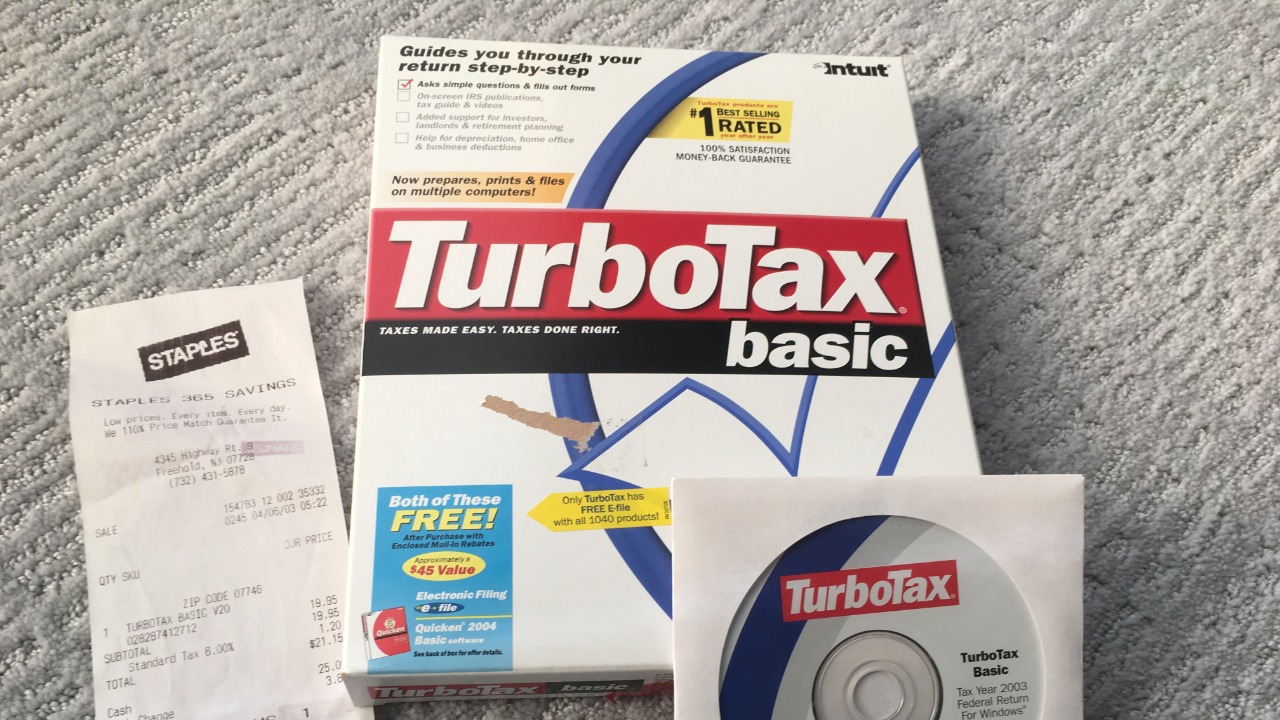
The fight over who gets to own tax season in the United States is no longer just about software features or slick ads. The IRS is trying to normalize truly free filing, while TurboTax and its parent Intuit are working just as hard to keep paid products at the center of the experience. Whether free government tools can go mainstream, and how far regulators will push back on “free” marketing, will determine how much power the industry’s dominant player really has to lose.
At the same time, political decisions are reshaping the landscape in real time, from pilots that briefly opened the door to public options to moves by the Trump administration to shut them back down. I see a tax system caught between two models: one where filing is a basic public service, and another where complexity and upsells remain a lucrative business.
How IRS Direct File changed the conversation
The IRS did something quietly radical when it built its own online filing tool and invited taxpayers to skip commercial software altogether. After a pilot during the 2024 tax season, the agency reported that more than 140,000 people successfully used IRS Direct File, a small slice of the population but a proof of concept that the government could run a modern, guided tax app. In a market long dominated by private brands, the mere existence of a working public option signaled that the status quo was no longer inevitable.
By the 2025 season, Direct File was no longer just a technical experiment, it was a policy statement that filing could be simple, digital and actually free for those who qualified. The IRS framed the program in its own materials as “Direct File – What’s New,” underscoring that this was not a one-off stunt but part of a broader modernization push. For a company like Intuit, which has spent years convincing Americans that professional-grade help requires a paid product, the arrival of a government-built alternative was a direct challenge to both its narrative and its margins.
Who could actually use Direct File
Even in its expanded form, Direct File was never aimed at every taxpayer, and that narrow scope matters for judging its impact on TurboTax. The IRS limited eligibility to residents of certain states and to people with relatively straightforward returns, a design choice that advocates described with the simple question, Who can use Direct File, rather than a promise to replace the entire ecosystem. The IRS piloted Direct File in 2024 and then expanded it in 2025, but it still focused on wage income, standard deductions and common credits, not the complex business or investment scenarios that drive much of TurboTax’s revenue.
That design mirrored the agency’s broader approach to free help. The IRS already runs a patchwork of no-cost options, from its online Free File partnerships to in-person Volunteer Income Tax Assistance clinics, and it highlighted those Free tax filing options as part of the 2025 season kickoff. In practice, that means Direct File sits alongside, not instead of, existing programs, targeting the same lower and middle income filers that TurboTax has historically tried to bring into its “free” funnel before nudging them into paid tiers.
Why the 2026 shutdown is a turning point
Just as Direct File began to look like a permanent fixture, the Trump administration moved to pull the plug. Officials announced that IRS Direct File will not be offered during the 2026 filing season, a decision that instantly shifted the balance of power back toward commercial software. The message from Washington was blunt: even after a functioning pilot, the federal government would not guarantee taxpayers a direct, no-cost digital path to file their returns.
Politically, that move capped off a broader fight over whether the IRS should compete with private companies at all. Critics of Direct File argued that the agency should focus on enforcement and leave user-facing tools to the market, while supporters saw it as a basic service in a system where the government already holds most of the data it needs. By sidelining Direct File for 2026, the Trump administration effectively answered that debate in favor of industry, at least for now, and gave TurboTax breathing room just as the idea of a mainstream public alternative was starting to resonate.
Evidence that free public filing can win fans
Even with its limited reach and looming shutdown, Direct File showed that taxpayers are hungry for a simpler, cheaper way to deal with the IRS. A detailed 2025 Direct File report found that Taxpayers continued to love Direct File, and that they loved it even more than the year before, with satisfaction hitting 94% among users. That kind of approval rating is rare in any government service, let alone one associated with paying taxes, and it undercuts the notion that people inherently distrust the IRS as a technology provider.
Those numbers matter because they hint at what could happen if a future administration revives or expands the program. When nearly 94% of users say they would recommend a free government tool, it suggests that the barrier to adoption is not consumer preference but political will and eligibility rules. For TurboTax, the risk is not that every filer will suddenly abandon commercial software, but that a large share of its most price-sensitive customers will migrate to a public option the moment it is widely available.
TurboTax’s business model under regulatory fire
While the IRS was experimenting with free tools, regulators were scrutinizing how Intuit marketed its own “free” offerings. In a detailed Case Summary, The Federal Trade Commission accused Intuit Inc of steering people toward paid products even when they were eligible for no-cost filing, and of advertising TurboTax as free for “everyone” when most taxpayers could not use TurboTax’s free product. That enforcement action went to the heart of Intuit’s growth strategy, which has long relied on drawing filers in with the promise of zero cost and then layering on fees for extra forms, state returns or live help.
The FTC followed up with a consumer alert that put the issue in plain language, stating that the FTC finds TurboTax “free” is not free for most and accusing the company of making false “Free” claims. A separate order barred Intuit from distorting eligibility for its free edition, with an An opinion and final order issued in Jan requiring clearer disclosures about who actually qualifies. For a company facing a credible public alternative from the IRS, losing the ability to blur the line between free and paid is more than a legal headache, it is a direct hit to the funnel that feeds its core business.
Market dominance and the real hit from Direct File
Despite the regulatory pressure, TurboTax still sits at the center of the consumer tax universe. One market analysis found that Intuit’s TurboTax Maintains Market Leadership with 60% Share Amid Growing Tax Complexity, underscoring how deeply embedded the brand is in American filing habits. Intuit, listed on NASDAQ under the ticker INTU, has built an ecosystem that stretches from do-it-yourself software to full-service preparation, making it harder for any single government tool to dislodge.
Yet even a giant can feel a small shift at the margins. Reporting on the first Direct File season found that TurboTax lost 1 million free customers after the IRS rolled out its own option, and that the average user of TurboTax was spending 10% more on their filing compared with the prior year, according to TurboTax free customers data. That combination, fewer no-cost users but higher per-filer revenue, suggests Intuit was already leaning harder on upsells at the low end of the market just as Direct File began to siphon off the most price-conscious filers.
Legal limits on “free” and what they mean for competition
The legal crackdown on Intuit’s advertising is not just about truth in marketing, it is also about how easy it is for a public option to compete. A federal order reported that Intuit was ordered Monday to stop advertising any free products and services unless they are free for all consumers, or unless the company clearly explains who would be eligible for the unpaid offerings. That standard forces TurboTax to be more precise about what “free” really covers, narrowing the gap between what a taxpayer expects and what they actually get once they start a return.
At the same time, the broader case against Intuit has become a touchstone for advocates of public filing. In a sharply worded analysis, one critic argued that Intuit, Owner of TurboTax, wins battle against taxpayers when it successfully lobbies to limit or eliminate Direct File. The piece framed the fight as a clash between a company protecting its Share Amid Growing Tax Complexity and a public that stands to benefit from a simpler, cheaper system. The more regulators constrain TurboTax’s ability to blur the line between free and paid, the easier it becomes for a clearly free government tool to stand out.
TurboTax’s product strategy in a changing landscape
Intuit is not standing still while regulators and the IRS reshape the terrain. The company has been touting its technology as the future of filing, with a recent announcement from MOUNTAIN VIEW, Calif, distributed via BUSINESS WIRE, describing how Intuit’s consumer platform powers the future of tax filing with more automation and integrated financial services. The message is clear: TurboTax is not just a form-filling tool, it is a gateway into a broader ecosystem of credit, budgeting and small business products that the IRS is not trying to replicate.
On the consumer side, reviewers still describe TurboTax as an Online Tax Service that is easy to use for most filers, with a guided interface that walks people through their returns step by step. That user experience, honed over decades, remains a major moat against a relatively bare-bones government app. Even if Direct File returns in some form, Intuit is betting that many taxpayers will still pay for the comfort of hand-holding, audit support and integrated tools, especially as their financial lives grow more complicated.
Where IRS free options fit alongside TurboTax
Even without Direct File in 2026, the IRS is not abandoning the idea of no-cost help. The agency continues to promote its Unique Free File program, which pairs taxpayers with incomes at or below a set threshold with guided tax software from private partners. Unique eligibility requirements also separated the two programs, since Free File is generally for taxpayers with lower to moderate incomes, often around a specific dollar cap for guided tax software, while Direct File was built and run directly by the IRS. That distinction shows the agency is still willing to lean on industry even as it experiments with going it alone.
From my vantage point, the coexistence of Free File, in-person clinics and commercial software suggests that the future is less about one model crushing the other and more about a layered ecosystem. The IRS can keep expanding its own tools for simple returns while relying on partners for more complex cases, and companies like Intuit can keep moving upmarket into advisory and full-service offerings. The open question is how aggressively future administrations will push to make free public filing a default for straightforward returns, and whether legal limits on “free” marketing will push TurboTax to compete more on genuine value than on clever funnels.
More From TheDailyOverview

Julian Harrow specializes in taxation, IRS rules, and compliance strategy. His work helps readers navigate complex tax codes, deadlines, and reporting requirements while identifying opportunities for efficiency and risk reduction. At The Daily Overview, Julian breaks down tax-related topics with precision and clarity, making a traditionally dense subject easier to understand.

