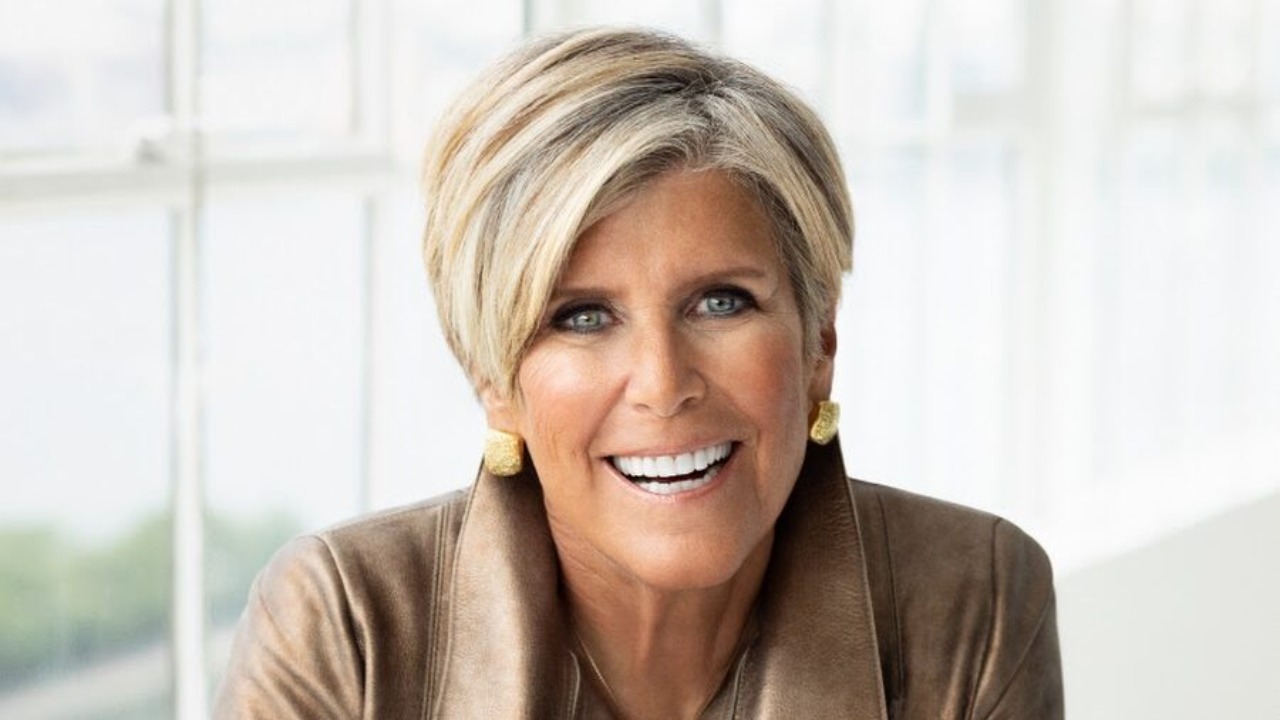
Suze Orman, the personal finance personality who built a media empire on retirement advice, has called $2 million in savings “nothing” and “pennies” for anyone planning to leave the workforce early. The remark, delivered during an interview on the Afford Anything podcast hosted by Paula Pant, set off a fierce debate about whether the popular Financial Independence, Retire Early movement sets its sights too low. Federal data on how much Americans actually hold in retirement accounts suggests the argument may be even more uncomfortable than Orman intended.
Orman’s Blunt Verdict on FIRE
Orman did not mince words when asked about the growing community of savers who aim to quit traditional employment in their 30s or 40s. “Two million is nothing. It’s pennies,” she said during the conversation with Pant, adding that early retirees need somewhere between $5 million and $10 million or more to handle real-world risks. Her reasoning centers on scenarios that standard retirement calculators often gloss over: catastrophic health events, long-term care expenses, and the tax burden that eats into withdrawals from traditional retirement accounts. In Orman’s view, the combination of a long retirement horizon and those unpredictable costs makes modest-looking assumptions about future spending dangerous.
The comments were not an offhand aside. Orman framed her position as a wholesale rejection of the FIRE philosophy, telling Money magazine that she “hates” the idea of people leaving work decades before traditional retirement age. Her objection is not that saving aggressively is bad, but that the movement’s typical target of 25 times annual expenses, derived from the widely cited 4% safe withdrawal rule, leaves too thin a margin when decades of post-retirement life are on the table. She has pointed to annual long-term care costs and the unpredictable nature of health-care inflation as forces that can shred a nest egg faster than any spreadsheet model predicts, especially if major expenses hit early in retirement when there is less time to recover from market downturns.
What Americans Actually Have Saved
Orman’s threshold looks even more striking when measured against reality. A Congressional Research Service analysis of the 2022 Survey of Consumer Finances, summarized in a federal brief, found that multi-million-dollar retirement accounts are rare across every age bracket. The share of households with retirement assets above $1 million remains a small fraction of the population, and breakdowns by age group show that younger households are even less likely to reach that mark. For workers under 55, balances at that level are especially uncommon, while the 55-to-64 cohort fares only modestly better as they approach traditional retirement ages.
Those figures expose a gap between aspiration and attainment that cuts deeper than the FIRE debate alone. If $2 million is “pennies,” as Orman contends, then the vast majority of American households are not just falling short of her benchmark but operating in a different financial universe entirely. The standard industry guideline of saving roughly 10 times one’s salary by retirement age, cited in coverage of her remarks, already feels out of reach for many workers facing stagnant wages, student debt, and volatile housing costs. Orman’s $5 million floor effectively moves the goalpost into territory that only a sliver of the population has achieved, raising uncomfortable questions about what “security” can realistically mean for everyone else.
Why Health Care Drives the Fear Factor
The strongest thread in Orman’s argument is medical spending. Her warnings are directly linked to rising health-care costs, a concern shared by mainstream financial planners even if they disagree with her specific dollar targets. Long-term care, in particular, can consume six figures per year, and unlike most retirement expenses, it tends to spike unpredictably and late in life when earning power is gone. A retiree who leaves the workforce at 35 faces a potential 50-plus-year horizon over which those costs compound, a timeline that traditional retirement planning rarely contemplates and that makes any underestimation of health-care inflation especially dangerous.
The 4% rule, which suggests retirees can safely withdraw 4% of their portfolio each year without running out of money over a 30-year span, was never designed for someone retiring in their mid-30s. Stretching that framework across four or five decades introduces sequence-of-return risk, inflation drag, and the simple uncertainty of what health-care policy and pricing will look like decades from now. Orman’s references to catastrophic events and long-term care expenses are her way of stress-testing the math that FIRE adherents often present as settled. Her critics may argue that no one can fully insure against every worst-case scenario, but her broader point (that health costs are the wild card in any early-retirement plan) has become a central theme in the debate.
The Risk of Setting the Bar Too High
There is a less obvious cost to Orman’s prescription. Telling middle-income earners they need $5 million to $10 million before they can feel secure risks discouraging the very behavior she claims to support. If the finish line looks impossibly distant, some savers may stop running altogether, deciding that if they cannot reach financial independence at Orman’s standard, there is little point in trying. The FIRE community, for all its imperfections, has motivated a generation of workers to dramatically increase their savings rates, slash consumer debt, and think critically about spending. For many adherents, the goal is not to stop working entirely but to gain enough flexibility to downshift into less stressful roles or pursue passion projects without fear of immediate financial ruin.
The Congressional Research Service data reinforces this tension. When retirement balances above $1 million remain uncommon even among households nearing traditional retirement age, a $5 million target is not a stretch goal; it is a fantasy for most. A more productive framing might acknowledge that $2 million, while imperfect, represents a level of financial resilience that the overwhelming majority of Americans have not reached and may never reach. The question is not whether $2 million is “enough” in some absolute sense but whether the pursuit of it, combined with flexible spending plans, continued part-time income, and realistic expectations about lifestyle, produces better outcomes than no plan at all. In that sense, FIRE’s emphasis on intentional living may matter as much as the specific dollar figure at the top of the spreadsheet.
Where the Real Debate Lands
Orman’s critique taps into a genuine vulnerability in early-retirement planning: the assumption that future costs will behave like past costs. Health-care pricing, tax policy, and market returns are all moving targets, and a portfolio that looks comfortable at age 40 can erode quickly if any one of those variables shifts sharply. Her instinct to build in a large buffer is sound risk management. The disagreement is over how large that buffer needs to be and whether insisting on an extreme standard is helpful for people who are trying to make incremental progress. For many households, the choice is not between retiring with $2 million and retiring with $10 million, but between saving something meaningful and saving almost nothing at all.
In the end, the clash between Orman and the FIRE movement is less about math than about philosophy. Orman’s stance reflects a desire for near-absolute safety in a world where medical costs and longevity are open-ended, while FIRE adherents accept more uncertainty in exchange for reclaiming decades of their lives from traditional work. The federal savings data suggests that either vision is out of reach for most Americans under current conditions, yet the conversation itself has value. By forcing savers to confront both the risks of retiring early and the risks of never building a cushion at all, the debate may push more people to engage seriously with their own numbers—whether their personal target is $500,000, $2 million, or something far higher.
More From The Daily Overview
*This article was researched with the help of AI, with human editors creating the final content.

Nathaniel Cross focuses on retirement planning, employer benefits, and long-term income security. His writing covers pensions, social programs, investment vehicles, and strategies designed to protect financial independence later in life. At The Daily Overview, Nathaniel provides practical insight to help readers plan with confidence and foresight.

