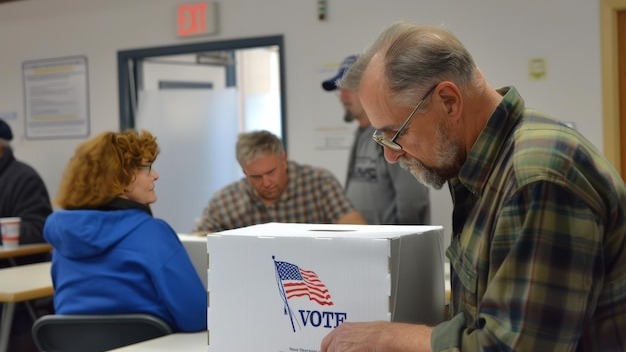
American parents are emerging as one of the most politically charged demographic groups ahead of the 2026 midterm elections, driven by deep partisan splits over what children should learn in school, who controls vaccine policy, and whether the country is doing enough to support families. Federal survey data and multiple institutional polls show that parents are not only engaged on these issues but increasingly divided along party lines, creating a volatile mix that both major parties will try to harness in competitive congressional districts.
Schools as a Partisan Flashpoint
Education has become one of the sharpest dividing lines in American politics, and parents sit at the center of that tension. A Pew Research Center survey measuring how Americans view K-12 public schools found large partisan and ideological gaps in favorability toward those institutions. Republicans and Democrats see the same school buildings through fundamentally different lenses, and that gap has widened as curriculum fights over gender identity, race, and American history have intensified.
Those fights are not abstract for the millions of adults with children currently enrolled. A separate Pew Research Center survey of U.S. parents found that parents differ sharply by party on what their K-12 children should learn, with the starkest divides appearing on topics like gender identity in classrooms and how schools teach about racism. These are not fringe disagreements; they touch the daily experience of families choosing schools, attending board meetings, and deciding whether to stay in or leave the public system.
Federal data from the National Center for Education Statistics confirms just how actively parents are making those choices. The Parent and Family Involvement in Education survey covers how families engage with K-12 schooling across public, private, homeschool, and virtual formats, documenting the reasons parents give for selecting one option over another. When parents feel strongly enough to switch schools or homeschool, those same convictions tend to follow them into the voting booth.
Vaccine Policy Adds Fuel to the Fire
The political energy around parenting is not confined to classrooms. Health policy, particularly childhood vaccination, has become another arena where partisan identity shapes how parents think about government authority. Pew Research Center data shows that Republicans are more likely than Democrats to say parents should play a major role in decisions about childhood vaccines, vaccine research, and related policy. That finding matters for midterm candidates because school vaccine mandates are set at the state level, meaning state and federal races alike can become referendums on parental autonomy.
The federal government tracks vaccination coverage through the National Immunization Surveys, which rely on parent and guardian interviews combined with provider verification. That methodology places parents at the center of the data collection process itself, reinforcing the idea that parental attitudes directly shape public health outcomes. As vaccine skepticism and parental rights rhetoric overlap more frequently in campaign messaging, candidates who can speak credibly to parents on both sides of this divide stand to gain an advantage in tight races.
Demographic Anxiety Raises the Stakes
Beyond schools and clinics, a broader demographic worry is shaping how Americans think about families and government support. A growing share of Americans say that fewer people having children would negatively affect the country, according to Pew Research Center. That sentiment creates political space for candidates to campaign on expanded child tax credits, subsidized child care, and paid family leave, issues that cut across traditional party lines and appeal directly to parents who feel squeezed by the cost of raising children.
This anxiety over declining birth rates is not just a cultural conversation. It feeds into concrete policy debates about immigration, workforce size, and entitlement funding that will be central to the 2026 midterms. Parents who already feel that the system is not built to support them may be especially responsive to candidates who propose tangible relief. The risk for both parties is that generic appeals to “family values” will ring hollow if they are not backed by specific legislative commitments on child care costs, school funding, or health coverage for children.
Measuring Parent Turnout and Issue Priorities
The question of whether parental frustration translates into actual votes has a data trail. The U.S. Census Bureau publishes turnout and registration rates by demographic and household characteristics through the Current Population Survey Voting and Registration Supplement for the November 2024 election. That dataset allows researchers to compare how households with children voted relative to other groups. The underlying CPS Voting Supplement microdata goes further, enabling custom analyses that cross-reference household composition, respondent age, and voting behavior.
Large-scale academic surveys add another layer of evidence. The Cooperative Election Study, a Harvard-led consortium administered by YouGov, fields samples of more than 50,000 respondents in election years using a two-wave design that captures issue priorities before and after Election Day. That scale makes it possible to isolate how parents rank education, child care, and health policy against other concerns, and whether those rankings differ meaningfully from non-parents. If parents are sorting themselves into a distinct issue cluster, the CES data will be among the first places that pattern shows up at a statistically reliable level.
More From The Daily Overview
*This article was researched with the help of AI, with human editors creating the final content.

Grant Mercer covers market dynamics, business trends, and the economic forces driving growth across industries. His analysis connects macro movements with real-world implications for investors, entrepreneurs, and professionals. Through his work at The Daily Overview, Grant helps readers understand how markets function and where opportunities may emerge.

