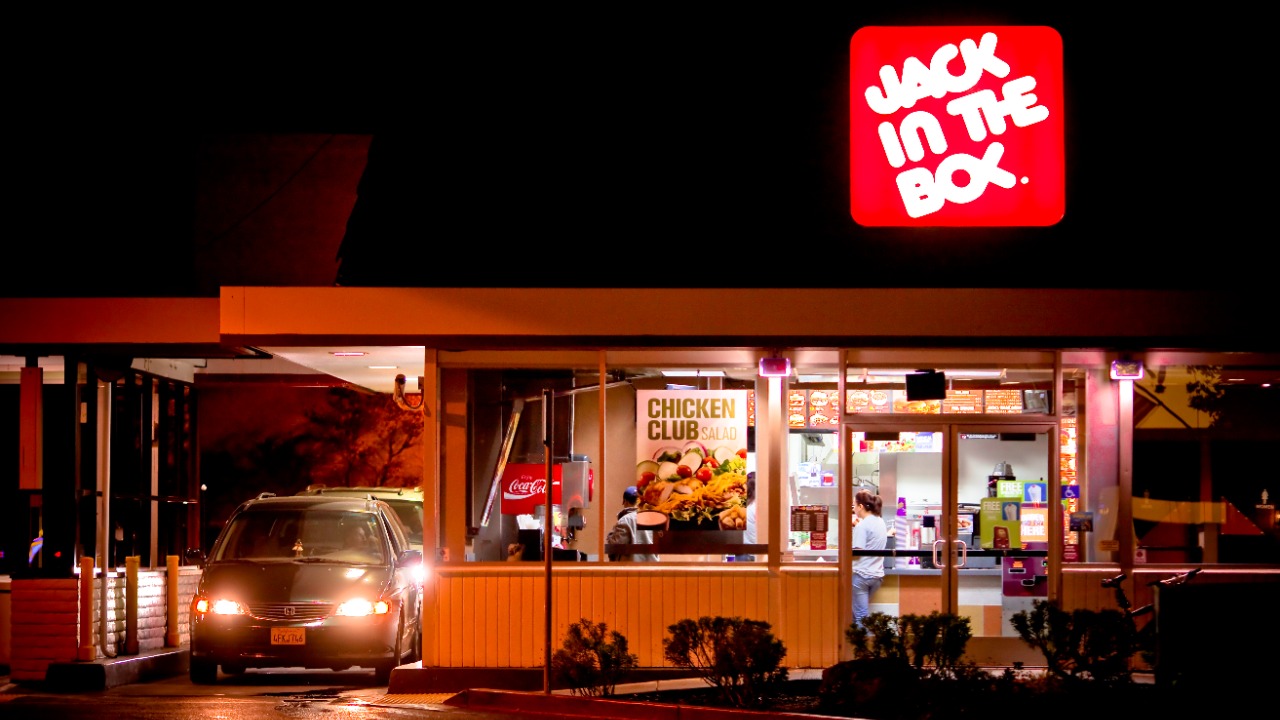
Jack in the Box is shrinking faster than many customers realize, with more than 70 restaurants already shuttered and a larger wave of closures locked in for the months ahead. The fast food chain is leaning on an aggressive restructuring plan that trades long standing locations for a leaner balance sheet, leaving some communities without a late night burger stop and thousands of workers facing uncertainty. I see a company betting that painful cuts now will keep the brand alive in a brutally competitive market.
The 70-store shock and why more are on the way
The first jolt for diners came as Jack in the Box quietly pulled the plug on more than 70 restaurants, a figure that signals more than routine pruning of underperforming units. Those closures, spread across the system, reflect a chain under real financial strain, with traffic slipping and costs rising faster than menu prices can keep up. Internal and external reporting describes a company wrestling with weaker sales, higher beef prices and a need to reassure lenders that it can still generate reliable cash flow.
In Dec, coverage of the retrenchment detailed how the company shut down more than 70 stores and warned that additional locations would go dark by the end of its fiscal year, a move framed as essential to improving margins and stabilizing earnings for the year that ended in September, according to By Landon Mion. A parallel report on the same restructuring wave underscored that the closures were concentrated in restaurants seeing fewer customers and facing elevated beef costs, with executives arguing that shutting those doors would ultimately strengthen the broader system, a rationale laid out in detail in a separate Business Flash breakdown of the company’s financial struggles.
A 75-year-old brand leans into a RESTAURANT CLOSURE PROGRAM
Behind the abrupt loss of local outlets sits a formal restructuring blueprint that Jack in the Box rolled out earlier this year. The company, which some reports describe as a 75-year-old fast food giant, is not just trimming at the edges but executing a defined RESTAURANT CLOSURE PROGRAM that targets entire blocks of locations. I read that strategy as a signal that management believes the current footprint is simply too large for today’s demand, especially in older trade areas where real estate and labor costs have climbed.
In its own investor communications, the company introduced a “JACK on Track” initiative that explicitly calls out a RESTAURANT CLOSURE PROGRAM, with Jack and Box projecting that a block closure approach will remove chronically underperforming units and free capital for remodels and new builds in stronger markets, as outlined in the official CLOSURE PROGRAM plan. Separate reporting framed the brand as a 75-year-old chain preparing to close 200 spots, with the first 120 expected to shut in a short window, a sweeping contraction that one account summarized with the blunt line “Say goodbye to 75-year-old fast food giant as 200 locations will close in fight to survive, first 120 will shut in days,” a description embedded in a detailed Say goodbye analysis of the chain’s survival plan.
From 70 closures to 200: how deep the cuts could run
The 70 initial shutdowns are only the visible tip of a much larger retrenchment that could reshape Jack in the Box’s national presence. Internal targets and outside estimates point to a total of roughly 200 closures, a scale that would rival some of the biggest fast food pullbacks of the past decade. I see that number as a rough proxy for how many restaurants the company believes are structurally unprofitable, either because of weak sales, outdated buildings or unfavorable leases that no longer make sense in a delivery heavy era.
One widely cited breakdown of the restructuring wave reported that the company plans to close about 200 locations, with the first 120 set to shut in days and many of those restaurants having been open for over three decades, a stark illustration of how even long tenured outlets are not being spared in the current reset, according to the detailed 120 will shut coverage. A separate report on the broader fast food landscape described a Wendy’s rival preparing to close up to 80 diners in 2026 as part of a turnaround strategy aimed at cutting costs, slashing debt and strengthening the balance sheet, with the company carrying roughly $1.7 billion in debt and targeting some of the oldest units in the system, a pattern that closely mirrors Jack in the Box’s own focus on aging restaurants, as laid out in a detailed Dec turnaround summary.
Why California and legacy markets are feeling it first
The pain is not evenly distributed, and early evidence suggests that California and other legacy markets are bearing a disproportionate share of the closures. Jack in the Box is headquartered in the state, and many of its oldest restaurants sit in communities where wage mandates, real estate costs and competition from newer fast casual brands have squeezed margins. I see the company’s decisions as a hard calculation that some long familiar corners can no longer support a drive thru burger shop at the price points customers are willing to pay.
One detailed account of the restructuring described a California based fast food chain preparing to close more than 150 locations, with between 80 and 120 Jack units expected to shut and some of those restaurants having operated for more than 30 years, a contraction that echoes the broader turmoil hitting casual dining icons like Red Lobster, which filed for bankruptcy from its base in Orlando, Fla, as laid out in a comprehensive Red Lobster comparison. Another report on the same wave of closures emphasized that the California based chain’s retrenchment is part of a broader pattern in American dining, where legacy brands are shrinking their physical footprints even as they chase growth through delivery apps and smaller, more efficient store formats.
Franchisees, workers and customers caught in the middle
Behind every closed Jack in the Box sign sits a franchisee or corporate operator trying to salvage investments and jobs. Franchise owners, who often carry significant debt tied to their restaurants, are being forced to decide whether to invest in remodels, convert to new formats or walk away entirely. I see echoes of this pressure in other burger chains, where individual operators are closing units without resorting to bankruptcy but still absorbing real financial pain.
One report on the broader burger sector highlighted a 56-year-old burger chain franchisee who closed a location without filing for bankruptcy, with writer Kirk Neil explaining how the operator weighed ongoing losses against the cost of staying open through Dec, a case study in how local owners are navigating corporate mandates and market realities, as detailed in the Kirk Neil account. For Jack in the Box, similar dynamics are playing out as franchisees respond to the company’s block closure program and as Dec communications from the chain stress that the goal is to emerge with a healthier, simpler, asset light model that can still support franchise profitability even as weaker stores are cut.
How Jack in the Box is selling the cuts to Wall Street and the public
To investors, Jack in the Box is pitching the closures as a disciplined reset rather than a retreat. The company’s messaging frames the shutdowns as a way to concentrate on higher volume corridors, reduce maintenance and labor burdens at aging sites and free up capital for digital ordering, drive thru upgrades and new prototypes. I read that narrative as an attempt to convince Wall Street that the brand can still grow earnings even if the raw store count shrinks.
In Dec, one detailed business report explained that Jack in the Box shut down more than 70 stores and expects more to close amid financial struggle, while also outlining how the company plans to use a block closure program to streamline operations and improve long term financial performance, a strategy summarized in a Jack in the Box shut breakdown. Another financial recap noted that Jack and Box have already closed more than 70 restaurants and are signaling that further closures will continue as part of a simpler, asset light model, a message that has been echoed in social media posts warning that “Your local #JackintheBox might be closing its doors soon” and that “the fast food chain has already closed more than 70 of its restaurants,” language that appears in a widely shared Dec social post amplifying the company’s shift.
Customers confront a future with fewer late-night tacos
For regulars, the closures are less about balance sheets and more about losing a familiar stop for burgers, tacos and late night snacks. The disappearance of neighborhood locations can reshape daily routines, especially in car dependent suburbs where fast food outlets double as informal community hubs. I have seen similar reactions when other chains pull back, with customers expressing frustration that profitable seeming stores vanish overnight once corporate spreadsheets say they no longer fit the strategy.
One financial recap of the restructuring wave noted that Jack and Box have already shut more than 70 locations, a figure that has been repeated in consumer facing coverage warning that “Your local #JackintheBox might be closing its doors soon” and that “Your local #JackintheBox might be closing its doors soon. The fast food chain has already closed more than 70 of its restaurants,” phrasing that appears in a widely circulated Your local alert to diners. Another summary of the trend emphasized that Jack in the Box shut down more than 70 stores with more expected by year’s end over financial struggles, a pattern that has been echoed in broader coverage of restaurant chains, including an AOL finance piece that referenced how Jack and Box are navigating the same pressures facing other operators, such as an Ohio based barbecue chain whose locations feature dine in options, as described in a detailed Jack Box comparison.
More From TheDailyOverview

Grant Mercer covers market dynamics, business trends, and the economic forces driving growth across industries. His analysis connects macro movements with real-world implications for investors, entrepreneurs, and professionals. Through his work at The Daily Overview, Grant helps readers understand how markets function and where opportunities may emerge.

