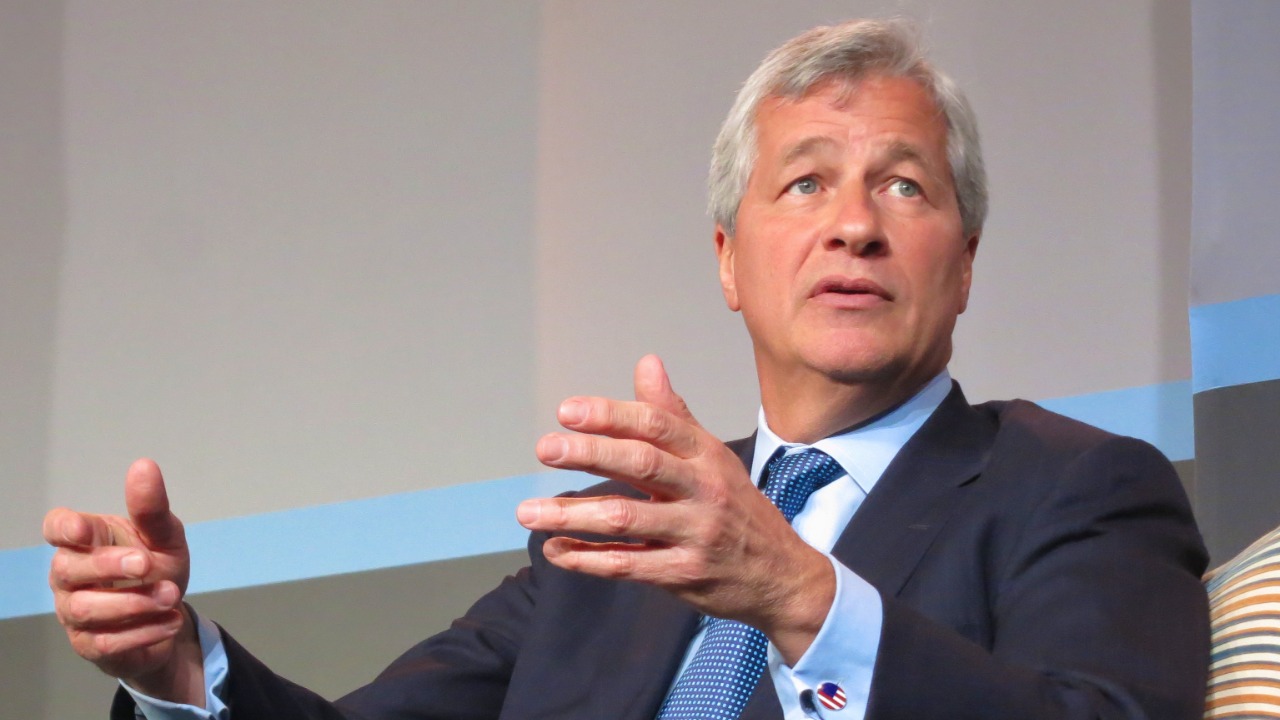
Jamie Dimon has spent years telling policymakers that the United States can ask more of people like him, as long as the money does not disappear into what he calls the Washington “swamp.” At the World Economic Forum in Davos this year, the JPMorgan chief executive sharpened that message, saying he is comfortable with higher personal taxes if the proceeds are clearly routed to families and communities that need help rather than to wasteful federal programs. His argument lands at a moment when the federal deficit, the national debt and the politics of inequality are converging into a single, uncomfortable question about who should pay and who should decide how the money is spent.
Dimon’s Davos broadside against the ‘swamp’
At Davos, CEO Jamie Dimon used his platform to draw a sharp line between tax levels and tax use, insisting that the real problem is not how much the government collects but where it goes. He told the World Economic Forum audience that he would accept higher taxes on himself if he could be confident the revenue would reach people who genuinely need support, rather than being absorbed by what he described as the Washington “swamp” of bureaucracy and political horse-trading, a critique that reflects his long running frustration with federal spending priorities and program design, including rules around benefits such as the child tax credit that he has argued should be simplified and expanded for low income workers, as reported in Jan.
His comments came against the backdrop of a global elite gathering that has often been criticized for being out of touch with ordinary voters, which made his choice of language even more striking. By invoking the “swamp,” Dimon borrowed a term that has been a staple of populist attacks on Washington, yet he used it to argue for a more progressive tax system that channels money directly to households rather than into opaque federal accounts, a theme that echoed through his Davos conversations about the strain on middle class Americans and the need to rethink how the United States funds social support, as highlighted in his On the remarks on the broader economy.
Deficits, debt and Dimon’s fiscal alarm
Dimon’s willingness to pay more is not abstract, it is rooted in his alarm about the trajectory of U.S. public finances. The federal government finished the 2025 fiscal year with a deficit of $1.78 trillion, a shortfall that was immediately added to the national balance sheet and pushed the overall debt burden to levels he has repeatedly described as unsustainable. That national debt figure now exceeds $38 trillion, and the government is already spending about $276 billion a year just to service that debt, numbers that he argues will eventually crowd out other priorities if left unchecked.
Earlier this year he warned that the swelling obligations are “going to bite,” saying the United States cannot “just keep borrowing money endlessly” without triggering consequences for growth, interest rates and financial stability. In his view, the combination of rising debt, higher servicing costs and political gridlock is a recipe for a future crisis that will be far harder to manage than a gradual course correction today, which is why he has urged policymakers to pair any new spending with credible plans to either cut other outlays or raise revenue in ways that support workers and communities rather than simply padding Washington’s coffers.
Tax the wealthy, but change how the money flows
Dimon’s critique of the “swamp” is paired with a clear policy prescription, he wants the tax code to lean more heavily on the wealthy while delivering targeted relief to low and middle income households. He has argued that there are “so many tax breaks out there that shouldn’t be there,” calling for a modest increase in taxes on high earners like himself and the removal of carve outs that primarily benefit the top of the income distribution, a stance he outlined when he said the rich should shoulder a bit more so that the government can expand support for workers at the bottom, as he put it in remarks cited by There.
He has been especially vocal about using higher taxes on the rich to finance more generous credits for low income families, including proposals to increase or even double the income tax credit for workers and to remove barriers that prevent some parents from claiming child related benefits. In earlier comments he backed the idea that affluent taxpayers should contribute more so that Washington can cut taxes for those on the lowest rungs of the income ladder, a position summarized in reports that Dimon says the rich should pay more to fund low income tax cuts, which he frames as both an economic and moral imperative in a country where wage growth has lagged for many workers.
From carried interest to local control: where Dimon wants change
Beyond broad calls for higher taxes on the wealthy, Dimon has singled out specific loopholes that he believes distort the system and undermine public trust. He has been explicit that “we absolutely should be taxing carried interest,” arguing that the long standing break for private equity and hedge fund managers is hard to justify when compared with how ordinary wage income is treated and that closing it would send a signal that the rules are not tilted toward insiders, a point he made while adding that more of the resulting revenue should “flow directly into the communities,” as he said in comments about carried interest.
He has also suggested that part of the answer lies in shifting more control over spending decisions away from Washington and toward local actors who can tailor programs to the needs of their communities. In a recent interview he said he thinks support should be delivered “at more of a local level,” describing a model where a city or region works directly with a company like JPMorgan, offers tax incentives and then holds the firm accountable for investing in specific projects such as job training or neighborhood revitalization, an approach he contrasted with sending money into federal programs that he sees as too slow and impersonal, according to the JAMIE DIMON transcript of his World Economic Forum appearance.
Economic storm clouds and the politics of paying more
Dimon’s tax arguments are intertwined with his broader view that the economy is entering a more volatile phase shaped by geopolitics, domestic politics and structural shifts. He has warned that a combination of factors will alter the economic landscape in 2026, including global conflicts, shifting supply chains and the risk of policy paralysis in Washington, a trio of concerns that he believes could weigh on growth and markets if not managed carefully, as outlined in his comments that Jamie Dimon Says Factors Will Alter the Economy. Against that backdrop, his call for a more progressive and efficient tax system doubles as a plea for political stability, since he argues that predictable rules and credible fiscal plans are essential for businesses deciding where to invest and hire.
At the same time, he has tried to distinguish between tax hikes that simply feed federal spending and those that are paired with visible benefits for workers, such as expanded credits or direct transfers. In Davos he said that “even if you had to raise taxes a little bit, that’s fine,” but only if the money is clearly directed to people who need it rather than being lost in the “swamp,” a line that captured his attempt to bridge elite and populist critiques of Washington and that was echoed in coverage noting his willingness to accept higher levies as long as they bypass the capital’s entrenched interests, as reflected in But Dimon’s comments and his sharper remark that right now the money “just goes to the Washington ‘swamp’,” as quoted in Right.
More From TheDailyOverview
*This article was researched with the help of AI, with human editors creating the final content.

Grant Mercer covers market dynamics, business trends, and the economic forces driving growth across industries. His analysis connects macro movements with real-world implications for investors, entrepreneurs, and professionals. Through his work at The Daily Overview, Grant helps readers understand how markets function and where opportunities may emerge.

