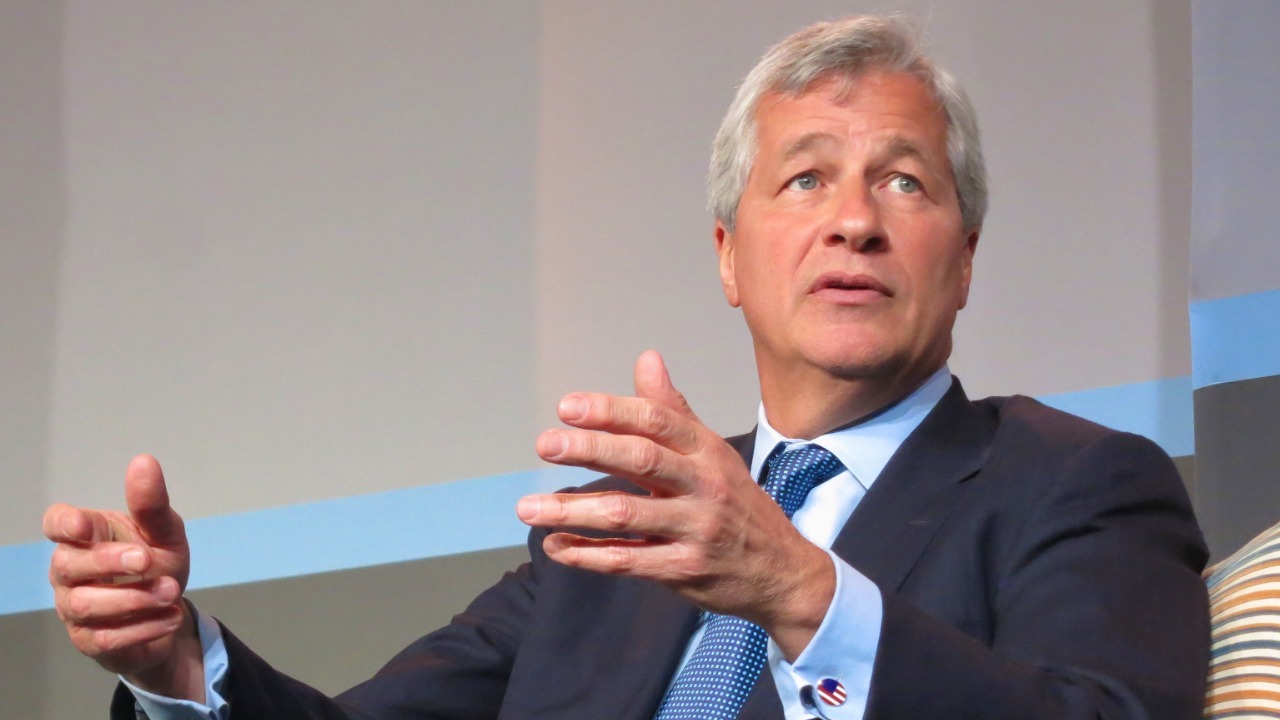
Jamie Dimon is not easily rattled, but the longtime head of the largest U.S. bank is telling clients that the next couple of years will look very different from the decade of cheap money and benign inflation. He has zeroed in on three powerful forces that, in his view, will collide by 2026 and reset how growth, prices and markets behave. I see his warning as less a market call and more a roadmap for how households, companies and policymakers will have to adapt.
Those forces are persistent inflation tied to large government deficits, a more dangerous geopolitical landscape shaped by trade fights and policy errors, and a still‑uncertain productivity shock from artificial intelligence. Each is disruptive on its own. Together, they could define whether the economy settles into a higher‑rate, more volatile regime or manages a surprisingly strong expansion.
Inflation and Deficits: The End of Easy Money
Dimon has been blunt that the era of near‑zero interest rates is over, and that is largely because of what he describes as “Inflation and Def” colliding with heavy public borrowing. After a burst of price spikes, he does not expect inflation to glide neatly back to the ultra‑low levels investors grew used to, in part because government spending and structural pressures are keeping demand and costs elevated. In his view, the combination of stubborn inflation and large fiscal gaps means central banks will be slower to cut and quicker to hike again if prices re‑accelerate, which is a very different backdrop from the 2010s.
That concern is rooted in hard numbers. The $601 billion deficit reported by the Congressional Budget Office earlier this year is one sign of how quickly the national debt is climbing, and Dimon has warned that this level of borrowing will eventually “bite” through higher rates and slower growth. He has tied that risk directly to the broader theme of “Inflation and Def,” arguing that persistent deficits make it harder for policymakers to fight price pressures without triggering market turmoil. When I look at his comments, I read them as a warning that investors should stop assuming a quick return to the old normal and instead plan for a world where financing costs stay elevated and fiscal policy is a constant source of uncertainty.
Geopolitics and Policy Mistakes: Tariffs, Trade Wars and Fragmentation
The second force Dimon highlights is what he calls “Geopolitics and Policy Mistakes,” a catch‑all for rising global tensions and the risk that governments respond in ways that make the economic picture worse. He has repeatedly pointed to tariffs and trade wars as a clear example, arguing that “Tariffs and” similar barriers are inherently inflationary because they add costs to imported goods and force companies to rewire supply chains. In practice, that can mean higher prices for everything from smartphones to cars, as well as delays and shortages when trade routes are disrupted.
Dimon’s concern is not just about one country’s policy but about a broader shift toward fragmentation that could leave the world with weaker growth and fewer opportunities. In his view, “Geopolitics and Policy Mistakes” can feed directly into inflation, by raising costs, and into financial volatility, by shaking investor confidence in cross‑border investment. Reporting on his outlook notes that he sees tariffs and trade conflicts as a direct threat to stable supply chains and as a driver of weaker growth and fewer opportunities for workers and businesses. I interpret that as a call for investors to pay as much attention to policy risk as to earnings forecasts, because a single misstep on trade or sanctions can now move markets as dramatically as a recession warning.
Debt Hazards and the Limits of Borrowing
Behind Dimon’s focus on deficits is a broader worry about how much debt the system can safely carry. On recent earnings calls, he has warned that the national debt, now measured in tens of trillions of dollars, represents “an enormous amount of risk” if rates stay high or rise further. The Why This Matters section of one analysis of his remarks underscores that bank balance sheets are already reflecting the strain of higher funding costs and shifting credit quality. Dimon has framed it in simple terms, saying the United States cannot “keep on borrowing money endlessly” without consequences for growth and financial stability.
For households and companies, that warning translates into a more cautious lending environment and a higher bar for new projects. If investors begin to demand a bigger premium to hold government bonds, that can ripple into mortgage rates, auto loans and corporate borrowing costs. Dimon’s comments about the hazards facing the economy suggest he expects credit conditions to tighten if deficits keep widening, especially if markets start to doubt Washington’s willingness to tackle long‑term debt. I see this as one of the clearest ways his three forces intersect: large deficits feed inflation, which keeps rates higher, which in turn magnifies the burden of the existing debt stock and raises the odds of a policy mistake.
The Unknown Effect of AI Productivity
The third factor in Dimon’s 2026 outlook is what one report calls “The Unknown Effect of AI Productivity Dimon,” a phrase that captures both his optimism and his caution. He has been one of the most vocal large‑bank leaders about the transformative potential of artificial intelligence, arguing that it could significantly boost productivity across industries. At the same time, he stresses that the timing and scale of that boost are uncertain, and that the transition could be bumpy for workers and for inflation. If AI tools rapidly increase output per worker, that could ease price pressures. If they instead fuel new demand and investment before efficiencies fully materialize, they could add to inflation in the short run.
Dimon’s comments suggest he sees AI as a wild card that could reshape everything from labor markets to politics. The reporting notes that he views the “Unknown Effect of AI Productivity Dimon” as a factor that could feed into both inflation and political debates over jobs and inequality. One analysis of his outlook emphasizes that he is urging investors to think about how AI might change corporate cost structures and profit margins, not just headline growth. I read that as a reminder that technology shocks rarely play out in a straight line. They can create winners and losers, shift bargaining power between employers and employees, and alter how central banks interpret productivity data when setting rates. In other words, AI is not just a tech story, it is a macroeconomic variable.
How Investors and Households Can Navigate Dimon’s Three Forces
Dimon’s warnings are not purely theoretical. As Chase CEO Jamie, he has a front‑row view of how consumers and businesses are behaving in real time, from credit‑card delinquencies to corporate borrowing plans. He has urged investors to prepare for a range of outcomes rather than betting on a single rosy scenario, pointing to the way “Jamie Dimon Says These” three “Factors Will Alter the Economy” as a framework for stress‑testing portfolios. Another account of his remarks notes that he is “once again urging investors” to stay cautious as these forces collide, highlighting that the more stretched the system becomes, the harder it is to recover from a shock.
That caution extends to expectations about interest rates. In one detailed breakdown of his outlook, Dimon argues that, “instead of returning to the ultra” low rates of the past, markets should assume that “Inflation and Deficits” will keep borrowing costs higher for longer. The same analysis notes that he sees savings buffers built up during the pandemic, in some cases reaching $50,000 for some households, as a temporary cushion that will not last forever if inflation stays sticky. From my perspective, that means both investors and families should be thinking about how their budgets and portfolios hold up if rates stay elevated and markets remain choppy rather than assuming a quick reversion to the old playbook.
More From TheDailyOverview

Grant Mercer covers market dynamics, business trends, and the economic forces driving growth across industries. His analysis connects macro movements with real-world implications for investors, entrepreneurs, and professionals. Through his work at The Daily Overview, Grant helps readers understand how markets function and where opportunities may emerge.

