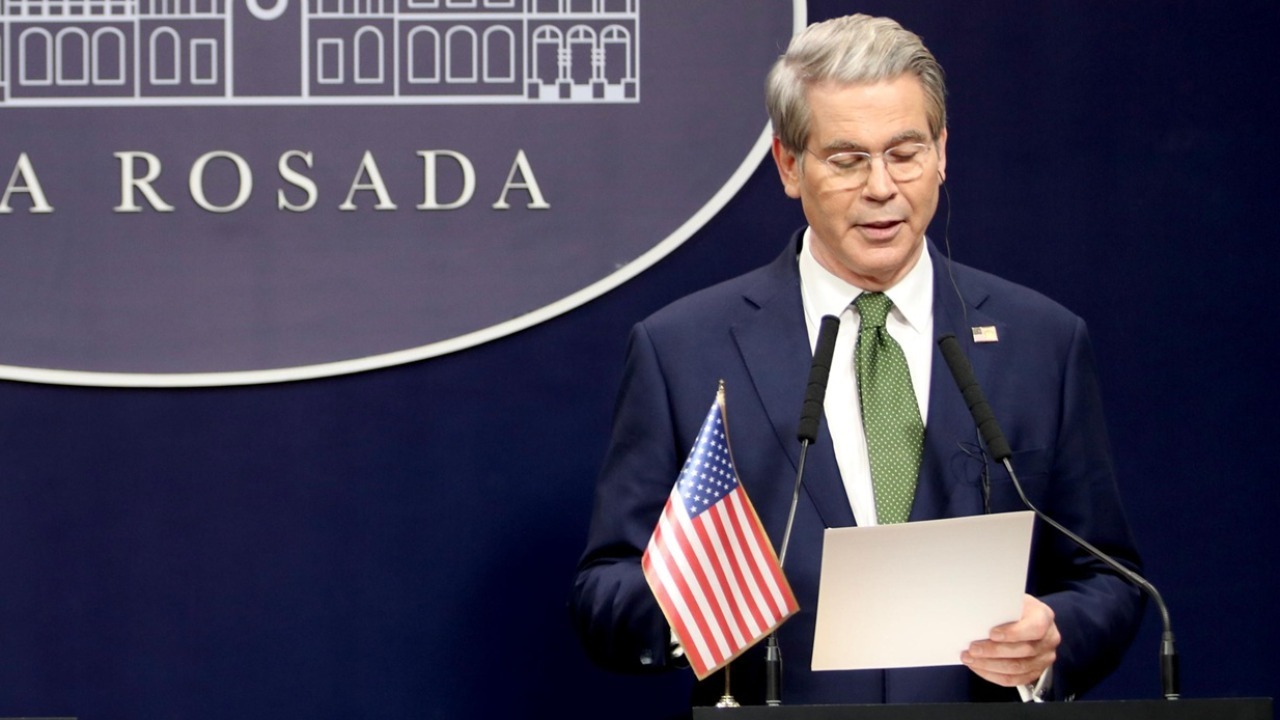
The Trump administration has turned a long-shot territorial ambition into the centerpiece of a transatlantic trade fight, with Treasury Secretary Scott Bessent arguing that acquiring Greenland is urgent enough to justify new tariffs on key European partners. By framing the push as a “national emergency,” Bessent is trying to recast a controversial annexation bid as a defensive move to prevent a future conflict and to pressure European governments that have lined up behind Denmark’s refusal to sell.
At stake is not only the future of Greenland, a vast Arctic territory formally under Denmar’s authority, but also the stability of the economic and security relationship between Washington and Europe. The clash over tariffs, emergency powers and sovereignty is rapidly becoming a test of how far President Donald Trump is willing to go to secure a strategic prize and how much pushback European leaders, and skeptical Republicans in Congress, are prepared to mount.
From tariffs to “national emergency”
In WASHINGTON, Treasury Secretary Scott Bessent has become the administration’s chief explainer of a policy that links trade penalties on eight European countries to the campaign to take control of Greenland. He has defended proposed duties on European goods as a necessary response to governments that oppose President Trump’s plan, describing the use of emergency economic powers as a way to force reluctant allies to the table and justifying the move as a form of preemptive crisis management. In his telling, the tariffs are not a side skirmish but the financial arm of a broader strategy to secure the Arctic territory despite European resistance, a position he has outlined while invoking the president’s authority under IEEPA to impose such measures on targeted European partners.
Bessent has sharpened that argument in multiple appearances, repeating that “the national emergency is avoiding the national emergency” as he explains why President Trump is willing to hit allies with a 10 percent tariff on goods from eight European states that have lined up behind Denmar’s control of Greenland. He has portrayed the president as “being strategic” and “looking beyond this year,” insisting that the administration will not back down as the new duties are set to take effect and telling interviewers that the White House is prepared to absorb political blowback in Washington and in European capitals to keep pressure on governments that have rejected the Greenland plan, a stance he has reinforced while defending the tariffs in WASHINGTON.
Why Greenland has become the flashpoint
To understand why the administration is willing to risk a tariff war over Greenland, it helps to look at the island’s strategic profile. The territory sits between North America and Europe, astride key North Atlantic sea lanes and Arctic air routes, and already hosts a major United States military presence at Thule Air Base. President Trump has said he wants Greenland to counter what he calls a growing threat from Russia and China, arguing that control of the island would give Washington a stronger position in the Arctic as Moscow expands its northern military footprint and Beijing pursues what he describes as a creeping economic and security role in the region, a rationale he has tied directly to the perceived challenge from Russia and China.
Greenland’s status as a self-governing territory within the Kingdom of Denmar has turned that strategic logic into a diplomatic minefield. European leaders have rallied behind Copenhagen’s refusal to discuss any transfer of sovereignty, with British Prime Minister Keir Starmer and French President Emmanuel Macron both signaling that the idea of a NATO ally annexing a territory from another NATO country crosses a line. Their stance reflects not only solidarity with Denmar but also concern that accepting such a move would set a precedent for redrawing borders inside the alliance, a fear that has shaped the broader Greenland debate in European capitals.
Bessent’s case: weak Europe, strong America
Scott Bessent has tried to flip European outrage on its head by arguing that the continent’s response to the Greenland bid proves why the United States must act. In interviews, Treasury Secretary Scott Bessent has said that Europeans project weakness by opposing the plan, warning that their reluctance to confront Russia and China in the Arctic leaves Greenland exposed and makes it harder for Washington to rely on NATO guarantees. He has framed the island as needing the United States because, in his view, European leaders are unwilling to match American resolve, a criticism he has leveled directly at Europeans who have rejected the annexation push.
That argument is paired with a blunt assessment of Europe’s leverage. Bessent has said that a “weak” Europe means President Trump “must take Greenland for us,” describing the tariffs as the administration’s most powerful retaliation tool and suggesting that the president is prepared to “leverage his emergency powers” to push through the acquisition despite allied objections. He has dismissed European talk of countermeasures as a “false choice,” insisting that Washington will not be deterred by threats of retaliatory duties and that the United States will not back down on taking over Greenland, a stance he has outlined while discussing how Trump announced a 10 percent tariff on goods from eight European countries.
European pushback and the tariff spiral
European leaders have not accepted Bessent’s framing, and the tariff threat has triggered a flurry of warnings about escalation. In live updates tracking the fallout, officials in Europe have discussed up to 108 billion dollars in potential retaliatory tariffs, even as some governments signal they would rather negotiate than launch a full trade war. British Prime Minister Keir Starmer has been among those voicing concern about the idea of a NATO member annexing territory from another NATO country, while French President Emmanuel Macron has echoed that alarm, underscoring how the Greenland dispute has become entangled with broader questions about alliance norms and the limits of American pressure on European allies.
At the same time, Bessent has warned that retaliatory EU tariffs would be “very unwise,” telling reporters that Europe should not escalate a dispute that began with what he portrays as a limited, targeted move. He has repeated that message in Davos and in Washington, arguing that the United States is using tariffs as leverage, not as an end in itself, and that European governments risk damaging their own economies if they respond in kind. His comments have been aimed squarely at the Retaliatory EU measures under discussion in Brussels, where officials are weighing how to answer a policy that many describe as blackmail.
Domestic skepticism and the “hot war” argument
The Greenland push has not only rattled Europe, it has also exposed divisions in Washington. Many lawmakers, including some Republicans, have pushed back on Trump’s rhetoric about annexing the island, questioning both the legality of using emergency economic powers to pressure allies and the wisdom of tying trade policy to a territorial gambit involving a NATO partner. Their criticism has focused on the risk that the United States could fracture its coalition in Europe at the very moment it is trying to counter Russia and China, a concern that has grown as the administration has linked the tariffs directly to the effort to acquire Greenland.
Bessent has responded by arguing that the real danger lies in inaction. Treasury Secretary Scott Bessent has said that Trump’s Greenland push is about avoiding a “hot war,” contending that securing the island now, and potentially expanding the existing United States military base there, would reduce the risk of a future armed clash with Russia or China in the Arctic. He has presented the tariffs and the emergency declaration as tools to prevent that scenario, not to provoke it, and has suggested that critics are underestimating the long term stakes of leaving Greenland’s status unchanged, a case he has made while linking the president’s strategy to the goal of preventing a direct conflict over Greenland.
More From TheDailyOverview

Grant Mercer covers market dynamics, business trends, and the economic forces driving growth across industries. His analysis connects macro movements with real-world implications for investors, entrepreneurs, and professionals. Through his work at The Daily Overview, Grant helps readers understand how markets function and where opportunities may emerge.

