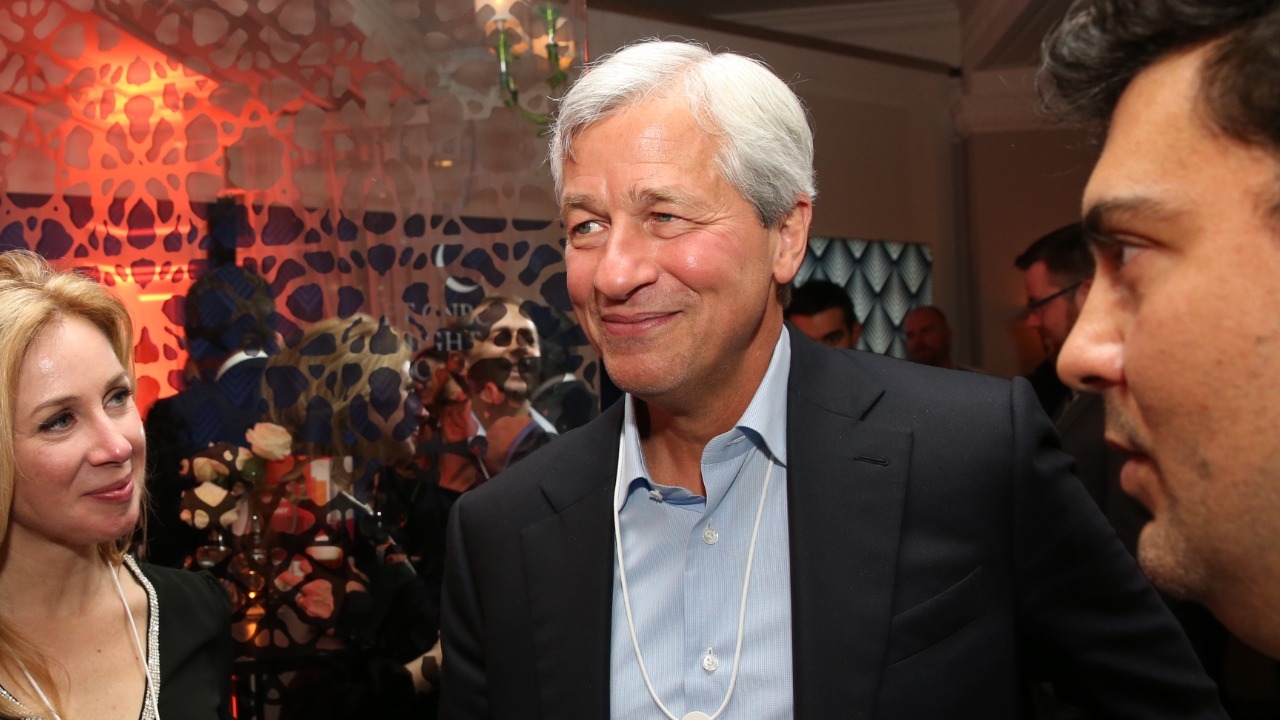
Jamie Dimon is not known for hyperbole, so when he says a single “red-hot” asset could “easily” climb another 131% in value, investors pay attention. The longtime banking chief is pointing to a market that has already surged, yet he argues the move may only be halfway done. I want to unpack what he is really saying, why it matters now, and how ordinary investors can respond without confusing a bold forecast for a sure thing.
His call comes as markets wrestle with slower growth, sticky inflation and a Federal Reserve that is closer to cutting rates than hiking them. In that environment, the asset he is highlighting is not a speculative tech stock or a crypto token, but a traditional store of value that has suddenly become the hottest trade on Wall Street.
Dimon’s 131% upside call and the asset behind it
Jamie Dimon has told investors that one specific asset could “easily” see its price rise by 131%, a figure that implies more than a doubling from current levels. In his view, the market is underestimating how far this move can run, even after a powerful rally that has already pushed the asset into “red-hot” territory. The way he frames it, the potential 131% gain is not a moonshot scenario but a plausible outcome if the macro backdrop continues to deteriorate, something he links to a slowing economy and persistent inflation pressures, as reported in detailed coverage of his comments in Jan.
The asset he is talking about is gold. In a separate breakdown of his remarks, Jamie Dimon is quoted explaining that what he means is simple: if gold were to revisit its inflation-adjusted peaks, the metal could log a 131% jump from current levels, a scenario he sees as entirely feasible rather than extreme. That framing, highlighted again in a follow up analysis of What, underscores that he is not promising a straight line higher, but arguing that the long term ceiling for the metal sits far above where it trades today.
Why a longtime skeptic is warming to gold
What makes this call striking is that Jamie Dimon has spent years downplaying the appeal of precious metals. He has described himself as “not a gold buyer,” complaining that it “costs 4% to own it,” a reference to storage, insurance and other carrying costs that make bullion less attractive than productive assets like stocks or corporate bonds. Those remarks, delivered at a high profile conference and recounted in a detailed look at his View on Gold, positioned him firmly in the camp of skeptics who see the metal as a dead asset in normal times.
Yet even in that conversation, Jamie Dimon conceded that in the current environment it is “semi rational” to buy gold, given the combination of geopolitical risk, high government debt and questions about long term fiat currency stability. That nuance has become more important as he now highlights the possibility of a 131% upside, a shift that is echoed in coverage of his more recent comments on Jamie, where he calls this “one of the few times” when owning the metal makes clear sense.
From 131% to 135%: how far could the rally run?
Dimon’s 131% comment is not the only aggressive upside scenario attached to gold right now. In a separate set of remarks, he has been cited suggesting that this same “red-hot” asset could “easily” go up another 135%, language that again frames a more than doubling as a realistic possibility rather than a tail risk. That bolder 135% figure, detailed in coverage of his earlier comments on a 135% move, underscores just how far he thinks the metal could run if inflation proves sticky and central banks keep adding to their reserves.
Institutional research is starting to line up with that kind of thinking. In a recent strategy note, one major U.S. investment bank shrugged off a sharp pullback in bullion prices and set a new year end target of $6,300 per ounce, arguing that the fundamental drivers behind the rally remain intact. That target, which explicitly calls for gold to reach $6,300, was laid out in a note circulated late Sunday, and it effectively backs up Dimon’s argument that the market is still underpricing the metal’s potential if the macro picture worsens.
How Dimon contrasts gold with crypto and other risk assets
Part of the reason Dimon’s gold call resonates is that it fits neatly with his long running skepticism toward cryptocurrencies. As J.P. Morgan Chase CEO Jamie Dimon, he has repeatedly blasted crypto tokens “which you call currency, like Bitcoin,” insisting that “They are decentralized Ponzi schemes.” Those remarks, captured in a widely circulated Bitcoin clip, underline that he sees a sharp distinction between a centuries old store of value and digital assets that depend on speculative flows and regulatory forbearance.
That stance has not stopped Bitcoin from staging its own powerful rallies, including a run toward $60,000 that drew intense scrutiny from market commentators and prompted fresh warnings from Dimon about the risks of chasing momentum. In one televised segment that revisited his earlier comments, analysts noted how Bitcoin was again “eyeing $60K” even as traditional bankers like Dimon kept highlighting its volatility and vulnerability to regulatory crackdowns, a tension that was explored in a segment focused on Oct. Against that backdrop, his preference for gold over crypto in a period of economic uncertainty becomes easier to understand.
What ordinary investors can do with a 131% forecast
For individual investors, the key question is how to translate a headline grabbing 131% or 135% upside scenario into a practical portfolio decision. Dimon himself has been careful to say “I do not know” whether gold is overvalued or undervalued at any given moment, a caveat that appears in detailed write ups of his comments on Jamie Dimon and is echoed in a separate breakdown of what to do “if you do not” already own the metal. Those pieces, which walk through the logic behind his 131% figure, stress that even a bullish long term view does not guarantee a smooth ride, especially after a big run.
In practical terms, that means treating gold as a diversifier rather than a core holding. Analysts who have parsed Dimon’s remarks suggest that investors who want exposure can use low cost exchange traded funds that track bullion prices, or consider a modest allocation to physical coins and bars if they are comfortable with the logistics. A detailed guide to his comments on what to do if you do not own gold, including how to size positions and think about entry points, appears in a widely shared What breakdown that emphasizes discipline over fear of missing out.
More From The Daily Overview
*This article was researched with the help of AI, with human editors creating the final content.

Grant Mercer covers market dynamics, business trends, and the economic forces driving growth across industries. His analysis connects macro movements with real-world implications for investors, entrepreneurs, and professionals. Through his work at The Daily Overview, Grant helps readers understand how markets function and where opportunities may emerge.

