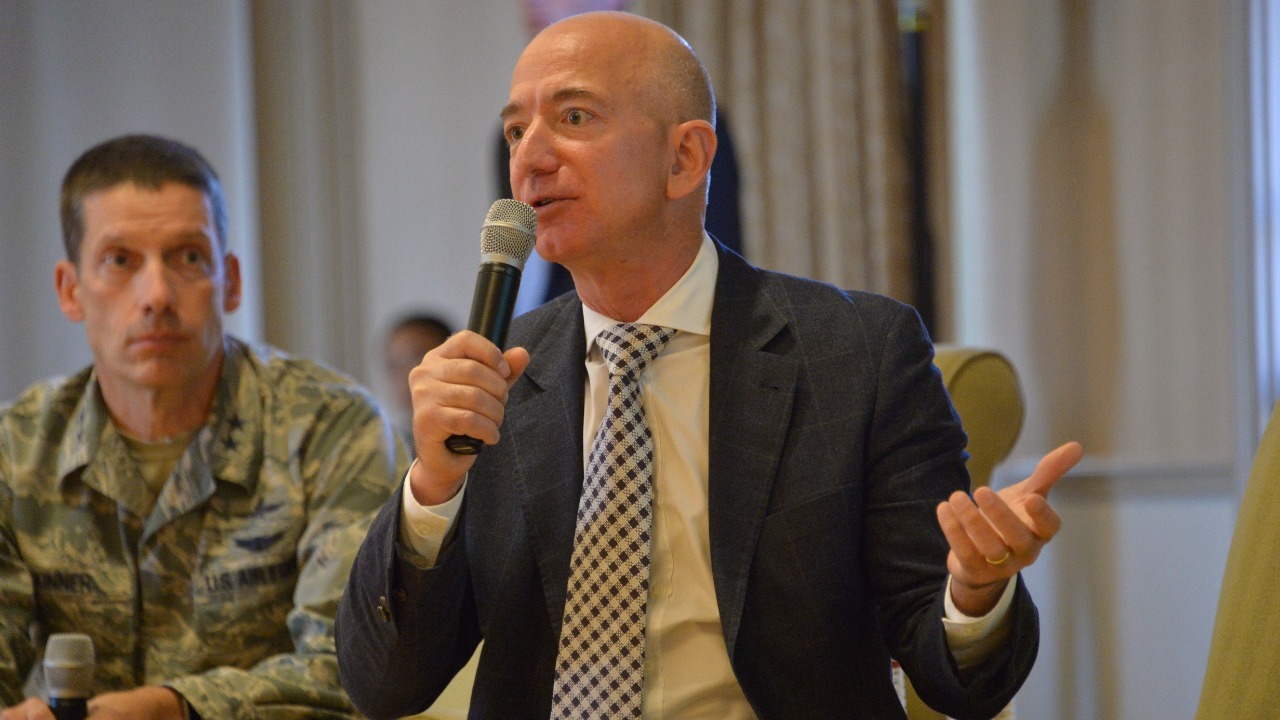
Jeff Bezos has been sounding the alarm about the U.S. economy for years, warning that a period of strain was coming for households and businesses that assumed the good times would roll on. That caution now looks less like billionaire pessimism and more like a blunt description of daily life for Americans squeezed by high prices, rising borrowing costs, and a drumbeat of recession chatter. The bleak outlook he sketched is increasingly visible in the way families spend, companies invest, and policymakers talk about what comes next.
What stands out is not that a tech founder anticipated a downturn, but that his specific concerns about inflation, risk, and big-ticket spending are now embedded in mainstream financial advice and middle-class behavior. The result is an economy that still posts headline growth while feeling fragile on the ground, with consumers quietly adopting the defensive playbook Bezos urged them to consider.
Bezos’ early warnings and the shift to defensive spending
When Jeff Bezos told viewers that “the economy does not look great right now” and advised people to “take some risk off the table,” he was not speaking as a day trader chasing headlines but as the founder of Amazon who had watched multiple cycles turn. In an interview reported on Nov 13, 2022, he linked that caution to clear signals that inflation and aggressive rate hikes were already slowing activity and pushing companies to slash headcounts. That message was simple: if a downturn was not yet official, it was close enough that households should think twice before stretching for a new car, a bigger house, or a risky investment.
By the time Nov 19, 2025 rolled around, that caution had hardened into a specific prescription. Reports on that date describe how the Amazon founder, identified as Jeff Bezos, urged consumers and businesses to delay major purchases amid growing recession fears and advised them to pull certain big commitments “off the table” as part of Bezos’ broader outlook. That was not a generic warning about volatility. It was a direct call for belt-tightening that mirrored what financial planners now tell clients who are staring at higher mortgage rates, steeper credit card bills, and a job market that feels less secure than the headline numbers suggest.
From “postpone big-ticket products” to a middle class under strain
In the months that followed, Bezos’ message became even more concrete. Coverage of a Jeff Bezos Recession Warning framed his advice in plain consumer language: “Postpone Big Ticket Products, Large Purchases,” a phrase that captured his view that skipping a new SUV or delaying a kitchen renovation could make a real difference if a recession hit. That guidance, summarized under the banner of Jeff Bezos Recession Warning, Postpone Big Ticket Products, Large Purchases, What We Know, effectively told households to treat discretionary spending as a luxury, not a default. For a middle class that had grown used to financing everything from Peloton bikes to three-row crossovers, that was a sharp reset.
The strain he anticipated is now visible in the way the U.S. middle class is described as “buckling” under almost five years of persistent inflation, with reporting detailing how paychecks that once covered a mortgage, childcare, and a modest vacation now barely stretch to rent, groceries, and student loans. That erosion of purchasing power, documented in analyses of persistent inflation, is exactly the environment in which postponing a 2025 Ford Explorer or a high-end iPhone upgrade stops being optional and becomes survival strategy. In that sense, Bezos’ call to delay big-ticket products has moved from contrarian advice to a lived reality for families recalibrating what “normal” spending looks like.
Market crash fears, inflation risks, and Bezos’ guarded optimism
Bezos’ warnings have not been limited to household budgets. He has also been linked to concerns about a potential market crash in the coming months, a scenario that would hit retirement accounts and corporate valuations at the same time that everyday costs remain elevated. Reporting on Nov 20, 2025 describes how he urged people to avoid big-ticket purchases while analysts flagged the risk of a sharp correction, even as the section titled Optimism for the Future emphasized that he still believed in long-term growth and innovation. That combination of near-term caution and long-term faith is classic Bezos: protect the downside now so you can stay in the game when the next wave of opportunity arrives.
The macro backdrop has only reinforced that stance. In the same Nov 20, 2025 coverage, Moody’s chief economist, identified simply as Moody, warned that the annual inflation rate could rise to 4% by 2026, a level that would keep pressure on the Federal Reserve and on borrowers who had hoped for quick relief. That projection, detailed in analysis of how inflation might climb to 4% by 2026, aligns with Bezos’ view that the turbulence is not over and that both lawmakers and investors need to safeguard against further shocks rather than assuming a smooth glide back to low inflation and cheap money.
How Bezos’ playbook is shaping consumer and business behavior
What makes Bezos’ outlook so influential is that it has been echoed and amplified across the financial ecosystem. A detailed breakdown under the heading Bezos Warns Consumers describes how Jeff Bezos, as the founder of Amazon and a major global business figure, has urged both households and companies to delay spending amid economic fears, pairing that warning with a message of long-term optimism about innovation and productivity. That framing, captured in coverage of how Bezos Warns Consumers, Jeff Bezos, Amazon and other business leaders to balance caution with long-term optimism, has given corporate boards cover to slow hiring, trim capital expenditures, and rethink splashy acquisitions without signaling panic.
At the same time, commentators have noted that While the economy may not ever be grinding too hard on Amazon founder and executive chairman Jeff Bezos personally, the pressures he described are increasingly visible for everyone else. Analyses that explicitly state that While the economy may not ever be grinding too hard on Amazon founder and executive chairman Jeff Bezos still find his grim U.S. economy prediction coming true in the form of weaker consumer confidence, slower discretionary spending on platforms like Amazon, and a political climate that is increasingly focused on the cost of living. In that sense, the bleak outlook he sketched has become less a forecast and more a framework that consumers, executives, and policymakers are already using to navigate a choppy, uncertain U.S. economy.
More From TheDailyOverview
- Dave Ramsey says these two simple questions show whether you’re rich or poor
- Retired But Want To Work? Try These 18 Jobs for Seniors That Pay Weekly
- IRS raises capital gains thresholds for 2026 and what’s new
- 12 ways to make $5,000 fast that actually work

Grant Mercer covers market dynamics, business trends, and the economic forces driving growth across industries. His analysis connects macro movements with real-world implications for investors, entrepreneurs, and professionals. Through his work at The Daily Overview, Grant helps readers understand how markets function and where opportunities may emerge.

