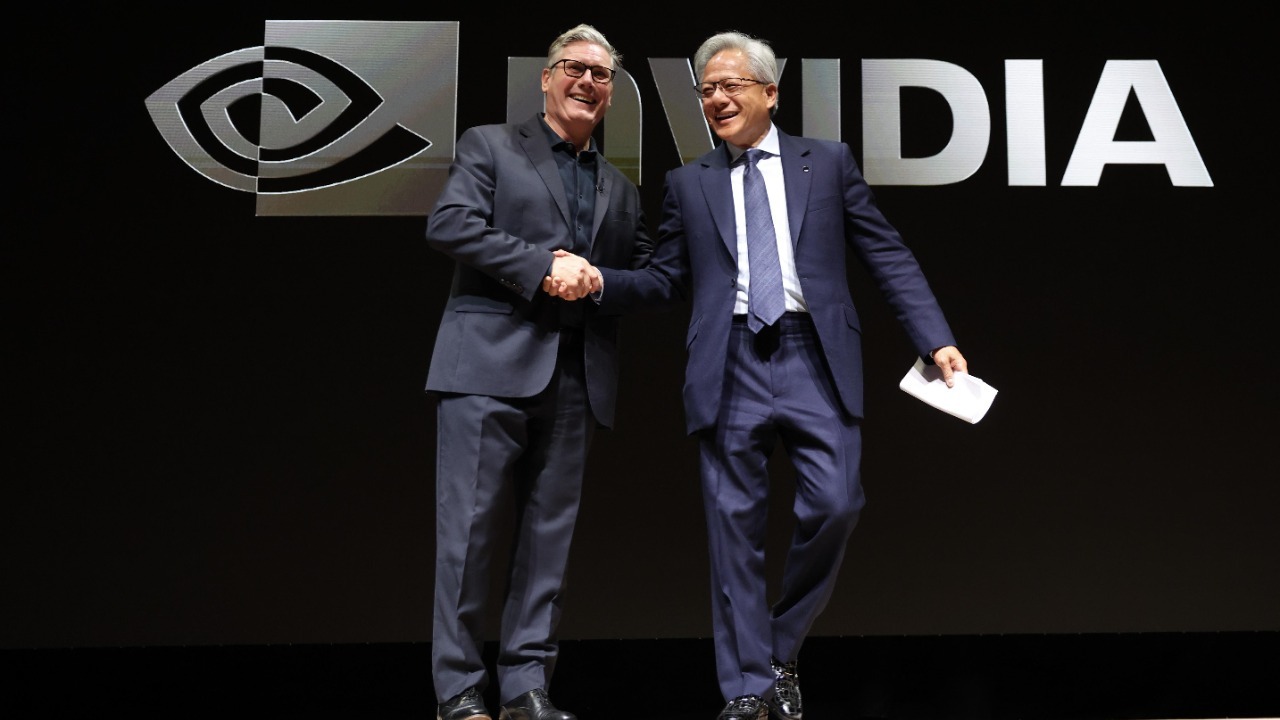
Nvidia just delivered another blockbuster quarter, yet its chief executive is pushing back hard on investors who treated the results as a reason to sell. Jensen Huang is arguing that the market is misreading both the durability of Nvidia’s data center boom and the company’s position at the center of a long AI infrastructure cycle, not a short-lived trade.
His message is blunt: the numbers show an “incredible” business firing on multiple cylinders, and the pullback in the stock says more about skittish sentiment than about Nvidia’s fundamentals or its roadmap for the next wave of AI hardware and software.
Huang’s “incredible” quarter versus Wall Street’s cold feet
Huang framed Nvidia’s latest results as proof that the AI buildout is still in its early innings, even as the stock sold off in the immediate aftermath. Revenue from the company’s core data center segment surged again, powered by demand for its Hopper and Blackwell platforms from hyperscalers and enterprise customers that are racing to deploy generative AI at scale. The company paired that growth with strong margins and robust cash generation, a combination that would normally calm any doubts about sustainability, yet the share price reaction told a different story, with traders focusing on guidance nuances and profit-taking rather than the sheer scale of the beat, according to earnings coverage.
In his comments, Huang pushed back on the idea that Nvidia’s growth is peaking, pointing to a multiyear transition in data centers toward accelerated computing and AI-specific infrastructure. He highlighted that cloud providers and large enterprises are still in the early stages of upgrading from traditional CPU-heavy architectures to GPU-centric systems, a shift that is driving repeat orders and long-term capacity plans rather than one-off spending spikes. That argument is backed by the company’s disclosure that data center revenue climbed to more than $30 billion in a single quarter, with AI GPUs and networking products both contributing, underscoring why Huang described the performance as “incredible” even as some investors chose to lock in gains.
Why the market is nervous about an AI leader
The selloff that followed Nvidia’s report reflects a broader anxiety about whether the AI hardware cycle can keep compounding at its recent pace, not a collapse in the company’s actual business. After a historic run-up in the stock, expectations were stretched, and any hint of deceleration in unit growth or pricing was primed to trigger a reaction. Some analysts flagged that hyperscale customers are becoming more disciplined about capital spending and are starting to diversify their AI chip suppliers, which could eventually pressure Nvidia’s share of wallet even if overall AI budgets keep rising, a concern echoed in post-earnings analysis.
There is also a lingering fear that AI infrastructure spending could prove cyclical if early generative AI applications fail to deliver the returns that justify massive GPU outlays. Some investors are watching for signs that cloud providers might slow orders as they digest existing capacity, or that enterprise pilots will not convert into broad rollouts. Those worries surfaced in commentary that noted how Nvidia’s forward revenue forecast, while still strong, did not blow past the most aggressive estimates on the Street, which helped fuel the pullback despite the headline beat, according to earnings reaction coverage.
Inside Nvidia’s AI engine: data centers, GPUs and networking
Underneath the market jitters, Nvidia’s operational story remains anchored in a data center franchise that has become the backbone of modern AI. The company’s latest quarter showed that its AI GPUs, including the H100 and newer B100-class products, continue to dominate training and inference workloads for large language models and other compute-intensive tasks. Hyperscalers are building entire clusters around Nvidia’s hardware and software stack, while enterprises are increasingly adopting its platforms for private AI deployments, a trend reflected in the company’s disclosure that data center revenue jumped more than 70 percent year over year, as reported in the earnings breakdown.
Networking has become just as critical to Nvidia’s AI engine as the GPUs themselves. Huang has emphasized that high-performance interconnects, including InfiniBand and Ethernet-based solutions, are essential to scaling AI clusters efficiently, and the latest results showed networking revenue rising sharply alongside GPU sales. That combination is turning Nvidia into a full-stack infrastructure provider rather than a component vendor, with customers increasingly buying integrated systems that bundle compute, networking and software. The company’s commentary highlighted strong demand for its end-to-end AI platforms, reinforcing why Huang views the current momentum as part of a structural shift in data center design, a point supported by management’s guidance for continued data center strength.
Huang’s long-game pitch: AI infrastructure as a decade-long cycle
Huang’s response to the selloff is rooted in a conviction that AI infrastructure spending will unfold over a decade or more, not a couple of years. He has argued that the world’s data centers are in the early stages of a wholesale transition from general-purpose computing to accelerated computing, a process he compares to the shift from on-premises servers to cloud computing. In his view, the current wave of GPU deployments is just the first phase of a broader transformation that will touch industries from automotive and healthcare to finance and manufacturing, a thesis he reiterated while discussing the company’s roadmap for Blackwell and its successors, according to management commentary.
That long-game pitch also leans heavily on Nvidia’s software ecosystem, including CUDA, AI frameworks and domain-specific libraries that lock in developers and make it harder for rivals to displace the company’s hardware. Huang has stressed that customers are not just buying chips, they are buying a platform that shortens time to market for AI applications and provides a path to future generations of hardware with minimal friction. The company’s latest disclosures highlighted growing adoption of its AI Enterprise software and cloud services, which provide recurring revenue streams on top of hardware sales and support Huang’s argument that Nvidia is building a durable franchise rather than riding a one-off boom, as reflected in recent analysis.
What the selloff reveals about AI expectations
The market’s reaction to Nvidia’s “incredible” quarter says as much about investor psychology around AI as it does about the company itself. After a year of relentless enthusiasm for anything tied to generative AI, expectations for Nvidia had climbed to a level where even a record-setting report could be framed as “not good enough.” The pullback underscores how quickly sentiment can swing when a market leader is priced for perfection, and how investors are now scrutinizing every detail of AI demand, from cloud capex plans to the pace of enterprise adoption, a shift captured in post-earnings commentary.
For Huang, the challenge is to keep translating Nvidia’s operational dominance into a narrative that convinces investors the AI cycle still has a long runway. The latest quarter gave him plenty of ammunition: surging data center revenue, strong networking growth and a deep roadmap for next-generation AI platforms. The selloff, however, is a reminder that even the most impressive numbers can be overshadowed by fears of saturation and competition. As AI infrastructure spending matures, I expect Nvidia’s stock to trade less on headline beats and more on evidence that its platform remains the default choice for the most demanding AI workloads, a dynamic that will keep Huang’s commentary under close watch in every earnings season to come.
More From TheDailyOverview
- Dave Ramsey says these two simple questions show whether you’re rich or poor
- Retired But Want To Work? Try These 18 Jobs for Seniors That Pay Weekly
- IRS raises capital gains thresholds for 2026 and what’s new
- 12 ways to make $5,000 fast that actually work

Grant Mercer covers market dynamics, business trends, and the economic forces driving growth across industries. His analysis connects macro movements with real-world implications for investors, entrepreneurs, and professionals. Through his work at The Daily Overview, Grant helps readers understand how markets function and where opportunities may emerge.

