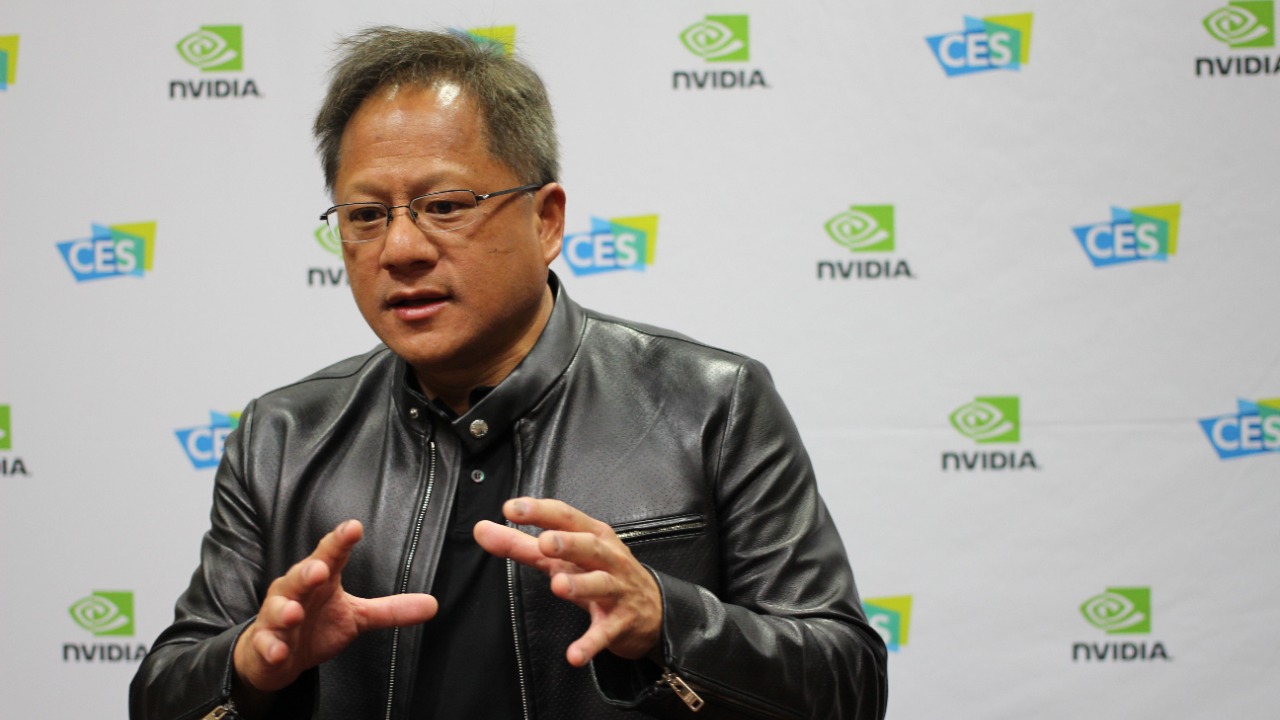
Nvidia’s latest $2 billion injection into CoreWeave has reignited a fierce debate over whether the chip giant is quietly propping up its own growth through circular financing. Critics argue the structure looks uncomfortably like Nvidia funding a key customer that, in turn, buys more of its GPUs, flattering demand and valuations on both sides. Jensen Huang is pushing back hard, insisting the CoreWeave deal is a straightforward bet on infrastructure, not a financial loop.
The clash goes to the heart of how the artificial intelligence boom is being built and financed. If Huang is right, Nvidia is simply locking in capacity at a crucial “AI factory” partner before rivals can. If skeptics are closer to the mark, the CoreWeave arrangement could be a high-profile example of the feedback loops that have fueled past tech bubbles.
The $2 billion bet and a deepening CoreWeave alliance
Nvidia’s new commitment to CoreWeave is not a marginal top-up, it is a fresh $2 billion stake that cements the cloud provider as one of its most important infrastructure partners. Reporting on the deal notes that Nvidia Invests another Billion More in CoreWeave and ties the funding to long term access to its infrastructure and a New Chip roadmap. The structure gives Nvidia preferred access to CoreWeave’s GPU cloud capacity through 2032, effectively reserving a sizable slice of the startup’s future data center footprint for its own ecosystem.
The two companies simultaneously announced an expanded collaboration that casts CoreWeave as a key builder of “AI factories” for Nvidia’s customers. In a joint statement from SANTA CLARA, CLARA, Calif and LIVINGSTON, N.J, NVIDIA and CoreWeave, Inc, which trades on Nasdaq as CRWV, described plans to pair Nvidia’s latest GPUs with CoreWeave’s bare metal cloud to build out industrial scale AI shells for enterprises. Under that expanded collaboration, CoreWeave is expected to deploy more Nvidia hardware as it rolls out new regions and services, deepening the commercial interdependence between the two firms.
Huang’s “ridiculous” rebuttal to circular financing claims
As questions mounted about whether Nvidia is effectively financing its own revenue, Jensen Huang moved to shut down the narrative. In a recent interview, he argued that it is “ridiculous” to say Nvidia’s $2 billion investment in CoreWeave is another circular deal, insisting the structure is about securing capacity, not gaming demand. Coverage of his comments highlights how Jensen Huang framed the CoreWeave stake as a way to guarantee that Nvidia’s largest customers can access GPUs when they need them.
The pushback has grown more pointed as the criticism has intensified. One account of his remarks describes Angry Nvidia CEO Jensen Huang telling detractors to Stop calling all my investments and acquisitions circular schemes, arguing that Nvidia is building real infrastructure to build AI factories rather than financial mirages. In that telling, Angry Nvidia CEO is portrayed as bristling at the idea that Nvidia CEO Jensen Huang is orchestrating a shell game rather than a capital intensive buildout of next generation compute.
Why skeptics still see a circular loop
Despite Nvidia CEO Jense Huang’s forceful defense, some investors and analysts remain unconvinced that the CoreWeave structure is cleanly separated from Nvidia’s own growth story. A detailed critique argues that the CRWV stake is not an investment, it is a bailout, pointing out that CRWV is up 8% on Monday as the market digested the news that Nvidia invested an additional $2 billion in the stock at an average price of $87.20, bolstering a key buyer of its greatest GPUs for its servers. That analysis, which links the funding to CoreWeave’s ability to keep ordering Nvidia hardware, is captured in a note that bluntly states CRWV would struggle to scale without Nvidia’s balance sheet.
Others have been raising alarms about circular financing in the AI sector for months. One analysis notes that Circular Financing Concerns Persist, and that Despite Nvidia CEO Jensen Huang strongly disputing the notion of circular financing, the new CoreWeave investment is unlikely to fully dispel comparisons to earlier tech cycles where suppliers funded customers to lock in demand. That same piece argues that under the expanded collaboration, CoreWeave’s role in deploying Nvidia chips could reinforce demand for its own GPUs, a dynamic that is flagged in a discussion of how Circular Financing Concerns even as investors look for solid stocks to bet on AI infrastructure.
CoreWeave’s roller coaster and market reaction
The backdrop to Nvidia’s latest move is a volatile year for CoreWeave’s own stock. CoreWeave, listed as CRWV, saw its shares drop over 50% from a $187 peak to $89.93 as investors fretted about an AI demand slowdown and the risk that circular financing could unwind. At the same time, the company disclosed that it had generated $748M through Q3 2025, a reminder that it is already a substantial player in GPU cloud services, as detailed in coverage of how CRWV stock soars when management rebuts critics.
The new Nvidia funding has, at least for now, swung sentiment back in CoreWeave’s favor. Shares of the company jumped after the deal was announced, with one market recap noting that Jumps After Nvidia Invests $2 Billion in AI Infrastructure Partnership, as traders reassessed the risk of a liquidity crunch. That same recap, which credits Howard Smith of The Motley Fool and refers to Mon trading action, underscores how the Jumps After Nvidia narrative has become central to how the market values both the Infrastructure Partnership and the broader AI buildout.
Inside Nvidia’s strategic logic and the unresolved trust gap
From Nvidia’s perspective, the CoreWeave deal is part of a broader push to secure AI infrastructure capacity before demand from hyperscalers and enterprises overwhelms supply. One detailed breakdown of the transaction notes that Nvidia backs CoreWeave with $2B to fuel AI infrastructure, and that the investment will help the neocloud vendor add five gigawatts of AI oriented power capacity across its data centers. That same report explains how Nvidia is effectively underwriting the grid scale buildout needed to keep its GPUs running at full tilt.
Jensen Huang has also framed the investment as a vote of confidence in CoreWeave’s leadership and execution. In one account, Nvidia’s CEO, Jensen Huang, said the investment is confidence in their growth and confidence in CoreWeave’s management and confidence in their strategy and getting infrastructure online, positioning the deal as a straightforward partnership rather than a rescue. That framing is echoed in a separate description of how Nvidia is leaning on CoreWeave to accelerate the rollout of AI ready data centers that can host its latest chips.
More From TheDailyOverview
*This article was researched with the help of AI, with human editors creating the final content.

Grant Mercer covers market dynamics, business trends, and the economic forces driving growth across industries. His analysis connects macro movements with real-world implications for investors, entrepreneurs, and professionals. Through his work at The Daily Overview, Grant helps readers understand how markets function and where opportunities may emerge.

