Corporate Minnesota is being forced off the sidelines. After weeks of aggressive immigration raids, a fatal shooting and mass walkouts, the chief executives of Target and other major employers are now publicly urging federal authorities to pull back. Their plea is not only about values, it is about a labor force that is literally disappearing from stores, warehouses and offices across the state.
What began as a law‑and‑order push by immigration agents has collided with a regional economy that depends on immigrant workers and diverse urban neighborhoods. As staff stay home, small businesses shutter and protests swell, I see a new kind of confrontation emerging: between federal power and the companies that say they can no longer operate under siege conditions.
The letter that broke Minnesota’s corporate silence
The turning point came when a bloc of executives finally decided that staying quiet was riskier than speaking up. More than 60 leaders of Minnesota‑based companies signed a joint letter calling for an “immediate deescalation of tensions” in the streets of Minneapolis and beyond, a move that underscored how deeply the immigration crackdown has rattled the state’s business establishment. That group included household names like Target, Best Buy, UnitedHealth and Cargill, companies that usually prefer to lobby quietly rather than confront federal agencies in public.
In a separate account of the same effort, the chief executives of 60 M Minnesota‑based firms, including Minnesota stalwarts Target, Best Buy, appealed directly to Immigrat enforcement leadership, President Donald Trump and state officials to dial back operations. Another report described how Major business leaders in Minnesota framed their demand as a call for peace after federal immigration officers shot Alex Pretti, while a separate summary emphasized that More than sixty executives were willing to put their names on a coordinated response from Minnesota’s corporate class.
Violence, a fatal shooting and a city on edge
The business revolt did not emerge in a vacuum. Public outrage surged after the fatal shooting of Renée Good by an ICE agent identified as Jonathan Ross, an incident that helped set the stage for what some accounts describe as a 2026 Minnesota general strike. That same overview notes how Public anger intensified as Minneso communities and civil liberties groups organized a broad coalition to resist the federal presence, turning a single shooting into a statewide confrontation over civil rights and local control.
Closer to Target’s headquarters, the company’s incoming chief executive felt compelled to address the unrest directly, saying there would be time later to discuss strategy but that, for now, his focus as someone raising a family in Minneapolis was on safety and accountability. In that statement, Target leadership called for those who killed Ren Good to be prosecuted, a rare instance of a major retailer explicitly demanding legal consequences for a federal agent. Another synthesis of the corporate letter noted that Target and Minnesota business leaders were responding to widespread protests throughout the city, underscoring how street pressure and corporate concern were feeding off each other.
Workforce vanishes: walkouts, blackouts and a looming strike
Even before the CEOs spoke, the labor market was already voting with its feet. One detailed account described how Target Store Staff as the crackdown in Minnesota intensified, with employees staying home rather than risk encounters with immigration agents on their commute or in the store. A companion report noted that, After immigration officials briefly detained two After Target workers who are US citizens from a Richfield, Minnesota location, fear and anger spread through the workforce, reviving long‑simmering concerns about the retailer’s underperforming shares and its vulnerability to political risk.
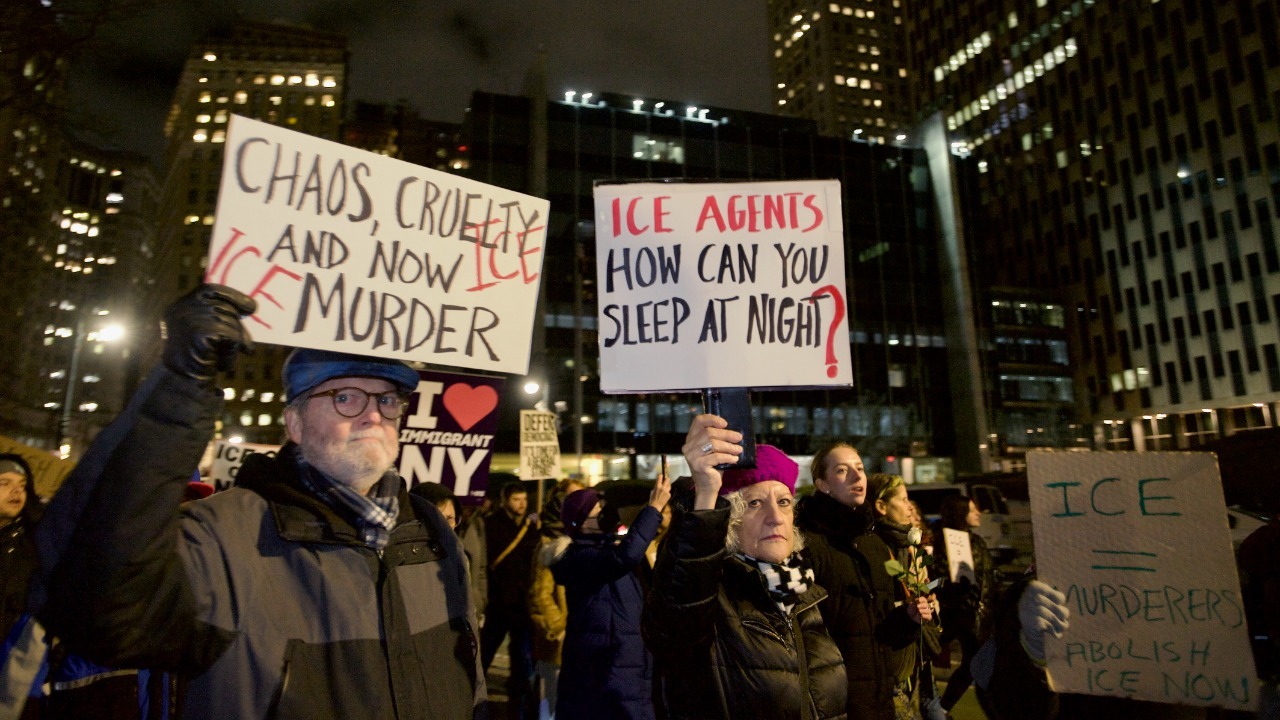
The disruption has not been limited to big‑box chains. In Minneapolis, more than 700 small businesses, faith organizations and educational institutions joined an economic blackout to protest ICE, closing their doors and urging a suspension of consumer spending. That same account stressed how Minneapolis businesses were explicitly targeting ICE operations, while another summary of the broader unrest described how a general strike in Minneso grew out of coordinated actions by unions, immigrant communities and local civil liberties groups documented in the Minneso overview.
Target’s tightrope: between employees, clergy and the White House
Target’s leadership is now trying to navigate a narrow path between a frightened workforce, vocal community leaders and a federal government that controls its regulators. One report detailed how Minneapolis‑based Target has not commented on videos of federal agents detaining two of its employees earlier this month, even as activists target companies that have housed federal agents. Another account described how clergy pressed the retailer to explicitly oppose ICE operations in Minnesota, only to see Target reject those demands while acknowledging that Federal agents had detained two of its workers.
Inside the company, pressure is mounting from below as well as from the pulpit. More than 275 employees signed a letter to Target leadership outlining four steps they want the company to take in response to the immigration raids, a sign that rank‑and‑file staff are no longer content with neutral corporate statements. Another account of the Richfield incident stressed that Target employees in Richfield, Minnesota were briefly detained despite being US citizens, while a separate summary noted that Target and other Minnesota employers had refrained from speaking out on ICE until thousands of protesters and allegations that agents kidnapped and assaulted two employees forced their hand.
Corporate clout meets political backlash
The CEOs’ intervention has already triggered a political response. Some Some Minnesota Democrats criticized the companies’ statement for failing to mention immigration explicitly, condemn the shooting of Pretti or call for a halt to immigration operations, arguing that the business community was still hedging. At the same time, another account of the joint statement highlighted how Sunday’s message from Target, Best Buy, Cargill and other Minnesota companies was coordinated through the Minnesota Chamber of Commerce, signaling that this was not a one‑off press release but an organized business lobby effort.
Local coverage has been even more blunt about the limits of corporate courage. One analysis argued that the CEOs of major Minnesota businesses finally spoke out but signed only a meek call for deescalation, noting that Target in particular had been the subject of intense pressure to speak after two of its employees were arrested by border agents. Another statewide overview framed the moment as one in which, As the violence and federal presence in As the Minnesota crisis deepened, public pressure on marquee corporations to speak out grew impossible to ignore. A separate business‑focused analysis noted that up until a few days ago, ICE operations had been met mostly with corporate silence, and that retailers and brands now face a stark test: oppose the raids or stay quiet while thousands protest outside their doors.
More From TheDailyOverview
*This article was researched with the help of AI, with human editors creating the final content.

Grant Mercer covers market dynamics, business trends, and the economic forces driving growth across industries. His analysis connects macro movements with real-world implications for investors, entrepreneurs, and professionals. Through his work at The Daily Overview, Grant helps readers understand how markets function and where opportunities may emerge.