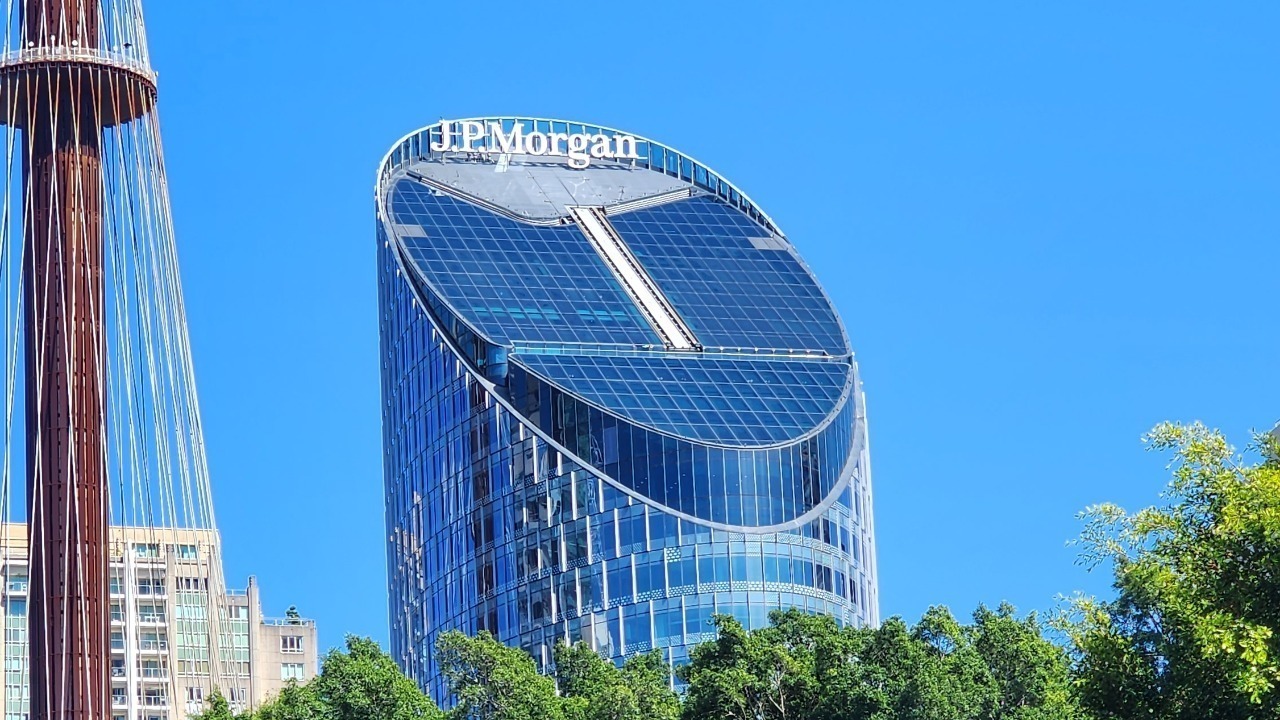
JPMorgan and GoldenTree are backing one of Brooklyn’s most ambitious waterfront projects with a construction loan package that signals how much capital is still willing to chase large-scale New York housing. The $525 million financing for a major Williamsburg build gives developers fresh momentum at a time when higher rates and construction costs have stalled or shrunk comparable plans across the city.
The deal, led by Miki Naftali and Len Blavatnik, is centered on the emerging Williamsburg Wharf district, where a cluster of new towers is reshaping the East River edge into a dense residential and mixed-use enclave. By locking in $525 m of debt in the current environment, the sponsors are effectively betting that demand for high-end Brooklyn waterfront living will keep outrunning supply.
How a $525 million loan reshapes the Williamsburg waterfront
The headline number alone, $525 million, instantly vaults this financing into the top tier of New York construction loans, especially for a single waterfront complex in Brooklyn. In a market where many projects are being value engineered or delayed, securing $525 m in fresh capital gives the Williamsburg Wharf build a level of certainty that competitors along the East River can only envy.
The sponsors, led by Miki Naftali and Len Blavatnik, are using the loan to push forward a multi-building plan that will add a substantial volume of new apartments and amenities to the Williamsburg shoreline. Their $525 million construction package, anchored by JPMorgan and GoldenTree, is structured to carry the project from heavy infrastructure work through vertical construction, which is precisely the phase where many large New York developments have struggled to keep financing intact.
Why JPMorgan and GoldenTree are leaning into Brooklyn construction risk
For lenders, committing to a half-billion-dollar construction facility in Brooklyn is not a casual decision, particularly in a cycle defined by elevated borrowing costs and persistent questions about rent growth. JPMorgan and GoldenTree are effectively signaling that they see Williamsburg Wharf as a defensible bet on long-term demand, not a speculative swing on a fleeting luxury boom.
The waterfront location, with direct access to the East River and proximity to established Williamsburg retail corridors, gives the project a built-in advantage that helps justify the scale of the loan. By aligning with experienced sponsors like Miki Naftali and Len Blavatnik, who have already assembled the site and advanced entitlements for the Williamsburg Wharf plan, the lenders are also reducing execution risk compared with backing a first-time megaproject team.
The Williamsburg Wharf vision and what it means for the neighborhood
Williamsburg Wharf is not just another tower on the skyline, it is a multi-building waterfront district that aims to knit together residential, open space, and ground-floor retail into a continuous edge along the East River. The scale of the site allows the sponsors to think in terms of a neighborhood within a neighborhood, with internal streets, plazas, and a curated mix of uses that can keep residents on the property for much of their daily routine.
For the surrounding community, that kind of self-contained district cuts both ways. On one hand, a fully realized waterfront plan can deliver new public access, landscaped promenades, and a broader retail base that supports both newcomers and long-time residents. On the other, the arrival of a large, amenity-rich complex backed by a $525 m loan will inevitably intensify pressure on nearby rents and commercial leases, especially as the project’s marketing machine begins to frame Williamsburg Wharf as a destination address.
Naftali, Blavatnik, and the playbook behind the megaproject
Developers do not land a $525 million construction loan without a track record that convinces lenders they can manage complexity at scale. In this case, the presence of Miki Naftali and Len Blavatnik at the top of the capital stack is a central part of the story, since both have spent years assembling and executing large urban projects that require patient capital and political navigation.
Their approach at Williamsburg Wharf follows a familiar pattern: secure control of a prime waterfront site, invest heavily in design and entitlement work, then bring in institutional lenders once the risk profile has shifted from speculative land play to executable construction plan. The fact that JPMorgan and GoldenTree were willing to underwrite the Williams project at this scale suggests that the sponsors have already cleared many of the hurdles that typically slow waterfront developments, from environmental reviews to infrastructure coordination.
Brooklyn’s waterfront boom and the role of mega-loans
Brooklyn’s shoreline has been in transformation mode for more than a decade, but the current wave of projects is defined by its financial heft as much as its architecture. Large construction loans like the $525 million package for Williamsburg Wharf are the fuel that turns underused industrial parcels into dense residential clusters, and the willingness of banks and credit funds to keep writing those checks is a key barometer of confidence in the borough’s future.
In that context, the JPMorgan and GoldenTree commitment reads as a vote of confidence not just in one site, but in the broader thesis that Brooklyn waterfront housing will remain a magnet for both renters and condo buyers. The sponsors’ ability to secure $525 m in debt at a time when some lenders are pulling back from ground-up construction underscores how selectively capital is being deployed, and how much weight is being placed on location, sponsor quality, and the long-term appeal of neighborhoods like Williamsburg.
What the financing structure signals about risk and reward
Construction loans of this size are typically layered, with senior debt, mezzanine tranches, and sometimes preferred equity all stacked to balance risk and return. While the precise structure of the JPMorgan and GoldenTree package has not been fully detailed in the available reporting, the sheer scale of the $525 million commitment suggests a carefully calibrated approach to leverage, interest reserves, and completion guarantees.
For the developers, locking in a large facility at once can be more efficient than piecing together smaller loans, but it also raises the stakes if leasing or sales underperform. The lenders, in turn, are betting that the combination of waterfront views, modern amenities, and the cachet of a new district like Williamsburg Wharf will be enough to support the rent levels needed to service a $525 m capital stack, even if the broader market softens.
Housing supply, affordability, and who benefits from the project
Any time a half-billion-dollar loan flows into a Brooklyn waterfront project, the question of who ultimately benefits is impossible to ignore. On one level, a large new complex at Williamsburg Wharf will add hundreds of units to a borough that has struggled to keep up with population and job growth, and that additional supply can help ease some pressure at the top end of the rental market.
Yet the price points likely to be targeted by a project backed by $525 million in construction financing will skew toward higher-income tenants, particularly in the early years as the sponsors seek to stabilize the asset and meet loan covenants. That dynamic raises familiar concerns about affordability and displacement, especially in adjacent blocks where landlords may use the arrival of a marquee waterfront address as justification for aggressive rent hikes or redevelopment plans of their own.
Construction, jobs, and the local economic ripple effect
Beyond the balance sheets of lenders and developers, a project of this magnitude has immediate implications for the local labor market. A $525 m construction budget translates into years of work for contractors, union trades, and a wide array of specialty firms, from foundation crews to façade installers, all of whom will draw paychecks that circulate through the Brooklyn economy.
Once the buildings open, the economic footprint shifts but does not disappear. Property management teams, retail tenants, hospitality operators, and building service workers will all play a role in keeping Williamsburg Wharf running, and their presence will support secondary businesses from neighborhood restaurants to local service providers. In that sense, the JPMorgan and GoldenTree loan is not just a bet on real estate values, it is a catalyst for a broader ecosystem of jobs and small-business activity tied to the waterfront build.
What this deal tells us about the next phase of New York development
Stepping back, the $525 million financing for Williamsburg Wharf offers a clear snapshot of where New York development is heading as the city adjusts to higher borrowing costs and shifting demand patterns. Capital is concentrating in projects that combine prime locations, experienced sponsors, and the potential to create entire micro-districts, rather than scattering across a wide field of smaller, more speculative bets.
For Brooklyn, that means the next generation of growth will likely be anchored by a handful of large, heavily capitalized sites like Williamsburg Wharf, each reshaping its immediate surroundings while competing for tenants and attention. The JPMorgan and GoldenTree loan, secured by Miki Naftali and Len Blavatnik for their waterfront megaproject, is a reminder that even in a more cautious lending climate, the right combination of site, scale, and sponsor can still unlock $525 m of construction capital and set a new benchmark for what is possible along the East River.
More From TheDailyOverview

Silas Redman writes about the structure of modern banking, financial regulations, and the rules that govern money movement. His work examines how institutions, policies, and compliance frameworks affect individuals and businesses alike. At The Daily Overview, Silas aims to help readers better understand the systems operating behind everyday financial decisions.

