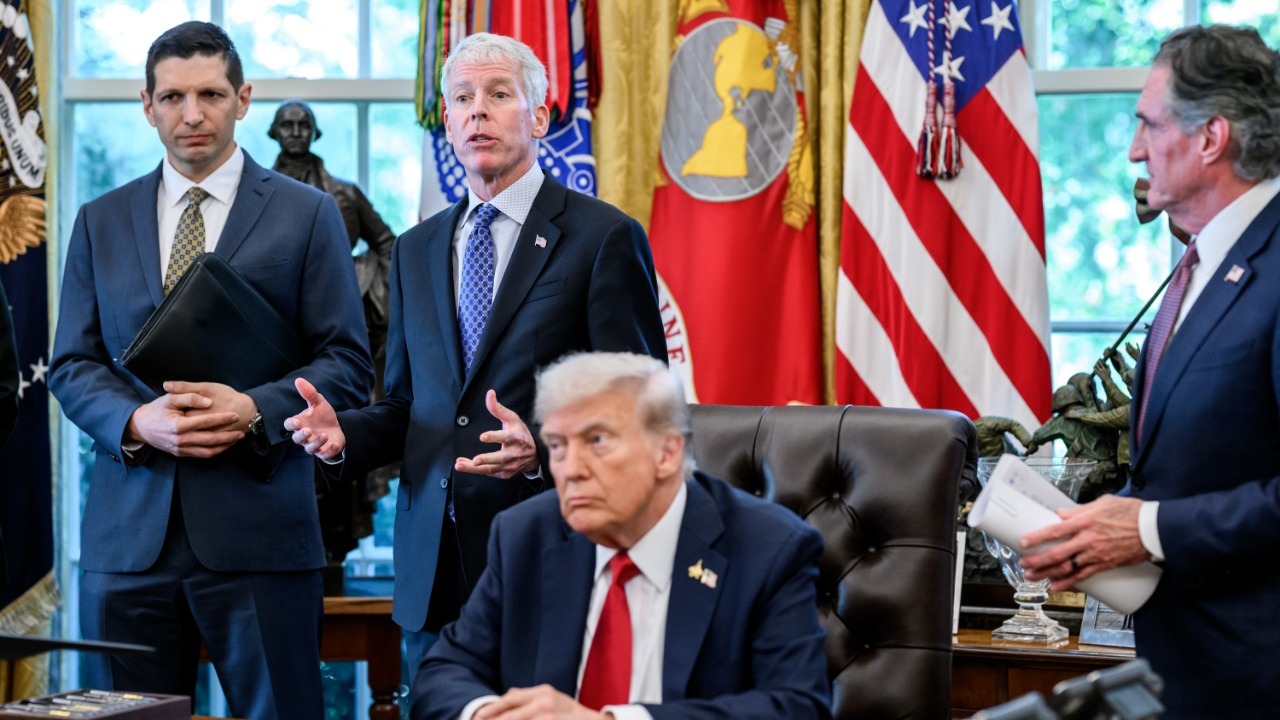
President Donald Trump has ordered the most sweeping federal shift on marijuana in decades, directing agencies to treat cannabis less like heroin and more like a tightly controlled medicine. The move reclassifies marijuana under federal law, accelerates research, and opens a path for prescription use, while leaving state-level legalization battles very much intact.
The change promises tax relief for cannabis businesses, new rules for employers, and expanded access to cannabidiol products, but it also raises fresh questions about who benefits first and how quickly the federal bureaucracy can catch up. I will walk through what the order actually does, what it does not do, and how it could reshape everything from medical care to workplace drug policies.
What Trump’s executive order actually does
At the center of this shift is an executive order from President Donald Trump that directs the federal government to treat marijuana as a drug with recognized medical potential rather than as a purely illicit substance. The order, described as “Increasing Medical Marijuana and Cannabidiol Research,” instructs agencies to move cannabis into a less restrictive category under federal drug law and to clear a path for doctors eventually to prescribe it under controlled conditions. In practical terms, it signals that Washington now accepts that marijuana and cannabidiol have medical uses that warrant structured access and rigorous study.
The order also tells the Department of Justice to complete the rulemaking process to reschedule marijuana “expeditiously,” pushing the Drug Enforcement Administration to finalize a new classification instead of letting the issue languish in administrative review. Legal analysts note that President Donald Trump used the “Increasing Medical Marijuana and Cannabidiol Research” Executive Order to frame marijuana as a substance that should be studied and regulated, not simply prohibited, which marks a clear departure from the decadeslong federal posture that treated it as a drug with no accepted medical use.
How federal marijuana policy worked before this shift
To understand the scale of the change, it helps to recall how rigid federal marijuana policy has been. For years, cannabis sat in the same legal bucket as heroin, classified as a substance with a high potential for abuse and no accepted medical use, even as states built sprawling medical and recreational markets. That disconnect meant patients who were legal under state law could still be treated as criminals under federal law, and researchers faced layers of red tape to study the plant’s effects.
Trump’s order does not erase the Controlled Substances Act, but it does instruct federal agencies to revisit the assumptions that kept marijuana in the strictest category and to recognize that medical use is now part of mainstream policy in much of the country. Reporting on the order explains that the White House is seeking a broad re-examination of the policy, including how federal law interacts with state programs and how agencies treat marijuana-related offenses and research applications.
Rescheduling, not full legalization
One of the most important clarifications is that Trump’s move is about rescheduling, not legalizing marijuana nationwide. By shifting cannabis into a lower schedule, the federal government is acknowledging medical value and allowing for prescription pathways, but it is not blessing open recreational use or wiping away criminal penalties across the board. In other words, the order changes the rules of the game for doctors, researchers, and regulated businesses, but it does not give consumers a blanket right to light up wherever they live.
Legal guidance on the order stresses that the new framework “opens the door for the eventual prescription use of marijuana” and focuses on potential medical benefits, while explicitly stopping short of declaring the drug legal for all purposes. Analysts note that the policy is designed to integrate marijuana into the existing system for controlled medicines, with strict oversight and labeling, rather than to create a free-for-all. One workplace advisory describes how the executive action at a Glance emphasizes medical use and regulatory controls, underscoring that recreational policy remains largely a state decision.
Why the White House says it is acting now
The administration is framing the shift as a science-first correction to outdated rules that have not kept up with medical practice or public opinion. President Donald Trump’s team argues that doctors and patients need clearer federal guidance on when marijuana and cannabidiol can be used safely, and that researchers require easier access to study dosage, side effects, and long term outcomes. By moving marijuana into a category that recognizes medical use, the White House says it is finally aligning federal law with the reality that millions of Americans already use cannabis-based treatments under state programs.
An official Fact Sheet on “President Donald Trump is Increasing Medical Marijuana and Cannabidiol Research” highlights a goal of “RECOGNIZING AND IMPROVING KNOWLEDGE OF” how these substances work in the body so regulators can “inform standards of care.” That language signals that the administration wants to move cannabis out of the legal gray zone and into the same evidence-based framework that governs other prescription drugs, even as it keeps tight controls on production and distribution.
What changes for medical marijuana and CBD access
For patients and health care providers, the most immediate impact is the promise of more consistent access to medical marijuana and cannabidiol products under federal rules. Rescheduling allows the Food and Drug Administration and other agencies to treat cannabis-derived medicines more like other controlled drugs, with standardized dosing, quality controls, and prescription pathways. That could eventually mean a patient with chronic pain or epilepsy can receive a marijuana-based treatment through a regular pharmacy, backed by federal labeling and safety standards, rather than relying solely on state dispensaries.
Policy analysts describe how President Trump’s action accelerates marijuana rescheduling and explicitly expands access to CBD, positioning cannabidiol as a therapeutic product that should be widely available under clear federal oversight. One legal overview notes that, on Dec. 18, 2025, the President moved to speed up rescheduling and to broaden CBD access as part of a full scientific and legal review of cannabis. The same analysis explains that the order is meant to integrate marijuana and CBD into a coherent national framework, rather than leaving them in a patchwork of state rules, by directing agencies to complete a full scientific and legal review of how these products should be regulated.
Economic stakes: tax relief and cannabis business growth
Beyond medicine, the rescheduling decision carries major economic consequences for the cannabis industry. Under the old classification, marijuana businesses were blocked from taking standard tax deductions, which meant higher effective tax rates and thinner margins even in states where they operated legally. By moving marijuana into a different schedule, the federal government is easing those tax penalties, giving dispensaries, cultivators, and manufacturers a chance to reinvest more of their revenue into expansion, hiring, and product development.
Industry reporting frames this as a turning point for cannabis entrepreneurs who have long argued that punitive tax rules were holding back growth. One analysis bluntly states that “Tax Relief Means Growing Businesses,” explaining that the policy change will allow marijuana companies to escape some of the most punishing provisions of the tax code and to operate more like other regulated industries. Advocates for patients and small businesses say this shift could help stabilize supply, improve product quality, and bring more operations into the legal market, a dynamic highlighted in coverage under the banner “Tax Relief Means Growing Businesses.”
Impact on employers, drug testing, and the workplace
For employers, Trump’s order introduces new complexity rather than simple answers. Rescheduling marijuana and opening the door to prescription use means more workers may eventually have doctor-authorized cannabis treatments in their medicine cabinets, similar to opioids or benzodiazepines. That raises questions about how to handle pre-employment screening, random drug tests, and accommodation requests, especially in safety-sensitive roles like trucking, aviation, and health care.
Workplace law specialists are already advising companies to revisit their policies in light of the executive order, even though it does not require employers to tolerate on-the-job impairment. Guidance notes that the order at a Glance focuses on medical use and research, but it also signals that marijuana may soon sit alongside other prescription drugs that employees lawfully use off duty. I expect to see more disputes over whether a positive test reflects illegal use or a legitimate treatment, and more pressure on employers to distinguish between presence of THC and actual impairment.
How markets and health programs are reacting
Financial markets have treated the reclassification as a major opening for cannabis-related companies, particularly those positioned to supply medical products and CBD to mainstream pharmacies and health systems. Investors are betting that a lower schedule will make it easier for banks to work with cannabis firms, for institutional money to flow into the sector, and for large pharmaceutical players to enter the space. The order also raises the prospect that federal health programs could eventually cover certain marijuana-based treatments, which would dramatically expand the potential customer base.
Coverage of the announcement notes that Trump’s executive order reclassifying cannabis is viewed by analysts as a gateway to broader access, including through Medicare and other federal programs, even though those changes will require additional rulemaking. The same reporting explains that the shift in classification has already boosted cannabis stocks and sparked speculation about how quickly insurers and government payers might move to cover CBD and other products. One detailed breakdown of how Trump “signs executive order reclassifying cannabis, opening door to broader weed access” underscores that the reclassification is viewed as a first step toward integrating cannabis into mainstream health financing rather than an endpoint.
What this means in states like Alabama
One of the most common points of confusion is whether Trump’s order suddenly makes marijuana legal in states that still ban it. The answer is no. Federal rescheduling changes how Washington treats marijuana, but it does not override state criminal laws that prohibit possession, sale, or cultivation. In places that have resisted legalization, the order may soften some federal consequences and expand access to CBD or prescription products, but it does not erase state-level bans on recreational use.
Reporting from the Southeast illustrates this tension clearly. In Alabama, for example, residents are asking whether weed is now legal after Trump signed the order to reclassify marijuana. Local coverage explains that while the federal government is changing its stance, Alabama’s own laws remain in force, and people can still face state charges for unauthorized possession or sale. The analysis spells out that the executive action does not automatically legalize marijuana in Alabama and urges residents to understand the difference between federal scheduling and state criminal codes, a distinction captured in the question “Is weed legal in Alabama after Trump signs order to reclassify marijuana?”
The limits and unanswered questions ahead
Even as Trump’s order marks the biggest federal marijuana shift in decades, it leaves significant questions unresolved. Rescheduling will take time to implement, and agencies must still write detailed rules on everything from prescribing standards to labeling and distribution. Law enforcement practices, immigration consequences, and expungement of past marijuana convictions are largely untouched by the order, which focuses on current and future regulation rather than retroactive justice. For many advocates, that means the move is a meaningful but incomplete step toward a more coherent cannabis policy.
Public radio reporting on the order emphasizes that President Donald Trump has directed a broad review of federal drug policies for marijuana, but that the existing patchwork of state laws and federal enforcement priorities will not vanish overnight. Analysts point out that Congress still controls key levers, including banking reform and comprehensive legalization, and that future administrations could revisit the scheduling decision. One detailed explainer on What to know about Trump’s order underscores that the directive initiates a re-examination of policy rather than locking in a final settlement of the marijuana debate.
More From TheDailyOverview

Julian Harrow specializes in taxation, IRS rules, and compliance strategy. His work helps readers navigate complex tax codes, deadlines, and reporting requirements while identifying opportunities for efficiency and risk reduction. At The Daily Overview, Julian breaks down tax-related topics with precision and clarity, making a traditionally dense subject easier to understand.