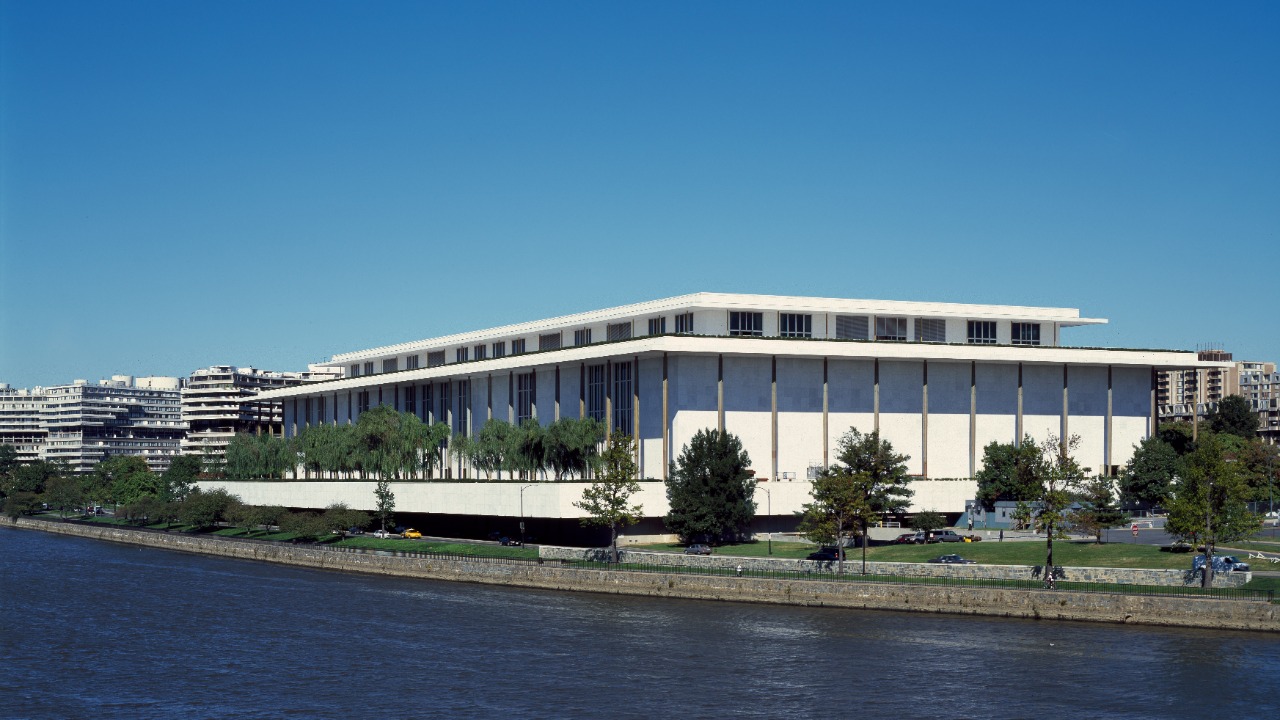
The president of the Kennedy Center for the Performing Arts is seeking $1 million in damages from a longtime jazz drummer who walked away from a Christmas Eve concert after the venue added President Donald Trump’s name to its facade. The clash pits a powerful cultural institution against an individual artist, turning a holiday tradition into a high-stakes test of contracts, conscience, and political branding. At its core is a question that reaches far beyond one canceled show: how far arts leaders will go to enforce deals when performers object to the politics wrapped around the stage.
The Christmas Eve concert that collapsed overnight
According to multiple accounts, the dispute began when Drummer Chuck Redd, a veteran bandleader closely associated with the Kennedy Center, pulled out of his annual Jazz Jam scheduled for Christmas Eve after learning that the building had been renamed to include Donald Trump. Redd had been preparing to lead the Jazz Jam with fellow musicians and had promoted the event as a festive, recurring gathering, but he said the new branding crossed a line for him personally and professionally, prompting his decision to cancel the performance rather than appear under the Trump name. In his telling, the choice was rooted in principle, not publicity, and he framed it as a refusal to help normalize a political figure whose values he does not share.
Venue officials saw something very different: a last-minute breach that left them scrambling to fill a prime holiday slot and exposed them to financial losses. Reports describe how the Trump-Kennedy Center, as it is now styled in some coverage, had marketed the Christmas Eve concert as part of its seasonal programming and had already committed staff, technical resources, and promotional budgets to the Jazz Jam before Redd withdrew. One account notes that the cancellation followed the White House’s move to add Trump’s name to the building and that the venue had been counting on the Christmas Eve performance as a centerpiece of its holiday calendar, a context that helps explain why the institution now claims the fallout has “cost us considerably” in both money and reputation, according to a detailed summary of the Christmas Eve performance.
Richard Grenell’s $1 million demand and the legal threat
Into that breach stepped The John F. Kennedy Center for the Performing Arts Venue President Richard Grenell, who has taken an unusually aggressive stance for a cultural executive by personally demanding $1 million from Redd. In a letter described in several reports, Grenell accuses the drummer of violating his agreement with the Kennedy Center and insists that the institution is entitled to seven-figure damages for the abrupt cancellation. One account characterizes the demand as part of a broader strategy in which the Kennedy Center president threatens a Million Lawsuit Against Jazz Musician Who Canceled Christmas Eve Concer, signaling that this is not just a bluff but the opening move in potential litigation over the failed show and its financial impact, as reflected in coverage that notes the Kennedy Center President Threatens legal action.
Grenell’s position is that the Kennedy Center, now frequently referred to in reports as the Trump-Kennedy Center, invested heavily in the event and that Redd’s decision to walk away for political reasons does not excuse him from his contractual obligations. One detailed account notes that the Kennedy Center president threatens musician with $1M lawsuit over canceled show and explicitly cites the figure 36 in the context of the dispute, underscoring how granular the institution’s accounting of its losses has become as it builds a case for damages. In that telling, the Kennedy Center argues that the cancellation has cost it considerably in ticket revenue, staffing costs, and reputational harm, a claim that underpins the $1 million figure and is echoed in a report that describes how the Kennedy Center president threatens musician with a lawsuit over the canceled show.
Why Chuck Redd walked away from the Trump-branded venue
Redd, for his part, has framed his decision as a matter of conscience tied directly to the renaming of the building to honor President Trump. In interviews cited across the coverage, he recounts seeing the new signage and feeling that he could not, in good faith, perform in a space that now bore the name of a political figure whose actions and rhetoric he opposes. One report quotes him saying that when he saw the name, he knew he could not go through with the show, and that he views his role as a jazz performer as a commitment to perform for all people, not to lend implicit support to a single political brand. That framing is captured in a summary that notes how NEED and KNOW are central to the way the story has been presented, with Redd positioned as an artist who chose principle over paycheck, as reflected in a detailed account of how NEED TO KNOW shaped his decision.
That narrative is reinforced by reports that describe Redd as the Musician Who Canceled Christmas Eve Show in direct response to the Donald Trump Venue Rename, a phrase that captures how tightly the cancellation is linked to the building’s new identity. In that telling, the renaming was not a background detail but the trigger for the entire conflict, with Redd deciding that he could not appear at a venue whose marquee now celebrated Trump. One account notes that Kennedy Center President Demands $1M from Musician Who Canceled Christmas Eve Show over Donald Trump Venue Rename, a formulation that makes clear the institution is not disputing his stated motive but is arguing that motive does not erase the financial damage. That tension between artistic conscience and contractual enforcement sits at the heart of the story, as seen in coverage that highlights how the Kennedy Center President Demands payment from the Musician Who Canceled Christmas Eve Show after the Donald Trump Venue Rename.
The Trump-Kennedy Center, political branding, and the Kennedy family backlash
The legal fight is unfolding against a broader backdrop of controversy over the decision to attach Trump’s name to the Kennedy Center in the first place. Reports describe how the building, long associated with President John F. Kennedy, has been rebranded in a way that aligns it more closely with the current president, a move that has drawn sharp criticism from some members of the Kennedy family. One account notes that Joe Kennedy III (D-Mass.), grandson of former U.S. Attorney General Robert F., has publicly condemned the renaming, arguing that it distorts the legacy of the original namesake and injects partisan politics into a national cultural landmark. That criticism underscores how the dispute with Redd is not an isolated flare-up but part of a larger argument over whether the Kennedy Center should serve as a neutral arts venue or a platform for presidential branding, a concern captured in reporting that details how Joe Kennedy III (D-Mass.), grandson of former U.S. Attorney General Robert, has slammed the move.
Within that context, the institution’s hard line toward Redd looks less like a one-off contract dispute and more like a test case for how the Trump-Kennedy Center will handle dissent from artists who object to its new political associations. Some coverage refers to the venue as the Trump-Kennedy Center filing $1M lawsuit against musician who pulled out of Christmas Eve concert over name change, language that explicitly ties the legal threat to the renaming. Another report notes that Kennedy Center seeks $1m from musician who cancelled after Trump name added to venue, again underscoring that the Trump branding is central to both the artist’s protest and the institution’s response. Those accounts suggest that the fight is as much about defending the decision to honor Trump as it is about recouping lost revenue, a dynamic that surfaces in detailed descriptions of how the Kennedy Center seeks $1m after the Trump name was added and in reports that describe the Trump-Kennedy Center filing $1M lawsuit against musician who pulled out of the Christmas Eve concert over the name change, as noted in coverage of the Trump-Kennedy Center filing $1M lawsuit.
What the $1 million fight means for artists, audiences, and the Kennedy Center
Beyond the immediate legal wrangling, the $1 million demand sends a clear message to performers who might consider similar acts of protest: backing out over politics could carry a staggering price tag. Reports describe how the Kennedy Center demands $1M from musician who canceled show and how the institution is seeking $1M damages from musician who cancelled after Trump name added to building, language that frames the figure as both compensation and deterrent. For artists, the episode raises practical questions about how to negotiate contracts with politically charged venues, whether to insist on clauses that address naming rights and sponsorships, and how to balance personal convictions with the risk of being held liable for six- or seven-figure sums if they walk away. Those stakes are evident in coverage that details how the Kennedy Center demands $1M from the musician who canceled the show and in reports that describe how the Kennedy Center seeks $1M damages from musician who cancelled after Trump name added to building, as noted in a summary that highlights how the Kennedy Center seeks $1M damages and even references a segment titled Should You Leave Ass.
For audiences and donors, the spectacle of a storied arts institution threatening to sue a jazz drummer over a Christmas Eve concert risks eroding the sense that the Kennedy Center is a neutral home for culture rather than a battleground for political loyalty. Some coverage refers to the Trump-Kennedy Center filing $1M lawsuit against musician who pulled out of Christmas Eve concert over name change and notes that the story has become a flashpoint in debates over how far Trump’s influence should extend into civic and cultural spaces. Others emphasize that Kennedy Center seeks $1m from musician who cancelled after Trump name added to venue and that the Kennedy Center president threatens musician with $1M lawsuit over canceled show, framing the dispute as a warning that institutions may prioritize brand protection and financial claims over accommodating artists’ ethical objections. That tension is captured in reports that describe the Latest developments as the Kennedy Center President Threatens $1 Million Lawsuit Against Jazz Musician Who Canceled Christmas Eve Concer and in accounts that note how the Trump-Kennedy Center filing $1M lawsuit against musician who pulled out of Christmas Eve concert over name change has become a national talking point, as reflected in coverage of the Trump-Kennedy Center filing $1M lawsuit against musician who pulled out of Christmas Eve concert over name change.
More From TheDailyOverview

Grant Mercer covers market dynamics, business trends, and the economic forces driving growth across industries. His analysis connects macro movements with real-world implications for investors, entrepreneurs, and professionals. Through his work at The Daily Overview, Grant helps readers understand how markets function and where opportunities may emerge.

