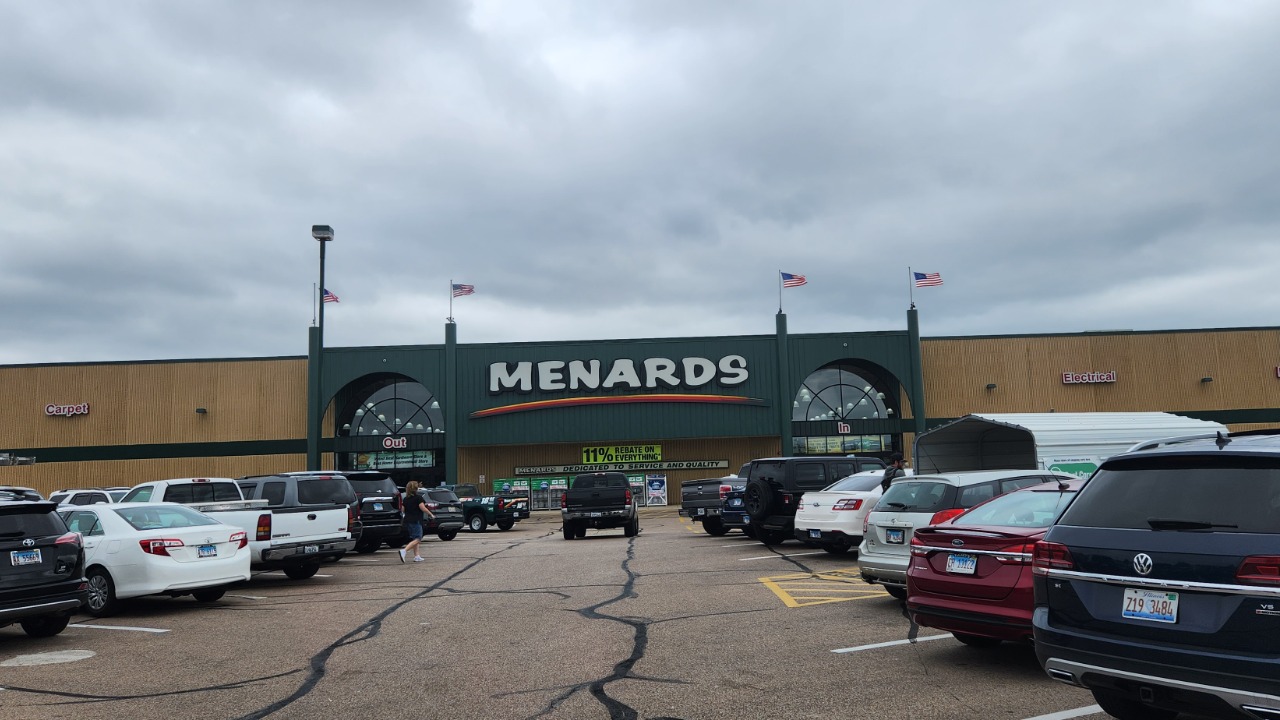
For years, Menards turned its “11% off everything” rebate into a signature draw for bargain hunters. Now that marketing hook has triggered a multistate crackdown, with the retailer accused of luring shoppers into a confusing rebate maze and agreeing to pay $4.25 m to resolve allegations that the promotion misled customers. The settlement, worth a total of $4.25 million, forces the chain to overhaul how it advertises and administers the rebates that helped define its brand.
At the heart of the dispute is a simple claim with complicated fine print: that customers were getting 11% off their purchases when, according to state attorneys general, many never saw the savings at all. I see the case as a warning shot to every retailer that leans on mail-in rebates and store credits, especially when those offers are splashed across circulars and TV spots as if they were instant discounts.
The multistate case that turned a marketing staple into a legal liability
The legal fight coalesced when a coalition of attorneys general accused Menards of using its 11% rebate program to create the illusion of across-the-board discounts that did not materialize at the register. According to officials in Ohio and other states, Menards will pay $4.25 million to resolve claims that its “11% OFF EVERYTHING!” advertising overstated the savings and obscured the hurdles consumers had to clear to collect them, including mailing forms and waiting for store credit instead of cash. Ohio’s attorney general joined counterparts from Arizona, Illinois, Iowa, Kansas, Michigan, Minnesota, Nebraska, South Dakota and Wisconsin in the multistate deal, which also requires changes to how the company promotes its Rebate offers.
Illinois played a central role in the enforcement push. In Chicago, Attorney General Raoul announced a $4.25 m multistate settlement with the home improvement chain, saying the agreement was designed to ensure that Illinois consumers are treated fairly when they respond to Menards’ 11% rebate promotions. Under the terms of the settlement, Menards is required to make several changes to its advertising and sales practices, including clearer disclosures about how and when rebates are paid and whether they come as store credit or cash, according to Attorney General Raoul.
How the “11% off” rebate allegedly trapped shoppers
State investigators argued that the problem was not just the existence of a rebate, but the way Menards framed it as a straightforward price cut when it was anything but. The 11% promotion was typically advertised as if every item in the store were instantly discounted, yet customers had to complete paperwork, mail it in, and then wait for a store credit that could only be used on future purchases. In some cases, according to complaints summarized by regulators, shoppers said they never received the promised credit at all, or discovered that certain items were excluded despite the sweeping “everything” language that anchored the discount ads.
From my perspective, that gap between the bold promise and the buried conditions is what turned a familiar retail tactic into what critics now call a rebate trap. The settlement documents describe how Menards must stop implying that customers are saving money at checkout when the benefit actually arrives weeks later, if at all, and only in the form of store credit. Regulators in multiple states said the company’s marketing left consumers with the impression that they were getting an immediate 11% reduction in price, even though the real-world experience depended on navigating a cumbersome process that many people never completed, according to the multistate allegations detailed by Home improvement regulators.
Where the $4.25 million is going and which states are cashing in
The $4.25 million settlement is not a single pot of money handed to one state, but a carefully divided fund that reflects how widely Menards operates. According to Raoul’s office, Menards is set to pay $4.25 m to the multistate group, with $946,633.61 earmarked for Illin consumers and the rest distributed among partner states that joined the case. That breakdown underscores how a regional chain’s marketing practices can ripple across the Midwest, prompting coordinated enforcement rather than isolated lawsuits, as outlined in the $946,633.61 allocation.
Other states have highlighted their own slices of the payout. In Iowa, officials said Menards will pay over $400 in a rebate advertising settlement that resolves claims the company misled residents about the nature of the 11% promotion and failed to honor it consistently. That Iowa agreement sits alongside separate commitments to states like Wisconsin, where Menards agreed to pay more than $750,000 after an investigation into its rebate program, according to Iowa officials and the separate Wisconsin-focused settlement described by Menards and state regulators.
What Menards must change about its rebate and advertising playbook
Money is only part of the story. The settlement also forces Menards to rewrite the rules of its rebate playbook, which had become a fixture of its brand identity. Under the settlement, Menards is required to make several changes to its advertising and sales practices, including clearer disclosures about exclusions, timelines, and the fact that rebates are issued as store credit rather than cash. Regulators say the company must stop using language that suggests an immediate price reduction at checkout when the benefit is actually deferred, a shift that could make the 11% promotion less flashy but more honest, according to the compliance terms described Under the agreement.
Illinois officials have been explicit about the behavioral changes they expect. In Chicago, Attorney General Raoul said the settlement requires Menards to ensure that any future 11% rebate advertising accurately reflects the conditions of the offer and does not mislead consumers into thinking they are receiving an instant discount. That includes revising circulars, in-store signage, and online promotions tied to the Menards 11% Rebate Program, which had become a recurring event for shoppers planning big-ticket purchases like kitchen remodels or deck projects, according to the enforcement summary released by Chicago authorities.
Why regulators targeted Menards now, and what it means for shoppers
The timing of the crackdown is not accidental. In SAINT PAUL, Attorney General Ellison framed the $4.25 m multistate settlement as part of a broader effort to protect consumers during periods of abnormal economic disruption, including the COVID-19 pandemic, when household budgets were under intense pressure and promotions like the Menards 11% rebate carried extra weight. Ellison’s office emphasized that Menards will pay $4.25 million and must avoid similar marketing tactics during future emergencies, a signal that regulators are watching how retailers pitch savings when shoppers are most vulnerable, according to the terms outlined by Attorney General Ellison.
Wisconsin-based Menards now finds itself a case study in how a beloved promotion can be reclassified as deceptive when it crosses the line from clever marketing into consumer confusion. State News reports that Menards settles deceptive 11% rebate lawsuit for $4.25M with 10 states, including Wisconsin, Mena, Nebraska, Ohio and South Dakota, underscoring how widespread the concerns had become. For shoppers, the message is twofold: first, that regulators are willing to step in when rebate programs are marketed as simple discounts but function as complex mail-in schemes, and second, that it is worth reading the fine print on any “percent off everything” offer, no matter how familiar the jingle, as highlighted in the multistate summary carried by The Center Square.
The broader backlash against rebate gimmicks
Beyond the courtroom, the Menards case has tapped into a broader backlash against rebate gimmicks that feel more like obstacles than savings tools. Online, some Minnesotans greeted the news with a mix of resignation and relief, noting that the iconic 11% rebate program had long required consumers to jump through hoops for store credit that could easily be forgotten in a junk drawer. One widely shared Comments Section reaction summed it up with “Makes sense,” pointing to the settlement’s requirement that Menards avoid similar tactics during periods of abnormal economic disruption.
From my vantage point, the enforcement wave against Menards is likely to reverberate across the retail sector, especially among chains that rely on mail-in rebates and store credits to advertise eye-catching discounts without actually lowering prices at the register. News coverage from ATHENS, Ohio, and other communities has already framed the $4.25 m settlement as a template for future actions against deceptive discount schemes, while state officials in Dec have stressed that the goal is not to ban rebates outright but to ensure that advertising matches reality. As regulators in Wisconsin and other states continue to scrutinize high-profile promotions, Menards’ experience may push retailers to simplify their offers or risk becoming the next example of a rebate strategy that backfired, a trend reflected in the multistate enforcement narrative carried by News.
More From TheDailyOverview

Grant Mercer covers market dynamics, business trends, and the economic forces driving growth across industries. His analysis connects macro movements with real-world implications for investors, entrepreneurs, and professionals. Through his work at The Daily Overview, Grant helps readers understand how markets function and where opportunities may emerge.