The Kennedy Center for the Performing Arts is threatening an unprecedented financial penalty against one of its own holiday mainstays, seeking $1 million in damages after jazz musician Chuck Redd pulled out of his Christmas Eve show in protest of the venue’s new Trump-branded name. The clash has turned a long-running seasonal tradition into a flashpoint over politics, artistic conscience, and the power of major cultural institutions in the Trump era. I see a contract dispute on paper, but underneath it sits a much larger argument about who gets to define the mission of a national arts landmark.
At the center of the fight is the decision to rename the institution “The Donald J. Trump and the John F. Kennedy Memorial Center for the Performing Arts,” a move that followed a board vote and White House backing earlier this year. When that change became public, Redd, a drummer and vibraphonist who has anchored a beloved Christmas Eve jazz jam at the venue for years, walked away from the gig rather than perform under the new marquee. The Kennedy Center’s leadership, now headed by Trump ally Richard Grenell, responded not with quiet disappointment but with a legal threat that has quickly spilled into the broader culture war.
The Christmas Eve tradition that set the stage
Before it became a political battleground, the Christmas Eve concert at the John F. Kennedy Center for the Performing Arts was a cozy ritual for Washington jazz fans. Chuck Redd’s annual Christmas Jam drew regulars who treated the show as part of their holiday calendar, a chance to hear standards and improvisations in one of the country’s most prominent arts venues. That long relationship between the Musician and the institution is what makes the current rupture so jarring, because it pits a familiar seasonal gathering against a sudden shift in the building’s identity.
Redd’s role was not a one-off booking but a recurring anchor, with the Christmas Show marketed as a signature event at the John F. Kennedy Center. Reports describe him as a longtime performer whose Christmas Eve performance had become part of the venue’s brand, a status that helps explain why the Kennedy Center now argues that his cancellation “has cost us considerably” in both revenue and reputation. The institution’s own framing of the dispute leans on that history, casting the Christmas tradition as a professional obligation that the artist allegedly breached rather than a voluntary celebration he could walk away from when the politics changed.
How the Trump renaming ignited the conflict
The immediate trigger for the standoff was the decision by Its board of trustees to rename the institution “The Donald J. Trump and the John F. Kennedy Memorial Center for the Performing Arts,” tying the building’s identity to President Donald Trump alongside the slain former president. That move, approved earlier this year, followed a push from Trump’s allies to cement his imprint on Washington’s cultural landscape and was celebrated by supporters as overdue recognition of his influence. For critics, it represented a jarring politicization of a venue that had long traded on the relatively unifying legacy of John F. Kennedy.
Drummer and vibraphonist Chuck Redd learned of the new name as it rolled out and, according to multiple accounts, decided he could not in good conscience headline a show at an institution now formally branded after President Donald Trump. The renaming has sparked controversy beyond Redd’s circle, with some questioning the legality of the change and others warning that it risks alienating artists and audiences who do not want their work framed as a tribute to a sitting president. That broader backlash is the backdrop for Redd’s choice, which he has framed as a refusal to lend his reputation to a political project he did not sign up for.
Chuck Redd’s decision to walk away
From Redd’s perspective, the Christmas Eve Jazz Jam was no longer the same gig once the marquee carried Donald Trump’s name. Drummer Chuck Redd decided to cancel his yearly Jazz Jam after Donald Trump added his name to the venue, a step he reportedly communicated to colleagues and the Kennedy Center as a matter of principle rather than a negotiating tactic. In his telling, the issue was not money or scheduling but the symbolism of playing under a banner that now honored a polarizing political figure.
Accounts of the decision emphasize that Redd had built the show over years, often sharing the stage with collaborators like bassist William “Keter” Betts, which made the choice to walk away personally and professionally costly. The historic performing arts venue’s renaming was the specific line he would not cross, and he decided to cancel the show because of the renaming even as tickets had already been sold. That act of protest instantly transformed a niche jazz booking into a national story, with Redd cast by supporters as an artist standing on conscience and by critics as a contractor abandoning his post for partisan reasons.
Grenell’s $1 million demand and legal posture
On the other side of the dispute stands Ambassador Richard Grenell, the Trump-appointed president of the Kennedy Center, who has chosen to answer Redd’s protest with the blunt instrument of a potential lawsuit. In a letter that quickly circulated in political and arts circles, Grenell said the organization will seek $1 million in damages from Redd, arguing that the cancellation inflicted serious financial and reputational harm on the non-profit Arts institution. That figure, unusually high for a single concert, signals that the leadership wants to make an example of the case rather than quietly absorb the loss.
Grenell’s stance has been consistent across his public comments, where he has framed the threatened suit as a defense of contracts and donors rather than a punishment for political dissent. He has stressed that he was appointed by Trump earlier this year to protect the Kennedy Center’s interests and has portrayed the move as necessary after the board’s vote to rename the venue in Trump’s honor. The John F. Kennedy Center for the Performing Arts Venue President Richard Grenell has reportedly demanded $1 million in a formal communication, and he has suggested that anything less would be a disservice to the arts and to patrons who expected the Christmas Eve performance to go ahead.
Inside the Kennedy Center’s argument
The Kennedy Center’s leadership has tried to ground its position in the language of contracts and institutional duty rather than culture war rhetoric. In public statements, the Kennedy Center says it plans to file a $1 million lawsuit, asserting that the cancellation has cost us considerably in lost ticket revenue, staffing costs, and the need to scramble for replacement programming. The institution has described Redd’s decision as a breach that forced it to disappoint audiences and donors, casting the legal threat as a reluctant but necessary response to protect its operations.
After a musician allegedly dropped out of playing at the Kennedy Center this week over its recent name change, the president’s allies have echoed that framing, arguing that allowing artists to walk away for political reasons would undermine the stability of the schedule. Some coverage notes that the Kennedy Center President Demands $1M from Musician Who Canceled Christmas Eve Show over Donald Trump Venue Rename in a letter to Redd that accuses him of doing a disservice to the arts. By emphasizing the dollar figure and the alleged damage, the institution is signaling to other performers that contracts tied to the newly named venue will be enforced aggressively, regardless of personal objections to Trump’s presence on the façade.
How Redd and his supporters see the threat
Redd did not respond to a request for comment in some early reports, but his allies and fans have filled in the gaps, portraying the threatened lawsuit as an attempt to bully an artist into silence. Kennedy Center President Richard Grenell has threatened legal action against jazz musician Chuck Redd, a move that critics describe as “sad bullying tactics” aimed at punishing someone for refusing to play under Trump’s name. In that telling, the $1 million figure is less about actual losses and more about sending a message to other performers who might consider similar acts of protest.
On social media, President Trump’s supporters are attacking the Kennedy Center, Chuck Redd, and his decision, while others are rallying to his side and urging boycotts of the newly renamed venue. A longtime jazz concert at The Kennedy Center, Chuck Redd’s Christmas Eve show, has become a proxy battle over whether artists should be compelled to separate their work from the politics of the institutions that host them. In the comments under one widely shared post, users urge Redd to “stand firm” and accuse Grenell of weaponizing the courts, while others argue that if he signed a contract he should pay up, a split that mirrors the broader national divide over Trump himself.
Public backlash and the politics of a national stage
The controversy has quickly spilled beyond the narrow world of jazz into a broader argument about how far Trump’s influence should extend into cultural institutions. Coverage of the dispute notes that the move from Grenell, who was appointed by Trump earlier this year, comes after the center’s board of trustees voted to rename the building in Trump’s honor, a decision that many saw as a political reward rather than an artistic one. The renaming has sparked controversy and raised questions about the legality of the change, with some legal scholars and arts advocates warning that tying a federally supported venue so closely to a sitting president risks politicizing its mission.
News of the threatened lawsuit has only intensified that debate, with critics arguing that suing a musician over a protest cancellation will chill artistic expression at a time when the arts are already under pressure. The Kennedy Center seeks $1m from musician who cancelled after Trump name added to venue, a fact that has been repeated in headlines and social feeds as shorthand for what opponents call an overreach. In that environment, every move by Grenell and the board is being read not just as a contract enforcement decision but as a test of how far Trump’s allies will go to defend his imprint on national symbols.
What the law might actually say
Strip away the politics and the case still raises thorny legal questions about contracts, damages, and artistic autonomy. The Kennedy Center’s letter suggests it believes it can quantify the harm from Redd’s cancellation at $1 million, but contract experts note that courts typically require detailed proof of lost profits and cannot simply award a round number because an institution is angry. Some analysts have pointed out that the renaming itself could complicate the case, since Redd might argue that the fundamental nature of the engagement changed when the venue became The Donald J. Trump and the John F. Kennedy Memorial Center for the Performing Arts, potentially giving him grounds to walk away.
Media coverage has highlighted that the renaming has sparked controversy and raised questions about the legality of the change, which could become relevant if Redd’s lawyers argue that he was being asked to perform in a space whose new branding had not been fully vetted. A summary of the dispute notes that a musician recently canceled a Christmas Show at the John F. Kennedy Center and that the institution is now seeking $1 million from the performer who canceled show, but it also underscores that no lawsuit has yet been filed in court. Until that happens, the legal arguments remain largely theoretical, a mix of public posturing and behind-the-scenes lawyering that will determine whether this stays a threat or becomes a precedent-setting case.
A cultural landmark under Trump’s shadow
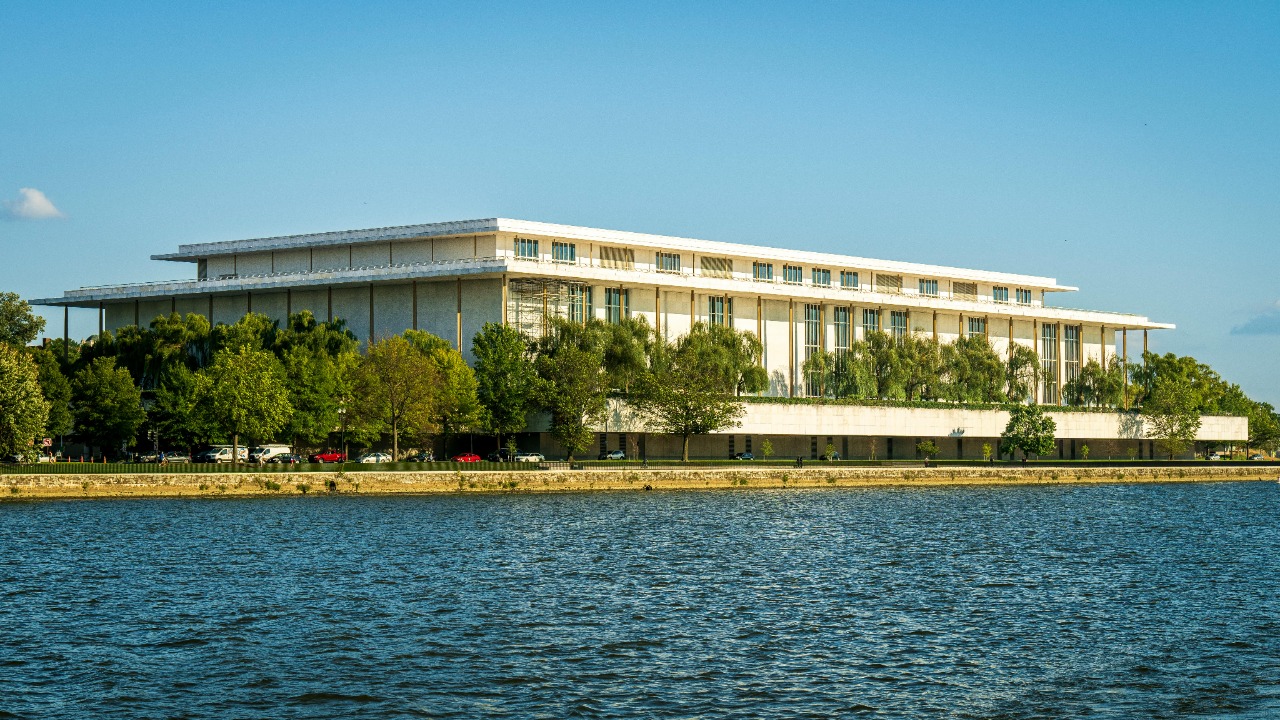
Beyond the immediate fight, the episode underscores how deeply Trump’s presence now runs through Washington’s physical and cultural landscape. The Kennedy Center, perched above the Potomac and long marketed as a living memorial to John F. Kennedy, now shares its official name with a sitting president whose brand already looms over hotels, golf courses, and office towers. That shift is not just symbolic; it affects how artists, audiences, and donors perceive the building, and whether they see it as a neutral stage or an extension of Trump’s political project.
Some observers have drawn parallels to other civic spaces that have been renamed or rebranded in honor of contemporary leaders, noting that such moves often trigger backlash and can take years to normalize. A media segment framed the dispute as part of a broader pattern in which the renaming has sparked controversy and forced performers to weigh their own reputations against the institutions that host them. Even seemingly apolitical details, like the Kennedy Center’s location near the Potomac and its status as a tourist stop highlighted in guides such as this overview, now sit inside a charged debate over whose names and values the building represents.
What comes next for Redd, Grenell, and the arts
For now, the standoff remains in a tense holding pattern. The Kennedy Center has vowed to pursue legal action, but as of the latest reports it has not yet filed a complaint in federal court, leaving Redd and his supporters to navigate a limbo in which a $1 million threat hangs over his head without a formal case to answer. Commenters tracking the story through social media posts, including threads where users click to read more about the longtime jazz concert and scroll to view all 7 comments, are effectively watching a negotiation play out in public.
As I weigh the stakes, I see more than a single canceled show. The Kennedy Center demands $1M from musician who canceled show, and that posture will be noticed by every artist considering whether to appear at the newly renamed venue. Coverage that tracks how President Trump’s supporters are attacking the Kennedy Center, Chuck Redd, and his critics, as well as pieces that detail how Ambassador Richard Grenell, the Trump-appointed president of the Kennedy Center, has doubled down on the threat, suggests that neither side is eager to back down. Whether the dispute ends in a courtroom, a quiet settlement, or a change of heart, it has already forced a national conversation about what happens when a cultural landmark becomes a stage for political loyalty tests as much as for art.
Additional reporting has filled in the edges of that conversation. One explainer notes that the cancellation followed the White House-backed renaming and that the Christmas Eve performance on Wednesday was supposed to cap a season of celebrations at the newly titled venue, while another segment describes how a Media Error in a widely shared clip did little to slow the spread of outrage. A separate analysis of how the historic performing arts venue now sits at the center of a fight over Trump’s legacy, and how National coverage has amplified every twist, underlines that this is no longer a local scheduling dispute. It is a test case for how far powerful institutions will go to enforce contracts when artists decide that the politics attached to a stage are a price they are no longer willing to pay.
In that sense, the Kennedy Center reportedly seeks $1M from artist who canceled show because of the renaming, but the real cost may be harder to tally. If more performers quietly decline invitations or audiences decide that a Christmas Eve at a less politicized club feels more comfortable, the damage to the brand could outstrip any judgment a court might award. For now, the story of Chuck Redd, Richard Grenell, and the Trump-branded Kennedy Center stands as a vivid example of how the collision of art, law, and politics can turn a single holiday concert into a national referendum on what a cultural institution is supposed to be.
As the debate continues, I am struck by how many of the arguments on both sides hinge on what people believe the Kennedy Center represents. Some see it as a neutral platform that should be open to all presidents and patrons, others as a memorial that should not be repurposed as a branding exercise for a sitting leader. The fact that so many are now parsing the fine print of contracts, scrolling through social media attacks and defenses, and debating whether a $1 million claim is proportionate to a single night’s music, shows how much symbolic weight the building carries. Whatever happens to this particular lawsuit threat, the questions it raises about power, protest, and the price of saying no are likely to echo far beyond one canceled Christmas Eve jam.
For readers trying to follow every twist, a range of detailed accounts help map the terrain. One narrative traces how Kennedy Center President to ‘Seek $1 Million in Damages’ Against Chuck has been framed as part of a broader push by some on the left and right to weaponize cultural spaces, while another breaks down how Ambassador Richard Grenell, the Trump-appointed president of the Kennedy Center, has been featured prominently in coverage of the dispute. A separate explainer on how the Kennedy Center seeks one million dollars after an artist canceled show because of the Donald Trump renaming, and a concise summary that a musician recently canceled a Christmas Show at the John F. Kennedy Center and now faces a potential seven-figure claim, round out a picture in which every stakeholder is keenly aware that the outcome will set a precedent. Even as the legal filings remain pending, the court of public opinion is already in session, and the verdict there may matter just as much.
For those looking beyond the Beltway, the story has also been picked up internationally, with one report noting how the cancellation followed the White House-backed renaming and another summarizing how the Kennedy Center seeks 1 million from performer who canceled show as part of a broader trend of cultural institutions aligning with political leaders. A concise broadcast segment has boiled the dispute down to a few key points for viewers who may only catch a glimpse between holiday errands, while a more detailed analysis has explored how the renaming has sparked controversy and raised questions about the legality of the change. Taken together, these accounts show that what began as a local programming decision at a single venue has become a global talking point about the intersection of art, power, and the Trump presidency.
More From TheDailyOverview

Grant Mercer covers market dynamics, business trends, and the economic forces driving growth across industries. His analysis connects macro movements with real-world implications for investors, entrepreneurs, and professionals. Through his work at The Daily Overview, Grant helps readers understand how markets function and where opportunities may emerge.