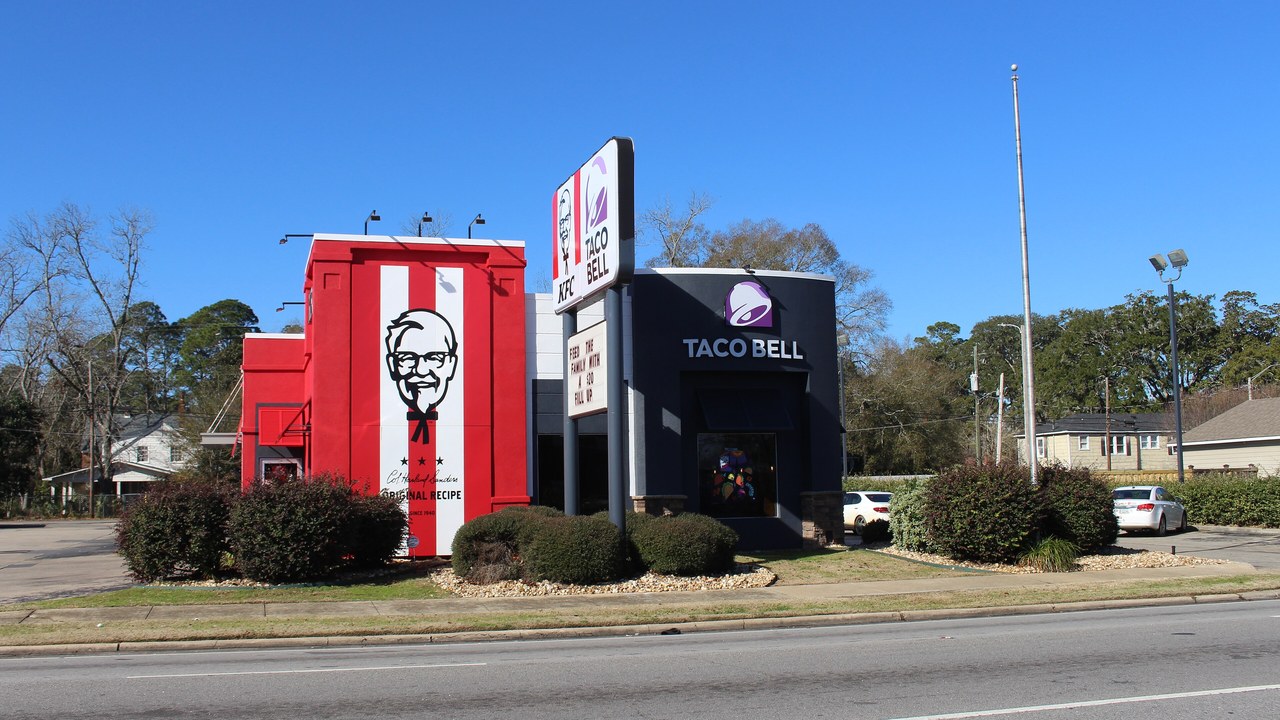
Tasty Chick’n, LLC, a franchisee that runs KFC and KFC/Taco Bell restaurants, filed for Chapter 11 bankruptcy on November 16, 2026, in the U.S. Bankruptcy Court for the Southern District of Texas. The company says it operates 84 restaurants in 10 states, and its lenders are owed about $67.2 million.
The filing is a court-supervised effort to sell the business, not an announcement that every restaurant is shutting. The company’s own sworn first-day statement describes which locations are already closed, which are winding down and what workers, customers and creditors can expect, and the details below come from that document.
What the first-day declaration says about the filing
The company’s first-day declaration in Case No. 26-90831 says the operating companies own or operate 75 KFC restaurants and 9 KFC/Taco Bell co-branded restaurants as of the petition date. They are in Tennessee, Florida, Virginia, Arkansas, Kentucky, Illinois, Missouri, Alabama, Mississippi and Indiana. The affiliated companies are managed through Tasty Restaurant Group, which provides payroll, accounting and other services.
The stated reason for filing is the threat to the franchise agreements. On September 15, 2026, Yum Brands units sent a notice of intent to terminate them, and termination would end the right to use the KFC and Taco Bell names. The declaration says the filing is meant to preserve the business as a going concern and to run a sale under section 363 of the Bankruptcy Code while other restructuring options are explored. Everything in the declaration is the company’s own account, not a finding by the court.
Personal bills are a separate job: A Chapter 11 case deals with the restaurant operator’s debts, and a collection call about an employee’s or customer’s own account follows different rules than the company’s case. The debt-validation steps are the part of The Bank Account & Debt Protection Kit built for making a collector validate a debt.
Debts, unpaid royalties and falling sales
According to the declaration, the lenders are owed about $67,217,658.46 in principal and accrued interest. Yum’s September notice asserted $15,684,849.71 in unpaid royalties and related fees, split among royalties, advertising contributions, digital and technology fees, rent-related fees and KFC Foundation fees. The company says it began deferring royalties in mid-2025 and generally stopped paying them in November 2025. Restaurant Dive reported the same figures.
Sales at the restaurants fell 11.4% in fiscal 2024, 1.4% in fiscal 2025 and 2.8% so far in fiscal 2026, about 15.6% over the three years, according to the filing. Restaurant margins shrank from 11.8% in fiscal 2023 to 4.0% in fiscal 2026 to date, while labor, operating and rent costs rose. About 14 landlord lawsuits, together seeking more than $2 million, were pending when the case began.
Which restaurants are closing, and which are not
The declaration does not say all 84 restaurants will close. It says the company asked the court to reject leases at locations that are not profitable, no longer operating or winding down, and to reject nine franchise agreements for restaurants that already shut or are winding down. Rejection is a request that needs court approval.
Labeled arithmetic from the filing: monthly store rent was about $1,196,254 in 2025 and would fall to about $890,000 if the rejections are approved, a difference of about $306,254 a month, or roughly $3.7 million over 12 months. Fast Company published a list of more than 70 restaurants from the filings and reported that many appear to have closed already. That list is the outlet’s reading of the papers, and the declaration pages reviewed here do not give a closing count, so the status of any single address should be checked locally.
How workers, gift cards and rewards are treated
The declaration says the companies employ about 1,646 people: 1,064 full-time hourly, 563 part-time hourly and 19 salaried. Pay is bi-weekly, in arrears. The company asked the court for permission to pay about $366,163.67 in accrued unpaid wages and keep payroll running in the ordinary course. It also asked to let employees keep using accrued paid time off, though it does not seek to pay that time out.
For customers, the declaration says gift cards are issued through a third-party program in which the issuer, not the restaurant company, is the obligor, and the restaurants honor them and are reimbursed through a daily settlement. The company also asked to keep the KFC and Taco Bell rewards programs running. Both requests await court approval, so a particular restaurant’s practice can still change.
Where creditors and workers can follow the case
The company proposed Epiq Corporate Restructuring as its claims and noticing agent, and the declaration points to a case website run by Epiq for notices and filings. The U.S. Courts’ Chapter 11 basics page explains that the automatic stay pauses collection actions and that creditors whose claims are not scheduled, or are scheduled as disputed, generally must file a proof of claim to vote or receive distributions.
Workers who lose their jobs have a separate federal rule to know. The U.S. Department of Labor’s WARN Act page points to the law covering plant closings and mass layoffs, and the rule at 20 CFR Part 639 covers employers with 100 or more employees, excluding part-time workers, and requires 60 calendar days of notice. Whether the rule applies to any given restaurant depends on the facts, and some closures may fall outside it.
The mistakes most likely to cost money or time
The biggest mistake is treating a bankruptcy headline as a closing notice. A restaurant on a published list may have shut months ago, may be staying open for a sale or may be listed in error, and a gift card or reward balance should be used soon after it is confirmed that the location honors it. Another is ignoring mail from the court or Epiq: a creditor who is owed money by the company, such as a vendor or a landlord, can lose rights by missing a deadline that the notice sets.
A third mistake concerns personal money. The case does not settle anyone’s own debts, and an employee or customer who is contacted about a personal account should keep dates, names and what was said.
Keeping personal debt notices apart from a company’s case
The Tasty Chick’n filing covers the franchisee’s own lenders, landlords and royalty claims, and the notices that follow are addressed to those creditors. A restaurant worker or customer with a personal account in collection faces a different question, which is whether the collector can document the debt at all.
The Bank Account & Debt Protection Kit is a 10-page kit with the debt-validation steps, the 2-month bank protection rule, the frozen-account response and a protected-funds and dispute log, which together support checking a collector’s claim and recording what was disputed.
Open the protected-funds and dispute log in The Bank Account & Debt Protection Kit.
This article was created with AI assistance and reviewed for accuracy against the first-day declaration filed in the U.S. Bankruptcy Court for the Southern District of Texas, Restaurant Dive, Fast Company, U.S. Courts and U.S. Department of Labor pages read in November 2026.

Grant Mercer covers market dynamics, business trends, and the economic forces driving growth across industries. His analysis connects macro movements with real-world implications for investors, entrepreneurs, and professionals. Through his work at The Daily Overview, Grant helps readers understand how markets function and where opportunities may emerge.