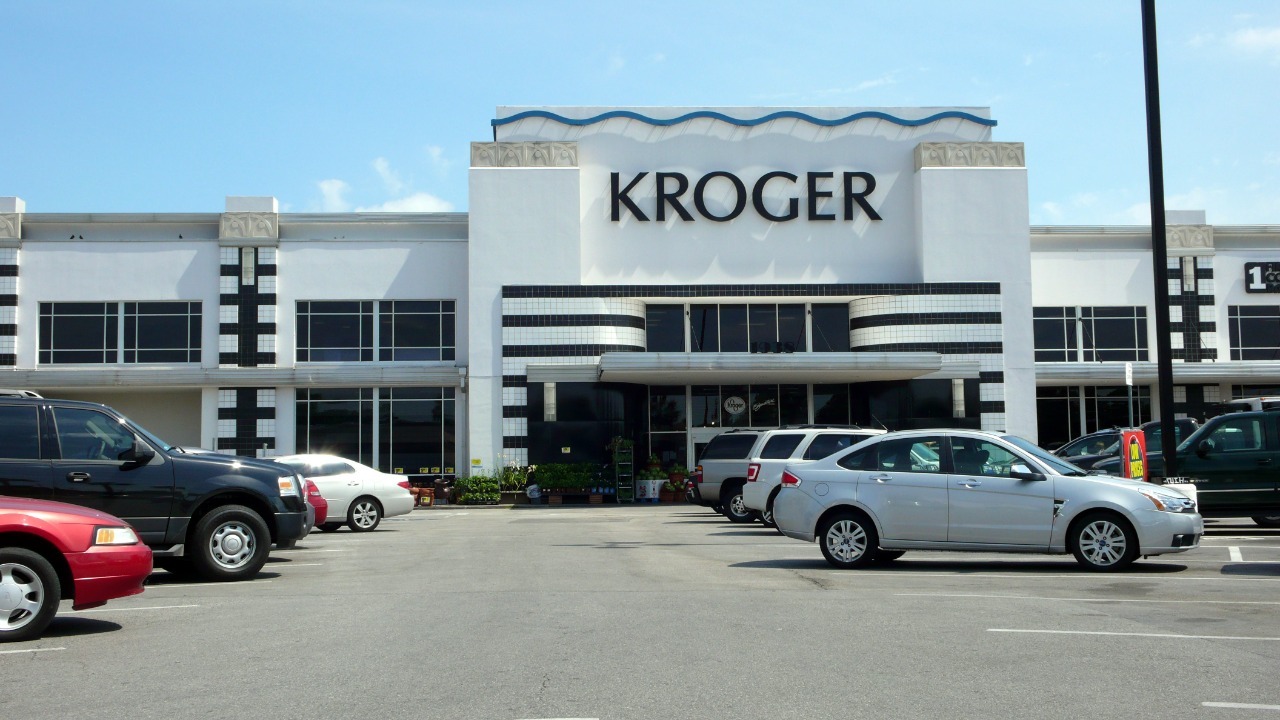
Kroger’s retreat from Florida marks a rare admission of defeat by one of the country’s largest grocers in a state that has become a proving ground for supermarket dominance. After years of trying to crack a market defined by fierce regional loyalty and aggressive national rivals, the company is walking away from a costly experiment that never translated into meaningful market share.
What looks like a simple geographic pullback is, in reality, a window into how quickly the balance of power in food retail can shift when logistics bets misfire and local incumbents dig in. I see Kroger’s exit as a case study in how even a scale giant can misread a fast‑growing Sun Belt market, underestimate entrenched competitors, and ultimately decide that capital is better deployed elsewhere.
How Kroger tried to win Florida without building stores
Kroger did not charge into Florida with a traditional wave of supermarkets, and that decision shaped everything that followed. Instead of planting its familiar banners along major corridors, the company leaned on a hub‑and‑spoke delivery model built around large automated fulfillment centers and spoke facilities that fed online orders into surrounding communities. The strategy was designed to let Kroger reach millions of Floridians without the expense and time required to assemble a full brick‑and‑mortar network, a bet that online grocery adoption and operational efficiency would offset the lack of physical stores and in‑person brand presence, as detailed in coverage of its Florida fulfillment centers.
That approach gave Kroger a toehold in markets like Jacksonville, Tampa, and Miami, but it also meant the company was effectively asking shoppers to change habits without giving them a store they could see on the drive home. The company’s automated facilities, including the large customer fulfillment center in Groveland and smaller spokes in cities such as Jacksonville and Tampa, were built to support delivery under the Kroger banner in a state where the chain had no legacy footprint. Reporting on the Florida network shows how the company used these sites to promise broad coverage and fast delivery across key metro areas, yet the model left Kroger competing almost entirely on price, assortment, and app experience rather than the daily visibility that rivals enjoyed through dense store networks anchored in local neighborhoods, a dynamic underscored in analyses of its Florida customer fulfillment strategy.
The Publix problem and a crowded Florida battlefield
Any outsider trying to grow in Florida’s grocery sector has to go through Publix, and Kroger was no exception. Publix Super Markets, headquartered in Lakeland, has spent decades building a near‑cultural bond with Florida shoppers, combining dense store coverage with a reputation for service and private‑label strength. In practical terms, that meant Kroger’s delivery‑only model was going up against a rival that already operated hundreds of stores across the state, many of them recently remodeled and supported by strong loyalty programs and prepared‑foods offerings. Reporting on Florida’s competitive landscape highlights how Publix’s entrenched position, along with its continued expansion and investment in new locations, left limited room for a newcomer to win over shoppers at scale, especially one that lacked a physical presence and had to rely on online ordering to build brand familiarity in a Publix‑first market, as seen in coverage of the state’s grocery wars.
Kroger also had to contend with a growing cast of national and discount players that were already reshaping Florida’s food retail map. Walmart and Sam’s Club continued to lean on their supercenter and membership models, while Aldi and Lidl pushed hard on limited‑assortment, low‑price formats that resonated with cost‑conscious households. At the same time, Costco and Target expanded their own grocery offerings, and Amazon’s e‑commerce muscle gave shoppers yet another way to buy staples without visiting a traditional supermarket. Analyses of Florida’s market show that this crowded field left Kroger’s delivery‑only proposition squeezed between value‑driven discounters and full‑service chains with deep local roots, making it difficult to carve out a distinctive niche or justify the heavy capital tied up in automated facilities when customer acquisition costs remained high and loyalty lagged behind incumbents, a pattern reflected in broader reporting on supermarket competition.
Why the automated fulfillment bet fell short
The Florida experiment was built on the idea that large, highly automated warehouses could deliver groceries more efficiently than a patchwork of stores, but the economics never fully cooperated. Kroger’s customer fulfillment centers in the state were designed to handle high volumes of online orders using robotics and centralized inventory, a model that depends on dense order flow to spread fixed costs and justify the technology investment. Reporting on the company’s decision to wind down these facilities indicates that order volumes and profitability targets did not keep pace with expectations, leaving Kroger with expensive assets that were underutilized in a market where many shoppers still preferred to walk store aisles or use curbside pickup from chains they already knew, a shortfall that ultimately led to the closure of its Florida automated centers.
Operational complexity compounded the challenge. Serving a sprawling state like Florida from a limited number of hubs meant longer delivery routes, higher last‑mile costs, and greater exposure to traffic and weather disruptions, especially in coastal and exurban areas. Analyses of Kroger’s network show that while the company could technically reach millions of households, the cost to serve many of them eroded the margin benefits that automation was supposed to deliver, particularly when orders skewed toward lower‑ticket baskets or promotional items. In effect, the model worked best in dense urban cores with strong adoption, but Florida’s growth has been heavily suburban and exurban, and rivals with local stores could blend in‑store traffic, pickup, and delivery in ways that Kroger’s stand‑alone fulfillment network struggled to match, a mismatch that became clear as the company evaluated the performance of its Florida customer fulfillment operations.
Strategic retreat and what it signals about Kroger’s priorities
When Kroger decided to shut its Florida fulfillment centers and exit the state, it was not just trimming a marginal business line, it was acknowledging that its chosen model could not overcome structural disadvantages in this particular market. Reporting on the closures makes clear that the company is closing the Groveland customer fulfillment center and associated spokes, effectively ending its direct delivery service to Florida customers under the Kroger banner. I read that move as a strategic retreat aimed at freeing capital and management attention for regions where Kroger has a stronger store base, more brand recognition, and a clearer path to integrating online and offline operations, a shift that aligns with the company’s broader focus on markets where it already holds significant share and can deepen rather than merely establish its presence, as reflected in coverage of its Florida exit decision.
The timing also intersects with Kroger’s larger corporate agenda, including its proposed merger with Albertsons and ongoing efforts to streamline operations ahead of potential regulatory outcomes. Analyses of the company’s footprint suggest that shedding a capital‑intensive, low‑scale operation in Florida helps simplify the portfolio and improve financial optics at a moment when investors and regulators are scrutinizing its efficiency and competitive impact. By stepping back from a state where it lacked stores and faced a dominant regional rival, Kroger is signaling that it will prioritize depth over breadth, focusing on markets where it can leverage existing distribution, loyalty programs, and store networks rather than continuing to fund a stand‑alone delivery beachhead that never reached critical mass, a recalibration that is consistent with reporting on its broader strategic priorities.
What Kroger’s Florida exit means for shoppers and rivals
For Florida shoppers, Kroger’s withdrawal will be felt most directly by those who had adopted its delivery service as a regular part of their grocery routine. Customers in areas served by the Groveland fulfillment center and its spokes will lose access to Kroger’s private‑label assortment and digital promotions, and many will likely shift their online orders to Publix, Walmart, or Amazon, which already operate robust e‑commerce channels in the state. Reporting on the closures notes that Kroger has been notifying customers and winding down operations, a process that effectively hands the online grocery field back to incumbents that can blend delivery with in‑store experiences and loyalty programs, reinforcing the advantage of chains that already have physical roots in Florida’s communities, as seen in coverage of the state’s grocery competition.
Rivals, particularly Publix and Walmart, stand to benefit from the vacuum left by Kroger’s departure, both in terms of customer acquisition and as a cautionary example of what not to do. Publix can point to Kroger’s exit as validation of its long‑term investment in stores, service, and local brand equity, while Walmart and Aldi can double down on price‑focused messaging that resonates with households still wrestling with food inflation. At the same time, the Florida outcome will likely influence how other national chains think about entering new markets with delivery‑first strategies, reinforcing the lesson that automation and logistics alone are not enough without a strong local presence and a clear value proposition. Analyses of the fallout from Kroger’s Florida pullback suggest that competitors are already using the episode to refine their own expansion plans, treating the failed experiment as a reminder that even the largest grocers must respect the power of regional loyalty and the limits of asset‑light entry models in markets as contested as Florida, a theme echoed in broader reporting on grocery‑sector strategy.
More From TheDailyOverview
- Dave Ramsey warns to stop 401(k) contributions
- 11 night jobs you can do from home (not exciting but steady)
- Small U.S. cities ready to boom next
- 19 things boomers should never sell no matter what

Grant Mercer covers market dynamics, business trends, and the economic forces driving growth across industries. His analysis connects macro movements with real-world implications for investors, entrepreneurs, and professionals. Through his work at The Daily Overview, Grant helps readers understand how markets function and where opportunities may emerge.