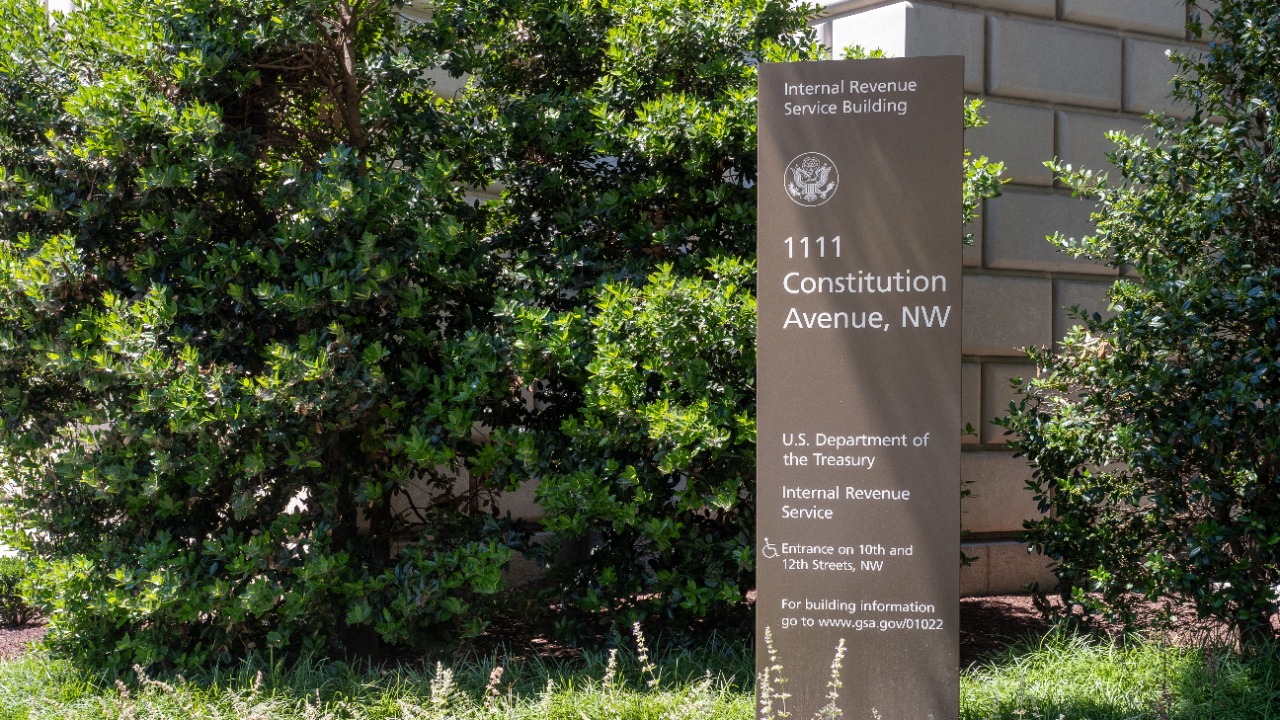
The $600 reporting threshold has become a flashpoint for anyone who earns money through side gigs, payment apps, or freelance work. I want to unpack how that old limit is being reshaped, what the new rules look like in practice, and why the changes matter whether you drive for Uber, sell on Etsy, or pay contractors for your small business.
At the center of the shift is a political and policy fight over how much information the IRS should get from third-party platforms and payers, and how much paperwork ordinary taxpayers should shoulder. The latest tax law, including the One, Big, Beautiful Bill Act, rewrites key thresholds and timelines, so understanding where the $600 line used to sit, and what replaces it, is essential before your next tax season.
How the $600 rule worked and why it became so controversial
For years, the $600 figure defined when many payers had to send a 1099 form to workers and the IRS, which meant even modest freelance or gig income could trigger extra paperwork. That threshold applied broadly to nonemployee compensation and other miscellaneous payments, so a handful of weekend photography jobs or a short-term consulting project could generate a 1099 and a matching data trail at the tax agency. As more people layered side work on top of traditional jobs, guidance for freelancers and gig workers stressed that even relatively small amounts of income had to be tracked carefully, with reporting rules sitting alongside other provisions like the lower income tax rates introduced under the 2017 Tax Cuts and Jobs Act that, as one analysis noted on Jul 16, 2025, were expected to stick around under the new law Jul 16, 2025.
The controversy intensified when Democrats pushed to extend that $600 standard to third-party payment apps and platforms, which would have meant detailed IRS reporting on transactions as low as $600 flowing through services like PayPal, Venmo, Etsy, or Airbnb. Critics argued that this would bury casual sellers and small-time side hustlers in forms and confusion, while supporters framed it as a way to close the tax gap on underreported income. The political backlash set the stage for a legislative response, and by Jun 4, 2025, Republicans were touting that WASHINGTON had moved to roll back what they described as Democrats’ onerous requirement that third-party apps report transactions as low as $600.
What the One, Big, Beautiful Bill Act changes about 1099 reporting
The One, Big, Beautiful Bill Act, often shortened to The One, Big, Beautiful Bill or OBBBA, does more than scrap a single rule, it rewires the reporting architecture for a range of 1099 forms. Under the One, Big, Beautiful Bill Act, lawmakers targeted the low $600 threshold that had been slated to apply to third-party payment networks and instead raised the bar for when platforms and businesses must send information returns. Supporters framed this as relief for gig workers and small businesses that would otherwise have been swept into a complex new regime, and the legislative text explicitly positioned The One, Big, Beautiful Bill as a repeal of what Republicans called Democrats’ burdensome tax reporting requirement for third-party apps and gig workers The One, Big, Beautiful Bill.
On the ground, that policy shift shows up in higher thresholds and a more gradual rollout. The IRS postponed implementation of the earlier $600 standard twice before settling on a phase in of the new threshold that began in 2024, and that phased approach is now being integrated with the OBBBA changes so that reporting is generally only required once payments cross the new, higher limits. One analysis of the implementation noted that The IRS, in guidance dated Oct 19, 2025, described how the phase in that began in 2024 would interact with state rules and the way a business operates or files returns, underscoring that the federal standard is only part of the picture Oct 19, 2025.
The new dollar thresholds: from $600 to $2,000 and indexed for inflation
The most tangible change for many taxpayers is the jump in the reporting minimums, which moves the conversation away from the old $600 benchmark. For nonemployee compensation and similar contractor payments, the law now sets a higher floor before a payer must issue a 1099, which means fewer small, one off jobs will trigger a form. A detailed breakdown on Jul 7, 2025, highlighted that the 1099 Reporting Threshold Increased to $2,000 and Indexed for Inflation, and that Payments to non employees for personal services will now be subject to this higher standard, effective for the 2025 tax year.
The ripple effects extend to the familiar 1099 MISC and 1099 NEC forms that many freelancers and contractors receive each winter. Guidance for payroll and HR professionals notes that, starting with 2026 payments, 1099 MISC and 1099 NEC reporting minimums have increased from $600 to $2,000, a shift that will be especially noticeable for small businesses that pay occasional contractors for design work, bookkeeping, or seasonal help. One summary dated Sep 17, 2025, framed these as Key changes, explaining that the law has raised the threshold for MISC and NEC reporting and that the minimum has been raised to $2,000 for those forms beginning with the 2026 calendar year Key.
How gig workers, side hustlers, and multi job earners should adapt
Even with higher thresholds, the responsibility to report income does not disappear, and that is where gig workers and side hustlers need to be especially disciplined. Tax guidance for people juggling multiple jobs stresses that You need to keep track of all your income sources, including cash payments, and report them accurately, regardless of whether a 1099 form shows up in your mailbox. A resource updated on Oct 31, 2025, under a section labeled Key Takeaways, emphasized that You should not treat the absence of a form as a green light to ignore income, and that careful tracking becomes even more important as withholding with 1099 forms is not automatic and new rules will fully apply with the 2025 tax year Oct 31, 2025.
For platform based workers, the OBBBA changes are a mixed blessing. On one hand, fewer small transactions will be reported automatically to the IRS, which may reduce confusion for casual sellers who occasionally unload a used 2019 Toyota Camry on Facebook Marketplace or sell a handful of handmade candles on Etsy. On the other hand, serious gig workers who rely on Uber, DoorDash, or Airbnb for a significant share of their income will still see forms once they cross the new thresholds, and they will need to reconcile those documents with their own records. Updated IRS FAQs on Nov 11, 2025, explained that Under the One Big Beautiful Bill Act, or OBBBA, the reporting threshold for Form 1099 K has been increased for payments processed by third party settlement organizations, and that reporting is generally only required once those higher limits are met, including when returns are filed through a combined federal state filing program Form.
What businesses and payers need to do differently
For businesses that issue 1099s, the new thresholds change who gets a form, but not the obligation to file on time and keep clean records. Companies that pay freelancers, independent contractors, or other nonemployees still need systems to track cumulative payments and determine when they cross the new $2,000 line, and they must continue to collect taxpayer identification information up front. A detailed overview on Oct 31, 2025, under a section labeled Key Takeaways, reminded Businesses that they are required to complete a Form 1099 NEC by January 31 (or the next business day if the deadline falls on a weekend or holiday) and that penalties can apply if they fail to file or furnish these forms to recipients who should receive one of these forms NEC.
The new law also interacts with broader tax planning for self employed people and small firms. On Jul 31, 2025, a summary under the heading What You Need To Know explained that The OBBBA increases the 1099 NEC reporting threshold from $600 to $2,000 and indexes it to inflation, which means that over time, the real value of the threshold should not erode as prices rise. That same guidance stressed that The OBBBA changes will affect how businesses structure payments to contractors, how they budget for compliance, and how they communicate with workers who may no longer receive a form even though their income remains taxable The OBBBA.
Planning ahead so the new thresholds work in your favor
The shift away from the old $600 benchmark creates an opportunity to simplify your financial life, but only if you plan ahead. I recommend that anyone with side income, whether from Instacart runs, freelance graphic design, or renting out a spare room on Airbnb, treat the new thresholds as a reporting backstop rather than a target. You still owe tax on profit, even if no 1099 arrives, and the safest approach is to track every dollar in a simple spreadsheet or bookkeeping app, set aside a portion of each payment for estimated taxes, and reconcile your records with any forms you receive at the end of the year. That mindset aligns with the broader message in guidance for freelancers and gig workers that, alongside provisions like the lower rates introduced under the 2017 Tax Cuts and Jobs Act, careful recordkeeping is essential to avoid risking penalties later, as highlighted in analysis dated Jul 16, 2025, that walked through 5 key provisions self employed people should know about in the new tax law Lower.
For businesses, the planning challenge is to update systems and expectations without losing sight of state rules or the possibility of future federal tweaks. The IRS has already shown, in guidance that noted how it postponed implementation twice before the phase in that began in 2024, that it is willing to adjust timelines when operational realities demand it, and the OBBBA changes are layered on top of that evolving backdrop. I find that the most resilient strategy is to assume that thresholds like $2,000 and the indexing for inflation will hold, but to build compliance processes that can flex if Congress or The IRS revisits the rules again, whether to tighten enforcement or to offer further relief to gig workers, small businesses, and the platforms that connect them.
More From TheDailyOverview
- Dave Ramsey warns to stop 401(k) contributions
- 11 night jobs you can do from home (not exciting but steady)
- Small U.S. cities ready to boom next
- 19 things boomers should never sell no matter what

Julian Harrow specializes in taxation, IRS rules, and compliance strategy. His work helps readers navigate complex tax codes, deadlines, and reporting requirements while identifying opportunities for efficiency and risk reduction. At The Daily Overview, Julian breaks down tax-related topics with precision and clarity, making a traditionally dense subject easier to understand.
