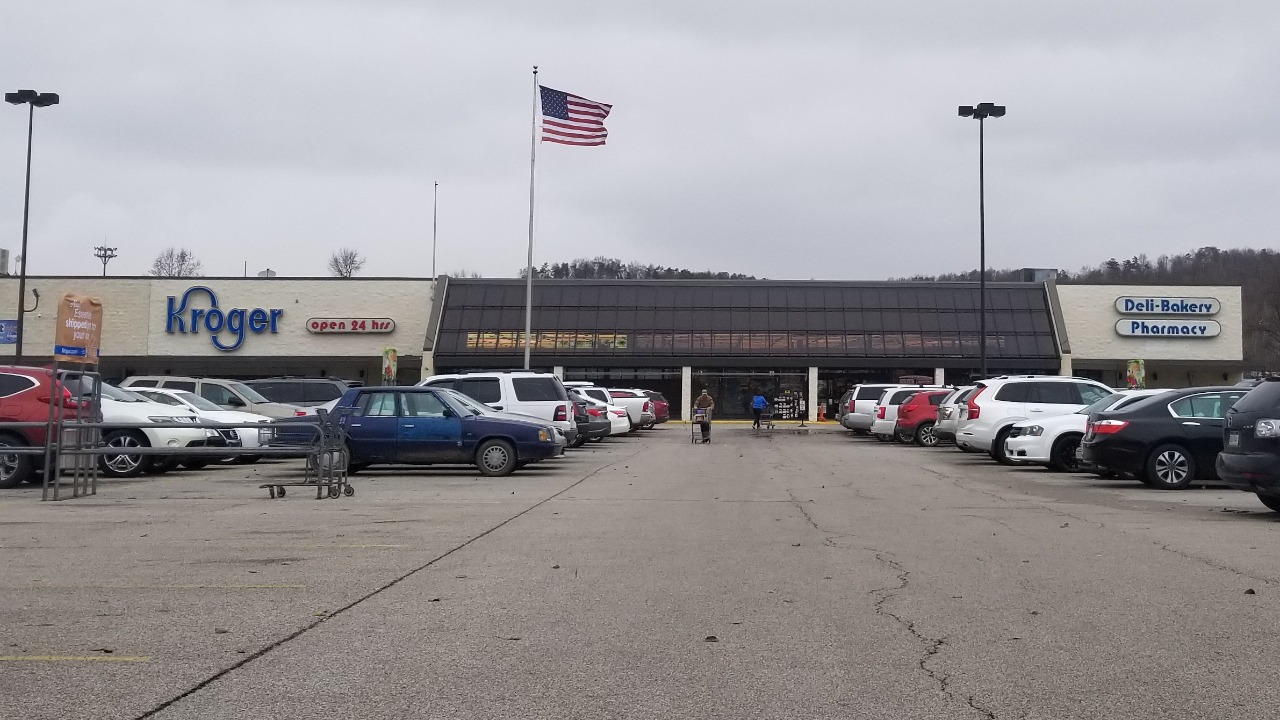
Kroger’s decision to retreat from Florida’s competitive grocery market has abruptly cut off paychecks for roughly 1,400 workers, exposing how quickly a national retailer’s strategic pivot can ripple through local communities. The move underscores a broader reshaping of the supermarket landscape, where regional chains, discounters, and delivery platforms are forcing even industry giants to rethink where and how they operate.
As Kroger consolidates around markets where it sees a clearer path to profit, Florida’s displaced employees and suppliers are left to navigate an uncertain transition, from severance negotiations to the scramble for new jobs in a sector already under pressure. The fallout offers a case study in how corporate optimization can collide with the realities of household budgets and neighborhood economies.
Why Kroger is backing away from Florida
When a retailer the size of Kroger pulls back from an entire state, it usually signals a hard calculation about where growth is worth the investment and where it is not. In Florida, Kroger had been trying to carve out space in a market dominated by entrenched players such as Publix, Walmart, and Aldi, while also building out a delivery-focused model anchored by automated fulfillment centers. Company executives framed the exit as a strategic refocus on regions where Kroger already commands stronger market share and can better leverage its scale, a shift that aligns with its broader push to streamline operations and concentrate capital in higher-return territories, as reflected in its recent strategic updates.
The Florida retrenchment also fits into a longer arc of restructuring that includes Kroger’s proposed merger with Albertsons and a series of divestitures aimed at satisfying antitrust regulators. In that context, Florida looks less like an isolated retreat and more like one piece of a national map Kroger is redrawing to emphasize core regions and reduce exposure in outlier markets. The company has already signaled that it is willing to close or sell stores, adjust its logistics footprint, and reallocate capital expenditures to digital and loyalty initiatives, a pattern that shows up in its recent investor disclosures and merger-related filings.
The 1,400 jobs at stake and who is affected
The headline figure of 1,400 lost jobs masks a more complex mix of roles, pay scales, and career paths that are now in limbo. The cuts span hourly store associates, warehouse staff, drivers, and salaried managers tied to Kroger’s Florida operations, including its delivery infrastructure and support functions. Many of these workers had been hired to support Kroger’s experiment with high-tech fulfillment centers and last-mile delivery in the state, an initiative the company had promoted as a growth engine before deciding to wind it down, according to its recent operational announcements.
For employees, the immediate questions are practical: how much severance is on the table, whether health coverage will continue for a transition period, and what kind of job placement assistance Kroger is willing to fund. The company has indicated that it will offer some combination of severance and support, but the specifics vary by role and tenure, and union-represented workers may have different protections than nonunion staff, as suggested in labor-related details contained in Kroger’s latest Form 10-K. For many of the 1,400, especially those in specialized logistics roles, the challenge will be finding comparable wages and benefits in a market where grocery competitors are also tightening labor costs.
How the pullback reshapes Florida’s grocery landscape
Kroger’s exit from Florida does not leave empty shelves, but it does shift bargaining power among the chains that remain. Publix, which already dominates the state’s supermarket share, is positioned to absorb some of the displaced demand, while Walmart, Costco, Aldi, and Lidl continue to expand their own footprints and private-label offerings. The retreat also reduces one of the few large-scale competitors experimenting with a pure-play delivery and fulfillment model in the region, potentially slowing innovation in how groceries reach Florida households, a trend that can be traced through Kroger’s earlier Ocado-powered initiatives in the state.
For consumers, the near-term impact may be subtle, showing up less in bare aisles and more in fewer promotional battles, narrower loyalty options, and less pressure on incumbents to match digital features or delivery speeds. Over time, the absence of a national rival like Kroger could give regional players more room to set prices and assortments, especially in suburban and exurban areas where competition is already thin. Analysts tracking supermarket consolidation have warned in recent competition reports that such concentration can lead to higher prices and fewer choices, particularly for low-income shoppers who have less flexibility to travel between stores.
Community and supplier fallout beyond the store walls
The 1,400 workers losing their jobs are the most visible casualties, but the economic shock extends well beyond Kroger’s payroll. Local suppliers that had secured contracts to stock Kroger’s Florida operations now face the loss of a major buyer, which can be especially painful for small food producers and logistics firms that invested in capacity to meet Kroger’s standards. Those relationships, often detailed in Kroger’s own supplier and sustainability reports, were part of the company’s pitch that its presence would support local agriculture and manufacturing, a promise that is harder to sustain once the retailer leaves.
Municipalities that courted Kroger with infrastructure improvements or tax incentives are also left to reckon with the fallout. Distribution centers and delivery hubs that once promised long-term employment and property tax revenue may now sit underused or be sold off, forcing local officials to scramble for replacement tenants. Economic development agencies often highlight large retail investments in their project summaries, and when those projects unwind, the secondary effects can include reduced sales tax collections, weaker demand for nearby retail, and pressure on public services that had scaled up in anticipation of growth.
What Kroger’s move signals about the future of grocery work
For me, the most telling part of Kroger’s Florida pullback is what it reveals about the evolving nature of grocery jobs in an era of automation, consolidation, and e-commerce. The company has been explicit in its filings that it is investing heavily in digital platforms, data analytics, and robotics, which can reduce the need for traditional in-store labor even as they create new roles in technology and centralized logistics. The Florida experiment, built around automated fulfillment and delivery, was a preview of that future, and its unwinding suggests that not every market can support the capital intensity and scale those models require, a tension that shows up in Kroger’s recent strategic priorities.
For workers, the lesson is that grocery employment is becoming more polarized, with a shrinking middle of stable, mid-wage store jobs and a growing split between lower-paid, flexible roles and higher-skilled positions in technology, analytics, and supply chain management. Labor advocates and regulators have flagged this shift in recent employment projections, warning that communities dependent on retail and warehouse work are particularly vulnerable when a major employer exits. Kroger’s Florida retreat, and the 1,400 livelihoods caught in its wake, is a stark reminder that the future of food retail is being written not just in boardrooms and earnings calls, but in the daily realities of workers and neighborhoods that have little say in where the next strategic pivot lands.
More From TheDailyOverview
- Dave Ramsey says these two simple questions show whether you’re rich or poor
- Retired But Want To Work? Try These 18 Jobs for Seniors That Pay Weekly
- IRS raises capital gains thresholds for 2026 and what’s new
- 12 ways to make $5,000 fast that actually work

Grant Mercer covers market dynamics, business trends, and the economic forces driving growth across industries. His analysis connects macro movements with real-world implications for investors, entrepreneurs, and professionals. Through his work at The Daily Overview, Grant helps readers understand how markets function and where opportunities may emerge.

