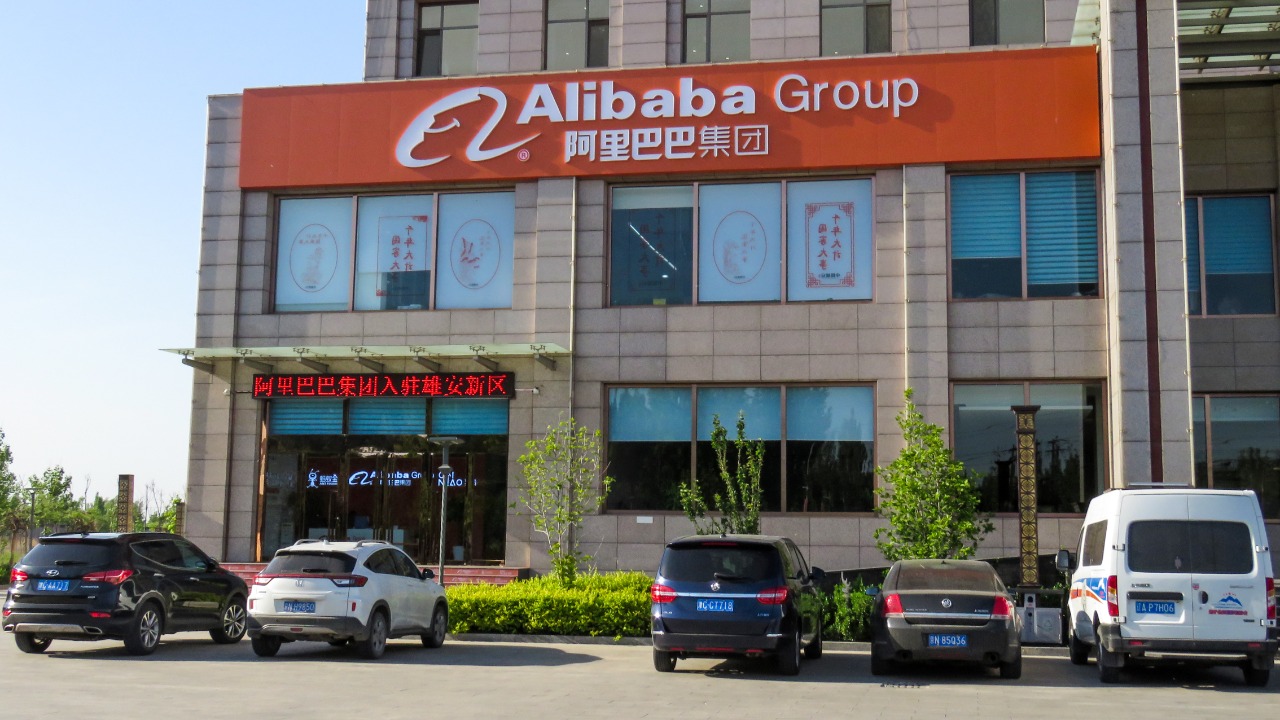
The Pentagon’s quiet move to flag Alibaba for alleged ties to the Chinese military has pushed one of the world’s biggest tech groups deeper into Washington’s national security crosshairs. The reported finding, which also sweeps in Baidu and BYD, signals that United States defense officials are increasingly willing to treat China’s consumer-facing champions as potential extensions of Beijing’s security apparatus.
At stake is more than a label. A Pentagon determination that Alibaba aids the Chinese military could feed into sanctions, investment bans, and fresh pressure on American companies that still rely on the group’s cloud, logistics, and e‑commerce infrastructure.
The Pentagon’s emerging case against Alibaba
According to multiple accounts, The Pentagon concluded on Nov 25, 2025 that Alibaba belongs on a roster of companies it views as supporting the Chinese military, alongside Baidu Inc and BYD Co. Reporting indicates that defense officials want the three firms added to the U.S. CMC list, a register that targets entities seen as part of China’s military‑civil fusion strategy and can trigger restrictions on American investors who hold their shares. One summary of the move notes that the names of Alibaba, Baidu, and BYD were identified for inclusion in the CMC list after a review that culminated in late November, with the Nov timeline underscored in the underlying correspondence between the Pentagon and lawmakers, and that same account stresses that the CMC designation is meant to warn U.S. markets about exposure to Chinese defense‑linked firms, a point reflected in the description of the Pentagon said to have named Alibaba, Baidu, and BYD for inclusion in U.S. CMC list.
A separate account of the same development reinforces that the Pentagon, again citing Nov 25, 2025 and the broader Nov timeframe, has moved to classify Alibaba, Baidu, and BYD as companies that should be treated as aiding China’s military sector. That reporting highlights that the CMC label is not merely symbolic, since it can shape how U.S. funds and index providers treat the securities of Alibaba, Baidu, and BYD, and it also notes that the move is part of a wider tightening of U.S. scrutiny on Chinese technology and electric vehicle groups, a pattern captured in the description that the Pentagon said to have named Alibaba, Baidu, and BYD for inclusion in U.S. CMC list and that the three groups are now being treated as part of a single strategic category.
An Oct. 7 letter and the push to expand the China military list
The Pentagon’s internal conclusion did not emerge in a vacuum. Deputy Defense Secretary Stephen Feinberg informed lawmakers of the department’s view in a letter on October 7, a communication that came roughly three weeks after the underlying assessment was completed and that laid out why Alibaba, Baidu, and BYD should be added to a list of companies that aid the Chinese military. That letter, described in detail in one account, framed the move as part of a broader effort to update the China military list so it reflects the role of major technology and electric vehicle players in Beijing’s security ecosystem, a rationale that is spelled out in coverage of how Deputy Defense Secretary Stephen Feinberg described the proposed additions.
In that same narrative, Feinberg is quoted as telling Congress that the Pentagon had concluded Alibaba, Baidu, and BYD should be treated as companies that aid the Chinese military and that they therefore belong on a list that can expose U.S. investors and contractors to penalties if they continue conducting business with them. The description of the October 7 letter notes that it was sent after internal deliberations and that it explicitly tied the three companies to China’s military‑civil fusion strategy, while also acknowledging that the process of formally adding them to the list would involve interagency consultation, a sequence that is reflected in the account of how The Pentagon, Alibaba Group Holding, Baidu Inc and BYD Co were grouped together in Feinberg’s explanation to lawmakers.
Alibaba’s sharp denial and Beijing’s pushback
Alibaba has responded aggressively to the Pentagon’s emerging stance. An Alibaba spokesperson told reporters that the company rejects the allegation that it should be added to the China military list, arguing that its businesses are focused on civilian cloud, e‑commerce, and logistics services and that it does not design products for military use. In one detailed account, the spokesperson is quoted as saying that Alibaba has no role in any military‑civil fusion strategy and that it complies with all applicable laws in the markets where it operates, a rebuttal that is captured in the description of how an Alibaba spokesperson told Reuters that the company disputes the Pentagon’s conclusion.
Chinese state‑linked media have gone further, portraying the U.S. move as politically motivated. One prominent outlet reported on Nov 26, 2025 that Alibaba Group rejected suggestions it could be added to the Pentagon’s Section 1260H List, described there as a roster alleging links to a military‑civil fusion strategy, and quoted the company as saying the allegation has “no basis.” That coverage framed the Pentagon’s reported decision as part of a broader U.S. campaign to suppress Chinese technology champions and warned that labeling Alibaba in this way could damage global supply chains and investor confidence, a line of argument that appears in the account headlined that Alibaba Group rejects allegation as ‘no basis’ amid media reports the US seeks to add it to military‑linked list.
White House allegations of targeting support
The Pentagon’s move comes on the heels of even more explosive claims from the White House. According to one account dated Nov 13, 2025 and updated on November 14, a White House memo asserted that Alibaba is helping the Chinese military target the United States, alleging that the company’s technology supports Chinese operations against U.S. assets. That report, attributed to By Reuters, said the memo accused Alibaba of providing tools that could assist in identifying or tracking American targets, while also noting that U.S. officials admit that they cannot fully verify every element of the underlying intelligence, a tension that is captured in the description that White House says Alibaba is helping Chinese military target US and that some of the claims remain difficult to corroborate.
A separate account dated Nov 15, 2025 goes further into the memo’s language, reporting that the White House document alleged “Alibaba provides tech support for Chinese military ‘operations’ against targets in the U.S.” and that it cited internal assessments of how the company’s cloud and data analytics platforms could be repurposed for military use. That report also noted that the memo’s existence has intensified pressure on U.S. regulators to treat Alibaba as a national security risk, even as the company insists that its services are commercial and that it does not control how Chinese state entities might use publicly available tools, a dynamic that is described in coverage of how a White House memo alleged Alibaba provides tech support for Chinese military ‘operations’ and how that allegation has reverberated through Washington and global markets.
Competing narratives and the stakes for global investors
Alibaba has not only rejected the Pentagon’s emerging classification but has also specifically denied the White House memo’s most serious claims. In a statement described in one account dated Nov 13, 2025 and updated on Nov 14, 2025, the company said the report that it helped China identify military targets in the United States is false and that it has never provided such assistance. That same report, titled “Alibaba Denies Report It Helped China Identify Military Targets in U.S. Provided by Dow Jones Nov,” notes that the company emphasized its compliance with international norms and argued that the allegations mischaracterize its technology, while also highlighting that the story was carried by Global News Select and that the denial was issued within 40 hours of the initial claims surfacing, details that appear in the description of how Alibaba Denies Report It Helped China Identify Military Targets and how quickly the company moved to rebut the story.
For investors and multinational partners, the clash between U.S. security agencies and Alibaba over these allegations introduces a new layer of risk. One detailed account of the Pentagon’s conclusion notes that The Pentagon has now formally determined that Alibaba should be added to a list of companies that aid the Chinese military and that this conclusion was communicated on Nov 25, 2025, with the report emphasizing that the list is used to guide restrictions on U.S. entities operating in or investing in such firms. That same narrative underscores that Alibaba is being grouped with other Chinese companies that have significant operations in the United States, and that the move could affect how American businesses engage with its cloud and e‑commerce platforms, a concern that is spelled out in the description of how The Pentagon concluded that Alibaba, among others, should be added to a list of companies that aid the Chinese military and how that decision could ripple through U.S. markets.
More From TheDailyOverview
- Dave Ramsey says these two simple questions show whether you’re rich or poor
- Retired But Want To Work? Try These 18 Jobs for Seniors That Pay Weekly
- IRS raises capital gains thresholds for 2026 and what’s new
- 12 ways to make $5,000 fast that actually work

Grant Mercer covers market dynamics, business trends, and the economic forces driving growth across industries. His analysis connects macro movements with real-world implications for investors, entrepreneurs, and professionals. Through his work at The Daily Overview, Grant helps readers understand how markets function and where opportunities may emerge.

