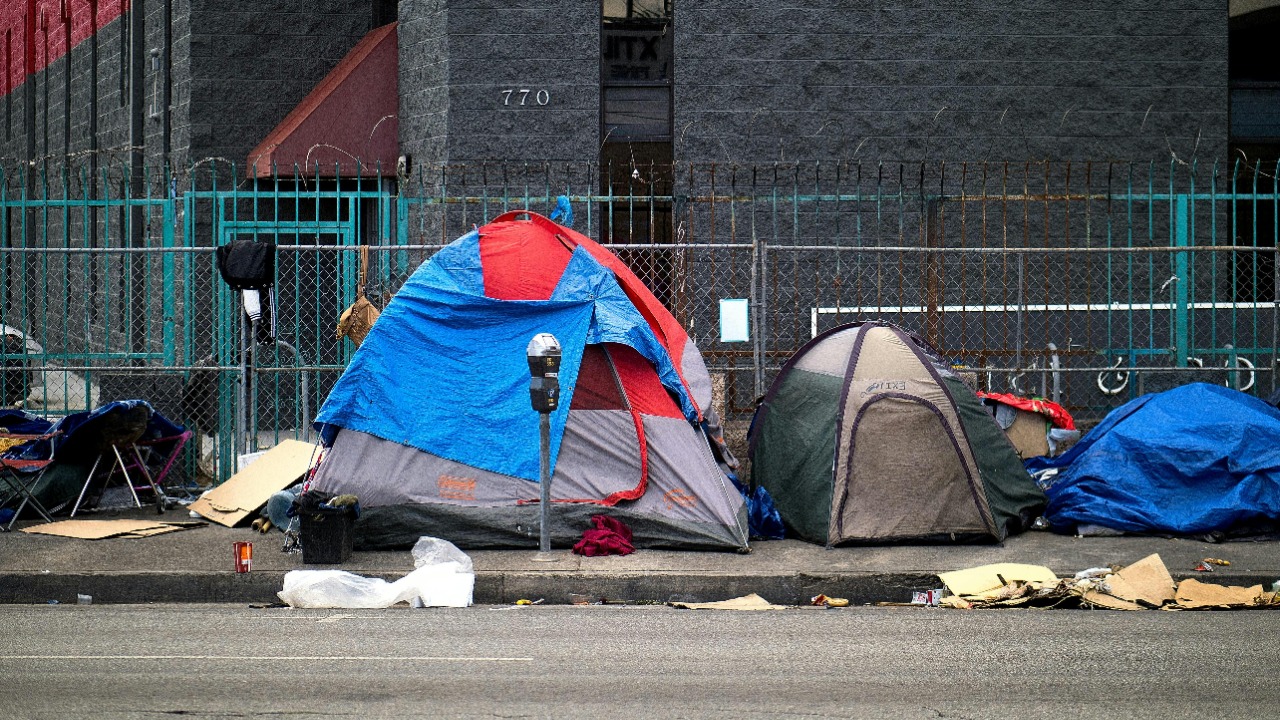
The Los Angeles Homeless Services Authority owes more than $69 million in overdue payments to service providers across the region, a crisis that spilled into public view after a county supervisor called the agency’s financial management a failure. The payment backlog persists even though Los Angeles County has already advanced the necessary funds to LAHSA, raising sharp questions about whether the agency can fulfill its core mission of coordinating homelessness services. The disclosure arrives as federal court oversight of the city and county’s homelessness response intensifies, with a formal county audit now part of the legal record.
County Audit Enters Federal Court Record
A county audit of LAHSA has been formally entered into the docket of the long-running federal case LA Alliance for Human Rights v. City of Los Angeles. The filing, designated as Dkt. 823, ties the agency’s financial troubles directly to the litigation that has shaped homelessness policy in the region for years. That case, housed in the U.S. District Court for the Central District of California, has served as a vehicle for enforcing accountability on the city and county regarding shelter capacity, encampment conditions, and service delivery, placing LAHSA’s performance squarely within a broader legal struggle over how local governments respond to a worsening crisis.
The audit’s placement in the court record matters because it gives the findings legal weight and public visibility beyond a routine internal review. Court records available through the Central District’s public access system confirm the docket entry, establishing a clear timestamp for when the audit became part of the official proceedings and ensuring that advocates, journalists, and service providers can reference it as an authoritative document. While the full contents of the audit report have not been publicly released in detail, the notice itself signals that county officials view LAHSA’s financial dysfunction as serious enough to bring before a federal judge already monitoring the homelessness crisis, potentially setting the stage for additional scrutiny of how money flows from government to frontline programs.
Horvath Calls Out Staffing and Payment Failures
Los Angeles County Supervisor Lindsey P. Horvath issued a pointed statement on February 20, 2026, after attending a LAHSA Finance Committee meeting where the scope of the payment crisis became clear. According to her office’s official release, Horvath said that LAHSA lacks the staffing and expertise necessary to process and pay its bills on time, describing the backlog as evidence of a system that is not merely strained but fundamentally mismanaged. She went further, saying that if LAHSA were a private company, regulators would shut it down, a comparison that underscored her view that the agency’s internal controls fall far short of basic standards for handling public funds and vendor contracts.
Horvath’s statement also addressed a specific contradiction at the heart of the crisis: the county has already advanced funding to LAHSA, yet the agency cannot pay providers for services rendered months ago. That gap between available resources and actual disbursement points to an administrative breakdown rather than a funding shortfall, raising doubts about whether LAHSA’s current structure can reliably support the region’s homelessness response. Her account of what was shared at the finance committee meeting included the claim that LAHSA had refused certain operational changes that county officials believed would speed up payments, though the precise details of what was refused remain limited to her characterization in the February 20 statement. LAHSA has not issued a public rebuttal to the supervisor’s claims as of this writing, leaving her allegations largely uncontested in the public record.
Why the Money Pipeline Is Broken
The distinction between a funding problem and a payment-processing problem is critical for understanding what is happening at LAHSA. Homelessness service providers, including nonprofits running shelters, outreach teams, and transitional housing programs, depend on timely reimbursement to cover payroll, rent, and supplies that they have already committed to on the strength of government contracts. When an agency sits on tens of millions of dollars in owed payments, those providers face cash-flow crises of their own, even when they have technically done everything required under their agreements. Some may be forced to scale back services or take on debt to stay operational, which directly undermines the region’s ability to move people off the streets at the very moment when the public expects visible progress.
Horvath’s framing suggests the bottleneck is internal to LAHSA: insufficient staff, inadequate financial systems, and a lack of specialized expertise in contract management and accounts payable. This is not a new category of complaint against large public agencies, but the scale of the backlog, exceeding $69 million, and the fact that it persists despite county funding advances make it unusually stark and politically volatile. The agency appears to have the money but not the operational capacity to get it where it needs to go, a failure that transforms budgeted dollars into idle figures on a balance sheet instead of services on the ground. That dynamic shifts the policy conversation away from “how much should we spend on homelessness” and toward a more uncomfortable question: “can the designated agency actually execute on the commitments that elected officials have made to the court and the public.”
Federal Oversight Adds Pressure
The LA Alliance for Human Rights v. City of Los Angeles case has been a central pressure point in regional homelessness policy for years, with the lawsuit filed in the U.S. District Court’s Central District serving as a forum where judges, lawyers, and policymakers hash out the pace and shape of the local response. The litigation has produced court orders and monitoring requirements that compel the city and county to demonstrate progress on shelter access and encampment management, effectively tying political promises to enforceable benchmarks. Adding a county audit of LAHSA’s finances to that docket raises the stakes considerably, because it links internal administrative failures to the broader question of whether local governments are in compliance with federal directives.
If the court determines that LAHSA’s inability to pay providers is undermining shelter operations or outreach programs that the city and county have committed to maintaining, the consequences could range from additional reporting requirements to more aggressive judicial intervention aimed at restructuring how funds are managed. Federal judges overseeing consent decrees and structural reform litigation have broad discretion to impose remedies when compliance falters, and a documented pattern of nonpayment could be framed as a barrier to meeting bed-count targets or outreach obligations set in prior orders. The audit filing creates a paper trail that plaintiffs in the case can use to argue that the current system is failing, and it gives the judge a factual basis for demanding corrective action that might include deadlines for clearing backlogs, independent financial oversight, or even a reallocation of responsibilities among city, county, and LAHSA staff.
What a $69 Million Backlog Means on the Ground
For the people and organizations doing the daily work of addressing homelessness in Los Angeles, the payment backlog is not an abstract budget line or a technical dispute over accounting procedures. Shelter operators who have already provided beds, meals, and case management cannot wait indefinitely for reimbursement without putting their own stability at risk, and outreach workers who engage people in encampments rely on agencies that can meet payroll every two weeks, not whenever a check finally clears. Smaller nonprofits, which often lack the financial reserves of larger institutions, are especially vulnerable because they cannot easily absorb months of delayed revenue while continuing to staff programs at full capacity. A prolonged delay in payment can force difficult choices: reduce bed counts, furlough outreach workers, or divert resources from other programs to cover the gap, each of which translates directly into fewer services for people living on the streets and more visible encampments in neighborhoods across the county.
The situation also raises a question that most coverage of homelessness spending overlooks: whether the administrative infrastructure behind the money matters as much as the dollar amounts that headline annual budgets. When an agency like LAHSA cannot reliably convert appropriations into timely payments, the practical value of every budget increase is discounted by the risk that providers will not be paid for months, or at all, for the work they perform. That uncertainty can deter organizations from bidding on contracts, slow the launch of new programs, and erode trust among community partners who are asked to expand services in good faith. As the federal court watches from the bench and county leaders debate potential reforms, the immediate stakes remain painfully concrete, whether shelters can keep their doors open, whether outreach teams can stay in the field, and whether people experiencing homelessness will see any tangible benefit from the millions of dollars that, for now, remain stuck in a system that cannot move them out the door.
More From The Daily Overview
*This article was researched with the help of AI, with human editors creating the final content.

Grant Mercer covers market dynamics, business trends, and the economic forces driving growth across industries. His analysis connects macro movements with real-world implications for investors, entrepreneurs, and professionals. Through his work at The Daily Overview, Grant helps readers understand how markets function and where opportunities may emerge.

