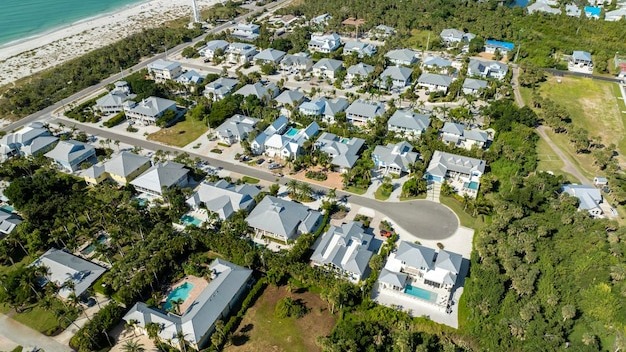
In Florida, a long simmering fight over neighborhood control has collided with tragedy. After a deadly confrontation inside a homeowners association community, a state legislator’s outrage has hardened into a campaign to give residents the power to dismantle their HOAs altogether. The clash is no longer just about parking rules or paint colors, it is about whether private neighborhood governments should survive in anything like their current form.
That debate now stretches from grieving families in Port St. Lucie to committee rooms in TALLAHASSEE, Fla, where lawmakers are weighing proposals that would let homeowners vote their associations out of existence. The outcome could reshape daily life for millions of Floridians and test whether the HOA model, once sold as a path to orderly growth, has become what one Legislator now calls a “FAILED EXPERIMENT.”
The deadly flashpoint that turned frustration into fury
The latest push to dismantle HOAs did not begin with a white paper, it began with a killing. In Port St, Lucie, a dispute inside a community association escalated into a deadly confrontation, the kind of neighborhood conflict that critics say has become disturbingly routine inside tightly regulated developments. In the aftermath, a Legislator publicly branded the HOA system “OUR FAILED EXPERIMENT,” arguing that a structure meant to keep the peace had instead become a breeding ground for hostility and fear, and that the Port St, Lucie case was not an aberration but part of a pattern of enforcement fights that spiral out of control, a concern detailed in coverage of the Port St community.
That language, “FAILED EXPERIMENT,” has since become a rallying cry for residents who say they have been bullied by boards, hit with surprise fines, or even threatened with foreclosure over minor violations. In one widely cited account, a Lawmaker from Florida seized on the Port St, Lucie killing to spark a fresh call to abolish HOAs outright, describing the system as a failed experiment in privatized governance and urging colleagues to consider whether the state should continue to delegate so much power to volunteer boards, a stance captured in reporting on the Lawmaker who has become the face of the movement.
From “ban HOAs” to HB 657’s escape hatch
Outrage alone does not change law, and the Florida fight has evolved from a blunt call to “ban HOAs” into a more intricate attempt to build an exit ramp. Earlier efforts were far more sweeping, with one Florida Lawmaker Floats Ban proposal in TALLAHASSEE that openly contemplated outlawing Homeowners Associations Amid Growing Backlash, a move that drew intense attention as residents lined up to speak out in coverage by reporter Forrest Saunders, who chronicled the TALLAHASSEE debate.
That maximalist idea has since been channeled into House Bill 657, a measure that would not erase associations overnight but would, for the first time, let Homeowners vote to dissolve their Association through a structured process. A new Florida bill, HB 657, described in detail by Homeowners and other stakeholders, would require a community vote and then a court supervised wind down of the HOA’s assets, debts and common areas, with supporters arguing that this “exit ramp” is a safer way to unwind decades of contracts than a blanket ban.
Inside HB 657: how Floridians could actually kill an HOA
HB 657 is not a symbolic protest bill, it is a detailed blueprint for how to dismantle an HOA without plunging neighborhoods into chaos. In committee hearings in TALLAHASSEE, Fla, lawmakers have been told that the measure would let owners petition for a dissolution vote, set a high approval threshold, then move the association into a court guided process that would transfer roads, parks and drainage systems to local governments or new entities, a sequence laid out in coverage of the first committee that approved House Bill 657.
Supporters say the bill responds directly to years of complaints about dues hikes and opaque finances, especially in Florida communities where residents have accused boards of mismanagement and even abuse of foreclosure powers. Analysts note that while Florida law already technically allows dissolution, the process is so murky that it is rarely used, which is why a more explicit, court supervised path has been framed as a way to move from calls to “abolish HOAs” toward a workable legal mechanism, a shift examined in reporting on how Florida might unwind these associations.
The broader reform wave and the “failed experiment” argument
HB 657 does not exist in a vacuum, it sits on top of a broader wave of HOA reform efforts that have been building across the Sunshine State. Before the dissolution bill surfaced, a Florida lawmaker filed a sweeping HOA reform package after months of homeowner protests, with that measure targeting everything from election rules to financial transparency and enforcement practices, a push that advocates say was designed to rein in abusive boards without scrapping the model altogether, as detailed in coverage of the Florida HOA bill.
At the same time, a separate proposal out of TALLAHASSEE, Fla would give homeowners unprecedented power to dismantle their associations, reflecting a growing belief among some legislators that private neighborhood governments should not wield more authority than most cities and counties do, a concern that has been highlighted in reporting on the Florida Legislature debate. That is where the “FAILED EXPERIMENT” framing gains force, because it ties individual horror stories to a structural critique that says the state outsourced too much power to entities that were never designed to handle it.
Backlash, property values and the fear of unintended consequences
For all the anger, the campaign to dismantle HOAs has met stiff resistance from residents, real estate interests and local officials who warn that the cure could be worse than the disease. In televised segments, Saunders has stood in front of the state capital in Tallahassee explaining how the Lawmaker’s idea to ban HOAs has drawn pushback from people who worry about who will maintain roads, pools and stormwater systems if associations vanish, concerns that were aired in coverage featuring Saunders in Tallahassee.
Another broadcast described how the debate over HOAs in the Sunshine State is affecting almost 10 million Flidians, with critics of abolition warning that dismantling associations could saddle local governments with new costs and potentially lower property values in communities that lose their amenities or fall into disrepair, a fear laid out in coverage of the Sunshine State debate. Analysts who track housing markets have also noted that Florida has more than 50,000 HOAs and that in some communities monthly dues can come in at a whopping $525, figures cited in coverage of the question “Florida Lawmaker Wants To Abolish HOAs, Could the Failed Experiment Really End,” which underscores how deeply the HOA model is embedded in the state’s real estate economy and how disruptive a rapid unwinding could be, as detailed in analysis of how a Florida Lawmaker Wants the system.
More From TheDailyOverview
*This article was researched with the help of AI, with human editors creating the final content.

Elias Broderick specializes in residential and commercial real estate, with a focus on market cycles, property fundamentals, and investment strategy. His writing translates complex housing and development trends into clear insights for both new and experienced investors. At The Daily Overview, Elias explores how real estate fits into long-term wealth planning.

