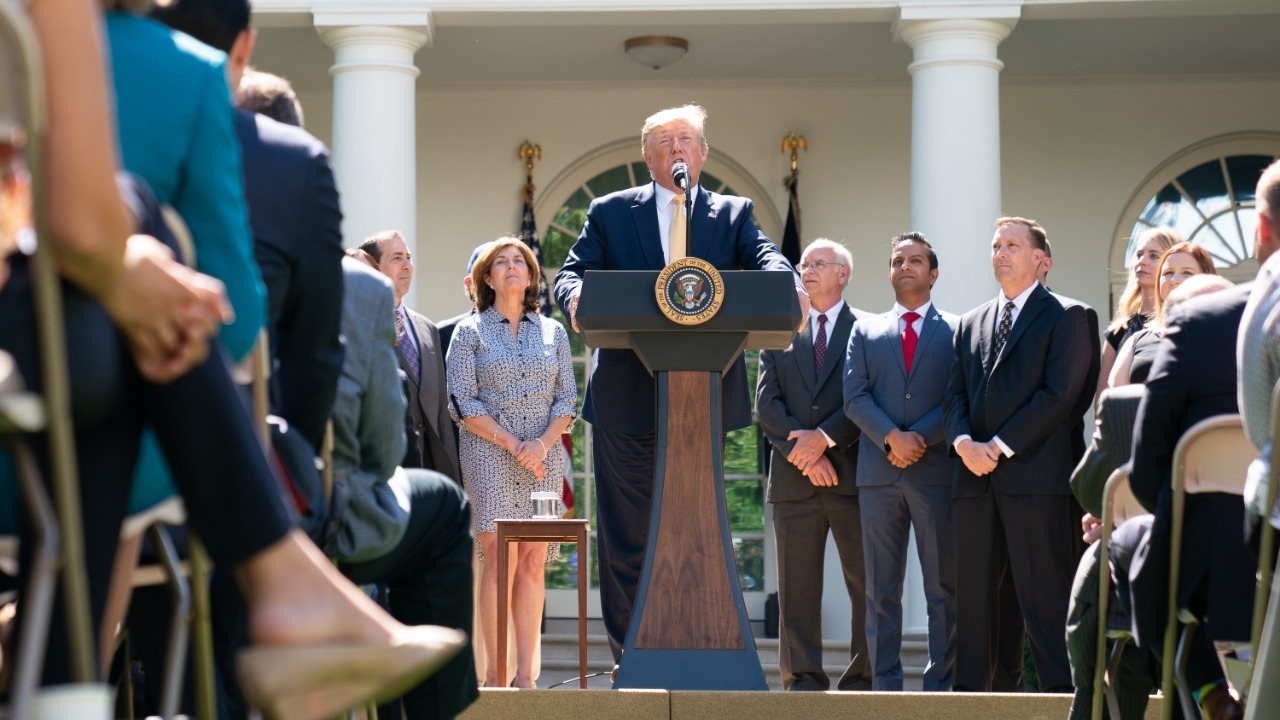
President Donald Trump is selling his new health agenda as a windfall for families, promising that the government will send cash directly to people to help them buy coverage. At the same time, premiums on the Affordable Care Act Marketplaces are climbing sharply and key subsidies have been allowed to lapse, leaving many households facing far higher bills. The clash between the small checks Trump is touting and the large costs now hitting consumers is at the heart of a growing fight over who really benefits from his “Great Healthcare Plan.”
The promise of “Great Healthcare” cash
Trump has put direct payments at the center of what he calls The Great Healthcare Plan, pitching it as a simple way to put patients in charge. In a video announcing the framework, he said, “That’s what we’re going to pay, and the American people will get the savings,” presenting the idea as a way to share any reductions in health spending with households rather than insurers or hospitals, according to Trump. At a separate event, he described the government sending money “directly to you,” telling supporters that they would then “take the money and buy your own health care,” a line that has become a staple of his pitch to voters and that he repeated while urging Congress to act on his blueprint, as reflected in Trump.
In public remarks, Trump has promised “tremendous” reductions in costs and framed the plan as a historic shift in favor of consumers. In one video clip promoting the proposal, he called it “a tremendous plan” and said Americans would see “tremendous reductions” through what he branded the Great Healthcare Plan, language that underscores how heavily he is leaning on the promise of lower premiums and out-of-pocket costs, as seen in Jan. When President Donald Trump formally unveiled the package for Americans, he again emphasized that people would receive cash and then “buy your own health care,” presenting the direct payments as a way to choose any plan rather than being steered into specific products, according to President Donald Trump.
Premiums are spiking as subsidies shrink
While Trump talks up checks, the underlying cost of coverage is moving in the opposite direction for many people who rely on the ACA Marketplaces. The amount health insurers charge for coverage on the ACA Marketplaces is rising 26 percent on average in 2026, according to KFF, a health policy organization that tracks premium trends, which means the sticker price of plans is jumping far faster than typical wage growth, as detailed in KFF. Separate KFF analysis has warned that ACA Marketplace premium payments would more than double on average if enhanced premium tax credits expire, with many enrollees only qualifying for smaller tax credits and others losing them entirely, a scenario that is now playing out as those enhanced subsidies end, according to Marketplace.
The policy choices behind those higher bills are not abstract. In July 2025, President Trump enacted H.R. 1, known as the One Big Beautiful Bill Act, and that law did not extend the Enhanced ACA subsidies that had been temporarily boosting premium assistance, according to Premium Increases In. As a result, starting in 2026, many Covered California enrollees and other Marketplace consumers are seeing premium increases tied directly to the expiration of those Enhanced subsidies, even as Trump now promotes his new cash payments as a solution. Policy analysts have also noted that the Great Healthcare Plan does not commit to restoring the enhanced ACA subsidies that expired at the end of 2025, and that the new concepts of the plan were released without a promise to bring those supports back, according to ACA.
Why experts call the checks a “joke”
Health policy experts who have reviewed the framework say the numbers simply do not add up for families facing those higher premiums. One analyst quoted in coverage of the plan argued that Trump is “boosting a plan to send people a small check instead of doing the one thing that would actually lower health care costs,” criticizing the focus on modest direct payments rather than structural reforms that would reduce premiums and deductibles for people who rely on the ACA markets, as described in Jan. Another expert has gone further, calling the plan to “send people a small check” a “joke” as prices rise, arguing that the proposed payments would not come close to covering the gap created by higher premiums and the loss of enhanced subsidies, according to Trump.
Critics also warn that the structure of the payments could destabilize insurance markets if they are not generous enough. One policy analysis noted that if the amount were not large enough, then younger, healthier people would generally be the ones to drop their coverage, leaving older and sicker enrollees behind and driving premiums even higher for those who remain, as explained in If the. Advocacy groups have seized on that risk, arguing that hard working families already struggling to pay for health care after Trump “jacked up their insurance premiums” are not buying the promise of small checks, and that there is little appetite for a plan that does not directly tackle insurer pricing or restore robust subsidies, according to Hard.
A vague blueprint with big political stakes
Even some specialists who are not aligned with advocacy groups say they are struggling to understand how the Great Healthcare Plan would work in practice. Reporting on the rollout noted that some policy experts are having difficulty making sense of the new Trump health plan, with The White House releasing The Great Healthcare Plan as a broad outline and Trump promoting it in a video without detailed legislative language, according to Some. Separate coverage has described the proposal as light on details, characterizing it as a broad framework of the president’s health care priorities, including reducing drug prices and reshaping insurance rules, but without clear answers on how the direct payments would be calculated or how they would interact with existing ACA subsidies, as summarized in Light.
Politically, Trump has tried to frame the plan as a response to long standing complaints about affordability, especially as efforts to repeal or replace the ACA have stalled in Congress. Earlier this year, Trump released a health care affordability blueprint on a Thursday and pressed Congress to enact it, saying it would lower drug prices and give people more control even as the broader ACA fight went nowhere and millions continued to rely on those subsidies, according to Trump. Yet the same blueprint pointedly avoids promising to restore the enhanced ACA subsidies that expired, a choice that has fueled skepticism among experts who see a widening gap between the president’s rhetoric about “tremendous reductions” and the reality of higher Marketplace premiums.
Rural investments and what the plan leaves out
Trump’s allies point to new spending on rural health as evidence that his administration is not simply cutting support. The Rural Health Transformation Program is providing unprecedented levels of new funding to states for a range of uses designed to improve access and stabilize care in underserved areas, including support for rural hospitals and communities that have struggled with closures and staffing shortages, according to Rural Health Transformation. A separate $50 billion rural health fund has directed large sums to states with significant rural populations, with large rural states like Texas, Alaska, California and Montana receiving the most money in 2026, and some smaller states like New Jersey and Rhode Island also benefiting, as detailed in Large. Those investments could help shore up fragile providers, but they do not directly offset the higher premiums that rural residents now face on the individual market.
More From TheDailyOverview

Grant Mercer covers market dynamics, business trends, and the economic forces driving growth across industries. His analysis connects macro movements with real-world implications for investors, entrepreneurs, and professionals. Through his work at The Daily Overview, Grant helps readers understand how markets function and where opportunities may emerge.
