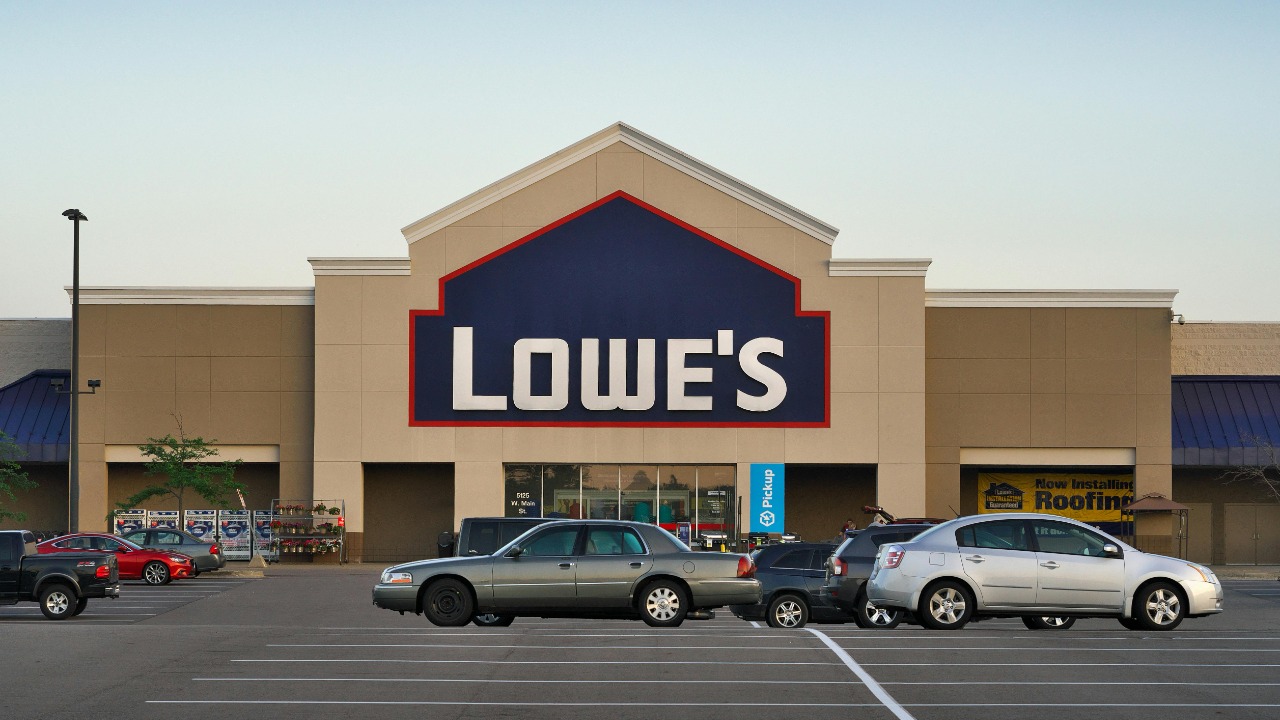
Lowe’s is quietly executing one of the most sweeping tool resets in recent memory, clearing Craftsman V-Series hand tools from shelves across its roughly nationwide footprint. The move turns a once‑promising premium line into a clearance event, while signaling a deeper shift in how the Craftsman brand is being positioned for professionals and serious DIYers.
As V-Series inventory drains out of more than a thousand locations, shoppers are finding steep discounts, lingering questions about warranty support, and a broader debate over what this means for Craftsman’s future in a crowded tool market. I want to unpack how we got here, what the clearance looks like on the ground, and why the decision by Stanley Black Decker to walk away from its own “Best Hand Tools” matters far beyond a single product line.
The nationwide V-Series clear-out at Lowe’s
The core fact is simple but striking: Lowe is pulling Craftsman V-Series from every corner of its tool aisles, turning what started as scattered markdowns into a coordinated exit across all 1,700 of its stores. What began as eye‑catching price drops on select ratchets and socket sets has now hardened into a full‑scale clearance strategy, with V-Series effectively treated as a discontinued guest rather than a long‑term resident in the retailer’s pro‑grade lineup. For shoppers who had just started to see V-Series as a credible alternative to higher‑end brands, the speed of the reversal is jarring.
On Lowe’s own digital shelves, the Craftsman presence is still prominent, but the V-Series label is increasingly hard to find amid the broader mix of mechanics sets, storage, and outdoor power equipment that fill the Lowe’s website. In-store, the story is even clearer: clearance tags, shrinking facings, and empty hooks where premium Craftsman hand tools once sat. The retailer is not abandoning the Craftsman name, but it is decisively stepping away from this particular experiment in higher‑spec mechanics tools, leaving bargain hunters to scoop up what remains while the brand’s next chapter is written elsewhere.
How the clearance wave first surfaced
The first signs that something bigger was happening did not come from corporate statements, but from shoppers comparing notes on steep discounts. In Oct, tool enthusiasts began flagging what looked like a blowout on Craftsman V-Series at Lowe’s, with ratcheting wrenches and socket sets suddenly marked down far beyond typical promos. One widely shared discussion described the event as a “V-Series blowout,” with users trading photos of clearance endcaps and confirming that the deals were not limited to a single market but appearing across multiple regions in a matter of days on r/Tools. The pattern suggested a coordinated reset rather than a routine seasonal sale.
By late fall, the speculation had hardened into a working theory among close watchers of the tool aisle: Lowe’s was not just discounting V-Series, it was clearing the decks. A detailed analysis of Craftsman V-Series pricing in Oct described “impossibly” aggressive deals on pro‑oriented sets and noted that the depth and breadth of the markdowns felt like a blowout clearance rather than a standard promotion, even as the author added a cautious “However” to acknowledge that retailers sometimes use sharp discounts to drive traffic without killing a line outright. The scale and consistency of those Oct clearance deals ultimately proved to be an early tell for the full discontinuation that followed.
From rumors to confirmation that V-Series is “dead”
As clearance tags multiplied, the conversation shifted from “Is this a sale?” to “Is V-Series finished?” That pivot was driven in part by content creators who specialize in tracking tool deals and product lifecycles. In Nov, a video from Ultimate Tour Reviews walked viewers through multiple Lowe’s locations where “everything is on clearance” in the Craftsman V-Series bay, reinforcing what shoppers were already seeing in their own stores. The host framed the markdowns as confirmation that the rumors were true, pointing to rows of discounted ratchets, wrenches, and mechanics sets that had once been pitched as Craftsman’s professional‑grade answer to higher‑end competitors, all now tagged for rapid sell‑through in the Ultimate Tour Reviews walkthrough.
By early Jan, the language around the line had hardened even further, with one prominent tool commentator flatly declaring that “Craftsman V Series is DEAD” in a video aimed at giving viewers a heads‑up on the situation. That creator, posting in Jan, described the clearance as a last chance to “swoop in and get” remaining V-Series stock before it vanished, underscoring that this was not a temporary promotion but the end of the road for the line at Lowe’s. The framing in that Jan video matched what shoppers were seeing on the ground: shrinking inventory, no signs of replenishment, and a sense that the retailer was racing to zero out V-Series SKUs.
Stanley Black Decker’s decision to discontinue V-Series
The retailer‑side clearance only tells half the story. Behind it sits a strategic call by Stanley Black Decker, the owner of Craftsman, to discontinue V-Series hand tools altogether. Earlier this year, a detailed breakdown of the decision reported that Stanley Black Decker is officially ending production of Craftsman V-Series hand tools, describing them as the brand’s “Best Hand Tools” and treating the move as a farewell to what many enthusiasts considered the most capable mechanics line to wear the Craftsman badge. The analysis framed the shift as “Craftsman Discontinued their Best Hand Tools – Goodbye V-Series,” capturing both the corporate decision and the emotional reaction from fans who had championed the line as a return to form, complete with 76 Comments debating the move.
That same reporting made clear that this was not a partial trim but a full stop, with Stanley Black Decker confirming that Craftsman V-Series hand tools are being wound down and that customers would instead be directed to the next equal value Craftsman product when seeking replacements. In other words, the parent company is not just allowing Lowe’s to walk away from V-Series, it is actively sunsetting the line across its own portfolio. The decision by Stanley Black Decker to pull the plug on Craftsman Series tools at the very moment they were gaining a foothold with serious users underscores how fluid brand strategy can be when margins, positioning, and retailer relationships collide.
Inside the V-Series product story and user reaction
Part of what makes the V-Series exit so contentious is that many users saw these tools as a rare bright spot in Craftsman’s modern catalog. In a detailed video posted in Apr, one longtime user walked through their experience with Craftsman V-Series, highlighting the fit and finish of the ratchets, the fine tooth mechanisms, and the overall feel that these were built to compete with more established professional brands. That creator, speaking under the banner “Craftsman V-series tools. What happened?!”, framed the line as a genuine attempt to reclaim Craftsman’s reputation among mechanics and serious DIYers, only to see it cut short just as word of mouth was building in the Apr review.
The reaction from enthusiasts has reflected that sense of missed potential. Comment threads and videos alike are filled with users who invested in V-Series sets for home garages, project cars like a 2014 Ford F-150 or a 2012 Subaru WRX, and side‑hustle repair work, only to learn that the line is being discontinued. Many praise the tools’ performance while questioning why a product that seemed to hit the right notes on quality and price would be pulled so quickly. The tension between positive hands‑on experience and the corporate decision to walk away has fueled a broader debate about whether Craftsman is willing to commit to the professional segment or is retreating to safer, more mass‑market territory.
What Lowe’s gains and loses by clearing V-Series
For Lowe’s, the V-Series exit is both a short‑term traffic driver and a long‑term repositioning. In the near term, the clearance event is pulling in deal hunters who might otherwise be shopping at competitors, as word spreads about deeply discounted ratchets, wrenches, and mechanics sets. The retailer can convert aging inventory into cash while freeing up shelf space for other brands and lines that may offer better margins or stronger marketing support. The fact that the clear‑out spans all 1,700 locations underscores that this is not a localized tweak but a coordinated reset of the hand tool aisle.
Longer term, however, Lowe’s gives up a line that had started to resonate with a specific slice of its customer base: pros and advanced DIYers who wanted something better than entry‑level Craftsman but were not ready to jump to premium truck brands or boutique toolmakers. Without V-Series, the retailer must lean more heavily on other offerings to fill that gap, whether through expanded assortments from competing brands or new Craftsman sub‑lines that attempt to recapture the same audience. The trade‑off is clear: a cleaner, more focused assortment and fewer complications from a discontinued line, at the cost of walking away from a product family that had begun to rebuild trust among demanding users.
Warranty, replacements, and what owners should expect
One of the biggest questions for existing V-Series owners is what happens when a ratchet fails or a socket cracks now that the line is being discontinued. Craftsman has long marketed a robust replacement policy, and early reports suggest that the company intends to honor that spirit by swapping broken V-Series tools for the “next equal value Craftsman product” rather than leaving customers stranded. That approach aligns with the broader messaging around “Goodbye V-Series,” which emphasizes that while the specific line is ending, the brand’s obligation to its customers continues through equivalent replacements and ongoing support for the Craftsman name in other hand tool families.
On the ground, that may mean a V-Series ratchet is replaced with a different Craftsman model that matches its size and general specifications, even if it lacks some of the premium touches that drew users to V-Series in the first place. In online discussions, some owners have already reported that when they bring in a failed V-Series tool, store associates confirm that “Yes, they’ll replace with the close ratchet they have available,” reflecting a pragmatic approach to honoring the spirit of the warranty even as specific SKUs disappear. For users who built out full mechanics sets, the prospect of mismatched replacements is not ideal, but it is still a better outcome than seeing the line vanish without any support at all.
Why Craftsman is walking away from its “Best Hand Tools”
From a strategic standpoint, the decision by Craftsman Discontinued its Best Hand Tools and to say Goodbye to V-Series reflects the hard math of product portfolios. Premium hand tools are a crowded field, with entrenched players like Snap‑on, Matco, and Gearwrench competing for professional mechanics, while brands such as Milwaukee and DeWalt increasingly bundle hand tools into broader ecosystems anchored by power tools and storage. For Stanley Black Decker, maintaining a high‑spec Craftsman Series line that must compete on performance, price, and perception may simply have proven too costly relative to the returns, especially if volumes at Lowe’s and other channels did not meet expectations.
There is also the question of brand clarity. Craftsman has spent years trying to balance its heritage as a trusted garage staple with the realities of modern mass retail, where price points and promotional calendars can matter as much as tooth counts and chrome quality. By discontinuing V-Series, Stanley Black Decker may be signaling that it prefers a simpler Craftsman story built around broad‑appeal lines rather than a fragmented hierarchy of “good, better, best” offerings that require more nuanced marketing and inventory management. The irony is that many enthusiasts saw V-Series as the clearest expression of what Craftsman could be at its best, even as the corporate calculus pushed in the opposite direction.
What the V-Series exit signals for the wider tool market
The end of V-Series at Lowe’s is not happening in a vacuum. It is part of a broader reshaping of the tool aisle, where retailers and manufacturers constantly adjust lineups in response to shifting demand, supply chain pressures, and the rise of direct‑to‑consumer brands. When a heritage name like Craftsman pulls back from a premium hand tool experiment, it opens space for rivals to move in with their own offerings, whether that is a new line of fine‑tooth ratchets from a competing brand or expanded presence for house labels that promise pro‑level performance at aggressive prices. For shoppers, the result is a mix of short‑term opportunity, in the form of clearance deals, and long‑term uncertainty about which lines will still be around a few years down the road.
At the same time, the V-Series story underscores how quickly narratives can flip in the modern tool market. A line that was being praised in Apr videos and dissected in Oct deal posts is now being eulogized in Jan as “dead,” even as remaining stock continues to trickle out of stores. For serious users, the lesson is to treat any new “pro” sub‑brand with a measure of caution until it proves staying power, and to weigh the value of ecosystem stability alongside tooth counts and polish. For Craftsman and Lowe’s, the challenge now is to convince those same users that whatever replaces V-Series will not just be another short‑lived experiment, but a durable part of the tool landscape that can earn a permanent place in the drawer.
More From TheDailyOverview

Grant Mercer covers market dynamics, business trends, and the economic forces driving growth across industries. His analysis connects macro movements with real-world implications for investors, entrepreneurs, and professionals. Through his work at The Daily Overview, Grant helps readers understand how markets function and where opportunities may emerge.