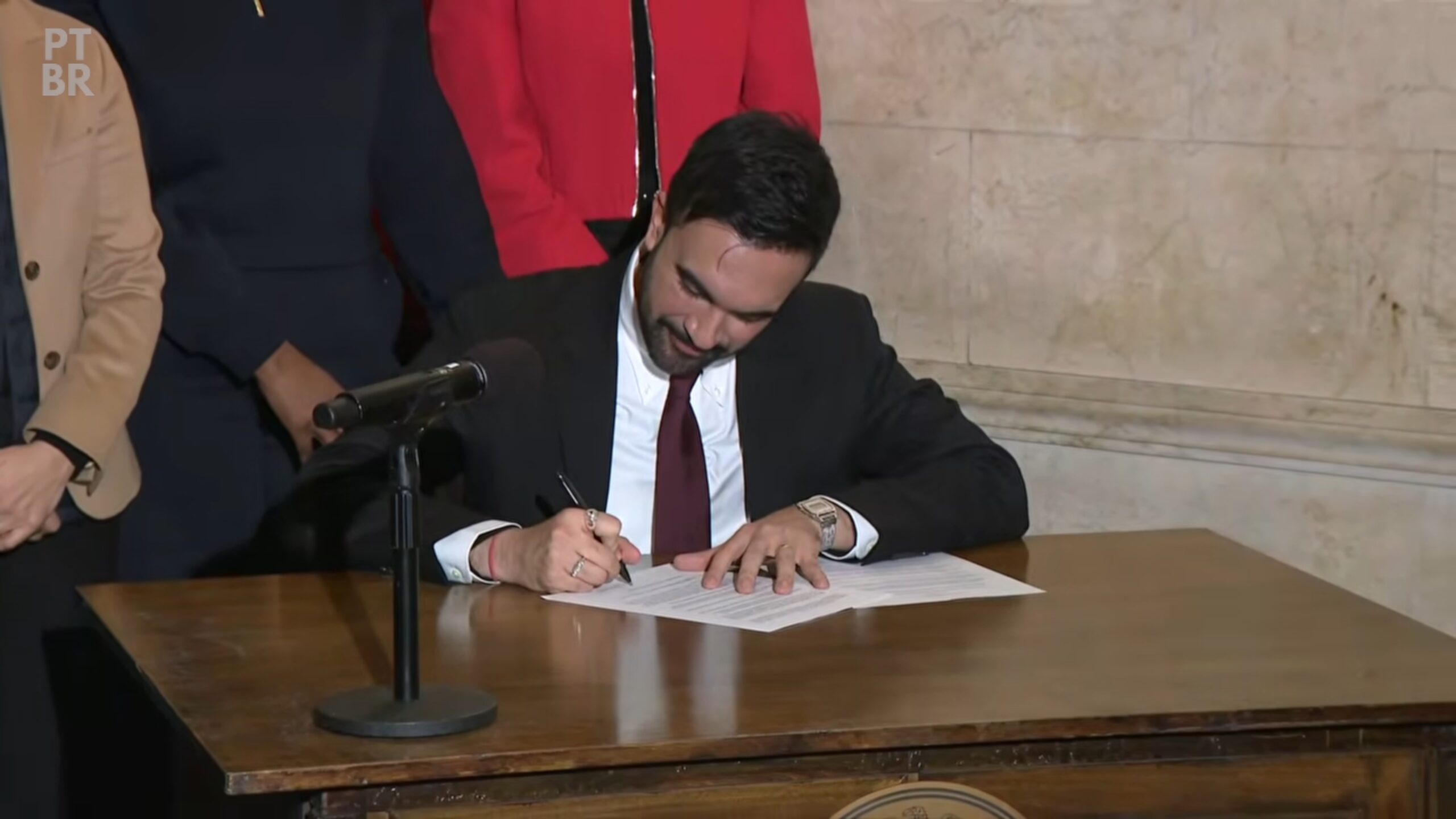
New York City Mayor Zohran Mamdani has framed his $127 billion preliminary budget for Fiscal Year 2027 as a direct challenge to Governor Kathy Hochul: either Albany approves new taxes on millionaires and profitable corporations, or city homeowners face a property tax increase of nearly 10%. That binary choice, laid out in the budget released this week, has drawn warnings from state fiscal analysts about volatile revenue assumptions and spending risks that could widen the gap between what the city needs and what it can afford.
A Two-Path Budget With One Clear Target
Mamdani’s preliminary plan puts the pressure squarely on Albany by proposing two mutually exclusive revenue tracks. The first would raise personal income taxes by 2% on approximately 33,000 New Yorkers earning over $1 million and increase corporate taxes on the most profitable firms, while also seeking to “end the drain” of the city-to-state fiscal imbalance. The second track, triggered only if the state refuses, assumes a 9.5% property tax rate increase that would generate $3.7 billion in FY2027. By packaging both options in the same document, Mamdani has effectively told Albany that inaction carries a political cost: millions of homeowners paying more because roughly 33,000 high earners were spared.
The strategy amounts to a calculated escalation. Rather than quietly absorbing inherited budget gaps through service cuts or reserve drawdowns alone, the mayor is forcing a public debate about who bears the fiscal burden. The budget does include a savings plan of $1.77 billion across two fiscal years and identifies reserve draws from the Rainy Day Reserve Fund and Retiree Health Benefit Trust, but those measures alone cannot close the shortfall. That leaves the millionaire tax or the property tax hike as the decisive variable, and Mamdani has made clear which one he prefers. As reporting in the business press has underscored, the warning of a nearly double-digit property-tax increase is explicitly tied to whether Albany signs off on higher levies for the wealthy and large corporations.
Dueling Gap Estimates Cloud the Math
How deep the city’s fiscal hole actually runs depends on who is counting. The prior administration’s November 2025 financial plan pegged the FY2026 budget at $118.2 billion and projected a FY2027 gap of $4.7 billion, according to city budget documents. But independent watchdogs quickly flagged those numbers as too optimistic. City Comptroller Brad Levine projected a $2.2 billion shortfall in FY2026 and a $10.4 billion gap in FY2027, pointing to underestimates in areas such as asylum-seeker services, overtime, and education. State Comptroller Thomas DiNapoli’s office similarly warned that potential gaps could approach approximately $10 billion in FY2027 and grow to roughly $13.6 billion by FY2029, driven by slowing economic growth and rising costs in social services, transit subsidies, and labor contracts.
Those competing estimates matter because they shape how credible Mamdani’s budget arithmetic looks. The preliminary plan benefits from an upward revision of $7.3 billion in tax revenue compared to the November baseline, according to the mayor’s office. DiNapoli’s review of the new plan put the increase even higher, at $8.6 billion above prior projections, or more than 10% higher than the November estimate. Whether the true revision is $7.3 billion or $8.6 billion, both figures reflect a significant improvement in the revenue picture. Still, the state comptroller flagged risks tied to the planned property-tax rate increase and to reliance on cyclical revenue sources like Wall Street bonuses, cautioning that a downturn in financial markets or real estate could quickly reopen large gaps that the preliminary budget assumes will be closed.
Who Already Pays and What a New Levy Would Mean
Critics of higher taxes on top earners often argue that the wealthy already carry a disproportionate share of the state’s tax load, and the data supports that claim in raw terms. According to the state’s personal income tax statistics, millionaires paid 41.0% of all personal income tax in tax year 2023, while the top 200,000 taxpayers accounted for 49.8%. By contrast, the lower 50% of filers paid just 0.2%. Those figures give opponents of a new surcharge a ready talking point: a relatively small group already funds nearly half of New York’s income tax collections, and further increases could encourage high earners to change their residency or shift income in ways that erode the tax base.
Mamdani’s argument flips that concentration into a case for his proposal. If a small cohort of about 33,000 city residents earning over $1 million can absorb a 2% income tax increase and thereby spare the broader homeowner base from a 9.5% property tax hike, the trade-off, in his telling, looks not only progressive but efficient. Supporters of the plan describe the millionaire levy as a targeted way to match the city’s post-pandemic needs with those best positioned to pay, especially as federal emergency aid winds down and structural costs in housing, healthcare, and transit continue to climb. They also note that property taxes fall heavily on middle-class homeowners, co-op residents, and small landlords, many of whom never saw their incomes recover at the same pace as the city’s highest earners and would feel a rate hike immediately through higher monthly payments.
Homeowners as Hostages, or Partners, in Albany Standoff
That framing has prompted sharp debate over whether Mamdani is using homeowners as leverage in a broader ideological fight with the governor and state lawmakers. The mayor’s allies argue that making the property-tax threat explicit is the only way to force Albany to engage seriously with progressive revenue options that have stalled in past sessions. They point to years of complaints about the city sending more in taxes to the state than it receives back in services, and to what they see as chronic underfunding of city priorities such as public housing and child care. By embedding both the millionaire tax and the property-tax increase in a single “either-or” budget, they say, Mamdani is finally forcing state leaders to choose whom they will protect.
Opponents, however, see a risky gambit that could backfire if the state calls the city’s bluff. If Albany refuses to enact the millionaire and corporate tax changes, the city would be left either to implement the 9.5% property-tax increase or to scramble for last-minute cuts and one-shots to keep the budget in balance. Critics warn that such a scenario could deepen uncertainty for homeowners and small businesses, potentially chilling investment just as the city is trying to solidify its post-pandemic recovery. Some also question whether the mayor is overstating the degree to which Albany alone controls the city’s fiscal fate, noting that New York City retains significant authority over its own spending choices and could pursue additional efficiencies or targeted trims before resorting to broad-based property-tax hikes.
Progressive Ambition Meets Fiscal Reality
Mamdani’s two-track budget is not only a revenue plan but also a statement of values about the size and role of city government. His administration has emphasized investments in affordable housing, mental health, climate resilience, and public safety alternatives, arguing that a city of New York’s scale cannot simply “austerity” its way out of structural problems. Supporters see the proposed millionaire tax as a way to sustain those priorities without imposing heavier burdens on working- and middle-class residents. They also frame the plan as part of a broader national debate over taxing wealth and high incomes in major cities grappling with inequality, a debate highlighted in recent coverage of New York’s wealth-tax push and its potential ripple effects.
Yet the tension between progressive ambition and fiscal reality remains unresolved. Even with stronger-than-expected revenues, the city faces long-term pressures from labor contracts, pension obligations, and the costs of sheltering and integrating new arrivals. State analysts have stressed that one-time windfalls and optimistic forecasts cannot substitute for recurring, sustainable revenue or disciplined spending controls. If the economy softens, the very high-income taxpayers Mamdani is counting on could see their earnings fall, or they could shift their tax domicile elsewhere, undercutting the projected gains. At the same time, if Albany refuses to act and the city balks at imposing the full property-tax increase, the result could be a return to midyear cuts and fiscal improvisation that undermine public trust. The coming months of negotiation between City Hall and the state capitol will determine whether Mamdani’s high-stakes wager produces a more progressive tax structure, or simply exposes the limits of municipal leverage in a complex, shared fiscal landscape.
More From The Daily Overview
*This article was researched with the help of AI, with human editors creating the final content.

Grant Mercer covers market dynamics, business trends, and the economic forces driving growth across industries. His analysis connects macro movements with real-world implications for investors, entrepreneurs, and professionals. Through his work at The Daily Overview, Grant helps readers understand how markets function and where opportunities may emerge.

